Boris D Heifets
@TheBorisLab
Followers
3K
Following
6K
Media
253
Statuses
2K
Anesthesiologist, neuroscientist, amateur psychiatrist. I know where the most powerful psychotropic drugs in the hospital are.
Stanford, CA
Joined November 2018
SPIKED: Stanford Placebo vs Intraop Ketamine Evaluated for Depression. We masked ketamine with surgical anesthesia in depressed patients. Full details now published, peer review pending. Huge antidepressant response in both groups. @TheresaLii 1st auth https://t.co/o9zdg0WY1Z
94
237
997

It started with a simple observation: some patients dreamed under anesthesia—and woke up changed psychologically.
2
3
4

I just turned 30. In my 20s, I learned: It's important to have a life outside of work (esp. in psychedelics) It's OK to work a lot if you enjoy it (it doesn't make you a hustle culture loser) Health isn't *everything* You can drink chamomile tea from a custard jug
10
1
31
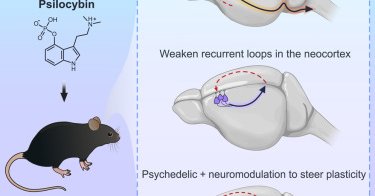
We used rabies virus 👾 to map how #psilocybin modifies long-range circuits 🧠, revealing network-specific reorganization that we didn’t expect. Full study now online at Cell @CellCellPress Paper 👉 https://t.co/nMpVaiTCni Thread for a synopsis 👉 https://t.co/X8QDQpRGTQ

New preprint + thread 🧵 #Psychedelics induce the formation of new synapses, but where do they connect? Our rabies tracing study reveals that #psilocybin shifts connectivity across specific cortical networks. https://t.co/lJgJcaxoxD 1/12
3
43
158

Psilocybin triggers an activity-dependent rewiring of large-scale cortical networks: Cell
cell.com
Psilocybin reshapes brain networks through activity-dependent plasticity, including a weakening of recurrent cortical loops that could underlie its therapeutic effects.
0
21
96
New work from @Nikos_Chatziris describes a method for genetically tagging neurons that respond two different stimuli.
biorxiv.org
The study of neural circuits has been greatly enabled by methods for obtaining genetic access to activated neurons. However, these approaches typically tag neurons based on their response to only a...
1
20
87

What if the cure for a deadly disease was right in front of us… but we refused to use it? That’s what happened with citrus and scurvy. And it’s happening again with psychedelic medicines. In his @TEDTalks released today, Dr. Nolan Williams shows how ibogaine, a natural
8
25
100


A review covering our clinical experience working with persistent challenges after using psychedelics and the research literature. Might be of interest @RCarhartHarris @Drug_Researcher @HDourron @TheBorisLab @JacobSAday
@ExistWell
@tommaso_barba
https://t.co/BFdVqJ67Ct
2
2
8

This is an old ad from the 50s to get warn kids from doing dangerous activities Wait until you see the kid "fall" from the ledge 😂 The doctor probably prescribed him a pack of cigarettes
23
39
545

My TEDx talk is live! I share my path from TBI to heroin addiction to neuroscientist, along with simple strategies for resilience and top-down control. I’d truly appreciate you sharing it. https://t.co/WqDD5HjAfr
1
4
12
A new Stanford-led study helps explain why MDMA (sometimes known as ecstasy) can support therapy while still having a lower risk of addiction compared to drugs like methamphetamine.
1
3
5

Happy birthday @KarlDeisseroth!!

Happy birthday to #LaskerLaureate @KarlDeisseroth of @StanfordMed! He won a #LaskerAward for the development of #optogenetics – a revolutionary neuroscience technique. https://t.co/lFDiPycGgf Watch an interview with him and #MacFellow @michelle_monje: https://t.co/ciiuMCZqtC
3
3
82
The Gowrishankar lab will be opening its doors @neuro_MUSC on Dec 1, 2025! We will be hiring at all levels. I will also be at @SfNtweets presenting my lab's vision on Wednesday, Nov 19, 8AM-12PM at poster board GG7. If you're interested, please reach out! https://t.co/ZlG2P66UAK
raajgowrishankarlab.org
24
28
97

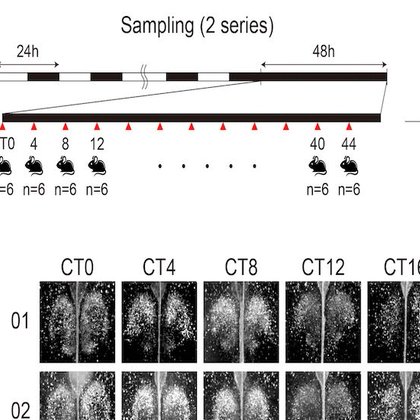
#PR Our Ms on brain atlas of circadian activity is out in Science! ~80%(508 regions) of whole brain show significant oscillations. We envisioned it at first CUBIC papers in 2014. It took a decade. Congrats, Katsu&Fukuaki! Ms→ https://t.co/VZNUIEsHbm DB→ https://t.co/01evod4ChG
5
57
211
@OttTorben With the final talk of the event, @TheBorisLab highlights the importance of maintaining cross-species feedback when developing translational models. Back-translating human drug effects, he shows, often reveals unexpected mechanistic pathways. Such results challenge the fidelity
0
2
6
全脳の神経活動の時刻表を作成した論文がサイエンスに。約80%の脳領域(508領域) が有意に概日リズムを示すことを発見。CUBIC論文時(2014年)に着想し10年以上かかりようやく実現。山下さん・木下さんおめでとう! 大学院生を募集中。Ms→ https://t.co/VBzWFjBMPr DB→ https://t.co/01evod4ChG
science.org
The mammalian brain comprises numerous anatomical regions with distinct functions despite their extensive connectivity. However, how spontaneous neural activity is coordinated across regions over the...
0
90
424
Who could ever have predicted this after the failure memantine, d-cycloserine, rislenemdaz, lanicemine, rel-1017, deudextrethorphan, traxoprodil, EVT-101, AV-101 and r-ketamine.
Another selective NAM of glutamate NR2B receptors fails in depression https://t.co/JDTwA8Q98V
1
0
12
The solving of the structure of DNA should be remembered as a the apotheosis of science as a collective endeavor. Many people contributed to it in an active and material way - with data, ideas and models - and yet take any individual out of the equation, and the discovery still
21
31
188
@mbeisen is the master of the sneer backed up only with his opinions. You should visit my lab to encounter the joy of science
It's genuinely astonishing that science progresses at all given that it is so often these days a parody of what science should be.
0
2
24
ZERO difference in memory score or dementia between groups... the best predictor of the future is the past, and what you've been doing the last few decades. Drugs (and there are lots in surgery) are a distant 3rd. Props to my friend Liz Whitlock for this https://t.co/ZJkS3BQlDM
0
2
10