Tim L. Assimes, MD PhD
@tassimes
Followers
513
Following
244
Media
2
Statuses
179
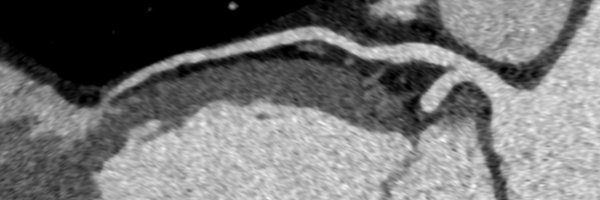
❤️ doc / researcher on the genomics of cardiovascular diseases / Stanford University School of Medicine / Palo Alto VA / 🇬🇷🧬+🇨🇦🍼+🇺🇸🧳/ Artery my own👆.
Stanford, CA
Joined May 2013
A healthy lifestyle free of smoking and full of aerobic activity not only reduces the overall risk of heart disease but also the chances of dying from your first event, should you have one. Project led by my gifted mentee @estella_chen_

About 1:3 women develop cardiovascular disease. A healthy lifestyle protects those who develop coronary heart disease from death at initial presentation. https://t.co/ducOsyPymn
@tassimes
1
3
5
The Million Veteran Program is the @DeptVetAffairs' gift that keeps on giving...critical clues to the etiology and treatment of coronary disease, the #1 cause of death worldwide. Thank you U.S. Veterans and program leadership for making this possible. Let's keep it going!
"Among all the uncertainty, you can always count on awesome science to make you smile. Check out our latest @CellCellPress interdisciplinary endeavor—a reminder that we all have a 🫀, whether right-dominant or not! https://t.co/ldPFuvMdTn
0
4
16
New Million Veteran Program research out in #EJPC @ESC_Journals! We use 🧬 to examine the relationship between Lipoprotein(a), LDL-C, and coronary plaque severity across the spectrum of disease. https://t.co/ANIfqheqkE
2
11
53
I can't believe it! Absolutely thrilled and honored to win the Roger S. Blumenthal Research Award at #ASPC2024!! 🥹
18
11
108

And that’s a wrap on #GWAS24 ❤️ What a fabulous 4 days it has been! Another big thank you to our chairs, Anny & Thomas, for putting together such a great programme!
0
1
8
Greetings from Sunny Portugal! Our #GWAS24 attendees have been busy networking and discussing all things GWAS this weekend. We cannot wait to celebrate all the fantastic research at our Gala Dinner this evening! ⛳️ ☀️
2
8
16

🚨 📰 Digital Footprints of #obesity Treatment: GLP-1 Receptor Agonists and the #HealthEquity Divide: Our research investigates the societal implications of access to GLP-1 agonists, particularly in light of recent clinical trials demonstrating the efficacy of Semaglutide in
0
2
7

I’m thrilled to share that our work from the @VAResearch is finally out in @ScienceMagazine ! We dive deep into the genetic architecture of 2,068 traits using data from the VA Million Veteran Program, comprising 635,969 Veteran. https://t.co/UnPZRk0QwE
9
53
136
My hometown celebrates a championship for the first time in 13 years with one of the most exciting Grey Cup game endings ever. Congrats Als, and enjoy Montréal!

0
0
3
V.A. Recruits Millionth Veteran for Its Genetic Research Database.

nytimes.com
Diverse data from the Million Veteran Program has already contributed to hundreds of medical studies, and the V.A. is continuing to recruit more participants.
0
0
1
A million US veterans are enlisting for science, each other – and everyone else

heart.org
The Million Veteran Program is enabling researchers to look at health, nutrition and genetic details in unprecedented ways. The results will benefit many more than the veterans enabling it.
0
0
0

You have two main coronary arteries—right and left. Most people’s right brings blood to the back of the heart. BUT in ~20% of folks, the left takes on all or part of the job. We find this “dominance” is genetically patterned by CXCL12 during development.
medrxiv.org
Mammalian cardiac muscle is supplied with blood by right and left coronary arteries that form branches covering both ventricles of the heart. Whether branches of the right or left coronary arteries...
3
30
139
@ShoaClarke thank you, could not summarized the scientific journey any better, but I will add, there’s more to come, so for those of you interested in this space…stay tuned!

What makes a heart left 🫲 or right 🫱 handed? A simple GWAS of coronary dominance took us on an incredible journey 🛣️, with a look at human fetal 🫀, a 🐁 model, & the intriguing possibility that a developmental decision may impact adult disease 🤯 https://t.co/RX5csiea5r
1
2
9

CXCL12 regulates coronary artery dominance in diverse populations and links development to disease https://t.co/DNEsDFR3nR
#medRxiv
0
3
7

A story on Privacy-preserving Federated Learning framework we created at Argonne: https://t.co/9gHtYBUWlR funded by DOE-ASCR @doescience with collaborators from @UChicago, @Livermore_Comp and @broadinstitute cc @pnatarajanmd @kkimopt
anl.gov
It’s hard to understate the impact machine learning will have on biomedicine. The ability to train computers to spot patterns by analyzing large, complex datasets is driving discoveries in heart...
0
1
5
Our latest work on plasma proteomics using the proximity extension assay in collaboration with the SCALLOP consortium @AMalarstig . Led by former lab @SarnoffCardio fellow, Corinne Carland, and Grace Png. Co-supervised with @ZanettiD_ .

Proteomic analysis of 92 circulating proteins and their effects in cardiometabolic diseases | https://t.co/dls2pJd9Wq
#proteomics
0
1
4
Our sincerest gratitude to Drs. Schunkert and Aherrahrou for their beautiful piece detailing Prof. Dr. Jeanette Erdmann's profound contributions to our field. This work celebrates her erudition, dedication, kindness, and remarkable character. https://t.co/PzBhGvfyAn
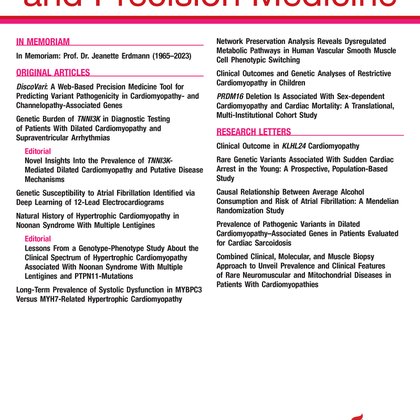
ahajournals.org
0
6
18
A great day for CAD polygenic scores and, by extension, all scores. Grateful for collab with @AniruddhPatelMD & @amitvkhera, and for the contribution of US #Veterans in the #MillionVeteranProgram. Let's now fully invest in the infrastructure that brings all scores to the clinic.

@EricTopol @NatureMedicine @AniruddhPatelMD @wallacemwang @MGHHeartHealth @broadinstitute Thank you @EricTopol! Animation shows prevalence of CAD according to percentile of polygenic score in identical set of >300K UKBB participants Striking and progressive ‘stretching’ of tails of distribution from original 2010 score from @samrip + @skathire to 2023
1
0
17
Polygenic scores of coronary disease “at their best”. Our latest work in Circ GPM. We show contemporary scores track with the earliest phases of coronary atherosclerosis in adolescents and young adults. It’s never too early to prevent a heart attack.
Atherosclerosis starts early in life, particularly for those with high genetic risk. Prevention must start earlier. https://t.co/cPshh6SgkL
1
5
21

Plasma #proteomics improves classification of #InsulinSensitivity over routine clinical variables. A population study performed in the #RISC and #ULSAM cohorts led by @ZanettiD_ and @tassimes #StanfordUniversity
https://t.co/NW7NW2jQo7 🔓
0
8
20