
James Evans
@evansrjames
Followers
150
Following
611
Media
5
Statuses
80
Postdoctoral research fellow at UCL Queen Square Institute of Neurology and the Francis Crick Institute. Former musician.
London
Joined April 2020
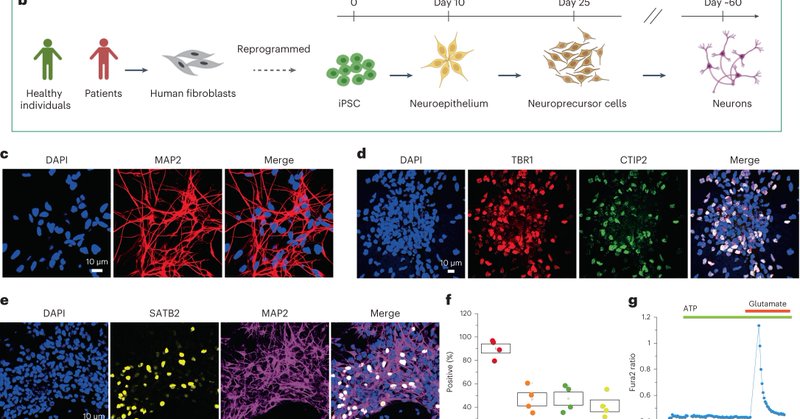
Very excited to share our latest work published in @NatMachIntell. We used ipsc-derived neurons, high-throughout imaging, and machine learning approaches to predict Parkinson’s disease subtypes. https://t.co/g4R6L6adgo
nature.com
Nature Machine Intelligence - Deep learning applied to live-cell images of patient-derived neurons aids predicting underlying mechanisms and gains insights into neurodegenerative diseases,...

The @LabGandhi team took part in an intensive coding course when the pandemic disrupted their research – and now they’ve published work with @faculty_ai showing that computer models can classify types of Parkinson’s from images of stem cells 🧠 @UCLIoN
4
5
26
Out now on biorxiv! Excited to share our latest collaborative work investigating the earliest stages of Parkinson’s disease. https://t.co/CFDoYmYHq4 Thanks to all the amazing co-authors Melissa Grant-Peters Joseph Beckwith Steven Lee Mina Ryten @LabGandhi

biorxiv.org
Parkinson’s disease (PD) is characterised by insoluble α-synuclein (αSyn) aggregates in Lewy bodies (LBs) within the substantia nigra, with cortical pathology appearing as the disease progresses....
0
1
5

Microglial activation and alpha-synuclein oligomers drive the early inflammatory phase of Parkinson's disease https://t.co/fMXb8hElqQ
#biorxiv_neursci
biorxiv.org
Parkinson’s disease (PD) is characterised by insoluble α-synuclein (αSyn) aggregates in Lewy bodies (LBs) within the substantia nigra, with cortical pathology appearing as the disease progresses....
0
3
11

VP-CLEM-Kit: An accessible pipeline for visual proteomics using super resolution volume correlative light and electron microscopy ... https://t.co/OxbydQPeZk
#biorxiv_cellbio

biorxiv.org
Visual proteomics (VP) aims to allow researchers to visualise, measure and analyse proteins in the context of cell and tissue structure in health and disease. VP is becoming a reality through...
0
6
14
Really exciting to be involved with this work! Congrats @EM_STP and team!
0
0
0
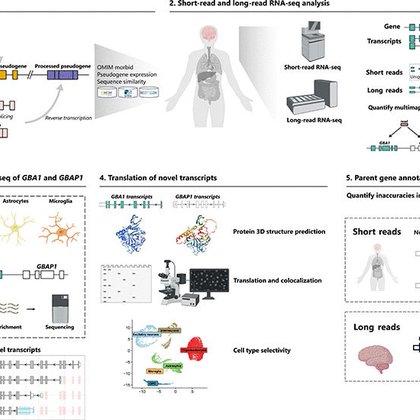
New research suggests nonlysosomal roles for #Parkinsons-associated GBA1 & its highly homologous pseudogene GBAP1 "with implications for our understanding of the role of GBA1 in health & disease" - from @em_ka_gu et al; Concealment of GBA1 by GBAP1 https://t.co/1aooz5W3Q6
0
5
10

Finally in print! I really think there is more to this "pseudo"gene. This has been such a nice collaborative effort and am really grateful to all that has been part of this story @ASAP_Research @PD_BrainMap @PD_Progression @ATransposons #GBA1 #GBAP1 #PD
science.org
Long-read RNA sequencing uncovers unexpected protein-coding roles for GBA1 and GBAP1, exhibiting tissue and cell type selectivity.
3
14
36
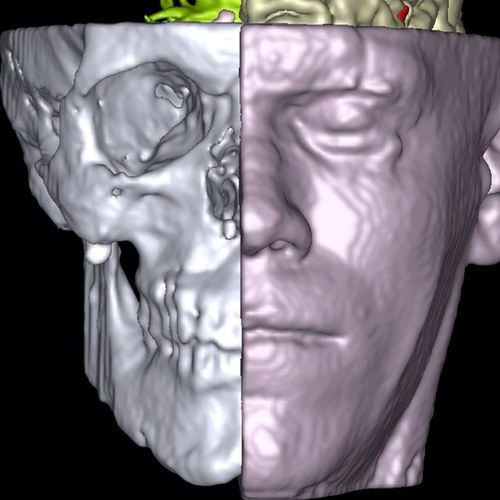
Exciting multiscale post-doc opportunity in #Parkinsons @WCHN_UCL & @TheCrick: Combining individual specific cell models @LabGandhi with longitudinal qMRI in the same person to define mechanisms of progression See link for details: https://t.co/cuuFkBDsiL
@OHBM #OHBM2024

ucl.ac.uk
UCL is consistently ranked as one of the top ten universities in the world (QS World University Rankings 2010-2022) and is No.2 in the UK for research power (Research Excellence Framework 2021).
1
12
11

In dopamine neurons, 10% of SNCA expression encodes novel open reading frames. Understanding the 3' UTRstructures enabled targeted ASO design, reversing key PD pathologies. #Parkinsons #SNCA #ASO
biorxiv.org
The role of the SNCA gene locus in driving Parkinson’s disease (PD) through rare and common genetic variation is well-recognized, but the transcriptional diversity of SNCA in vulnerable cell types...
0
9
18

Very surreal to see THE TOWER pictured inside Barnes & Noble on Fifth Avenue 🏰🗽 Thank you for the photos, @evansrjames
#TheTower #MaryQueenOfScots @BNBuzz
3
6
32
A friend of mine is in San Francisco and paid a visit to the iconic independent bookstore @citylightsbooks… and spotted THE TOWER inside! 🏰 The shop is a city landmark and known for publishing Allen Ginsberg's ‘Howl’.
4
4
35

Combined small-molecule treatment accelerates maturation of human pluripotent stem cell-derived neurons | Nature Biotechnology
nature.com
Nature Biotechnology - Neurons derived from stem cells are rapidly matured with a GENtoniK cocktail.
0
2
18

Head spinning after a brilliant morning at the Francis Crick Institute meeting Prof Sonia Gandhi and her team who are mapping the Parkinson’s brain.
13
90
4K

Machine learning can accurately predict subtypes of Parkinson’s disease using images of patient-derived stem cells, reports a study published in @NatMachIntell. https://t.co/E6bjsjPlqj
0
21
75

"We now hope to expand this approach to understand how these cellular mechanisms contribute to other subtypes of Parkinson’s." James Evans @evansrjames (@UCLIoN) on a new study involving @LabGandhi and the @TheCrick. Read in @Independent ⬇️
independent.co.uk
The findings could pave the way for personalised medicine and targeted drug discovery, researchers have said.
0
3
7
Machine learning can accurately predict subtypes of Parkinson’s disease using images of patient-derived stem cells, finds a new study by researchers at UCL and the Francis Crick Institute. @LabGandhi @evansrjames @UCLIoN @TheCrick Read more ⬇️
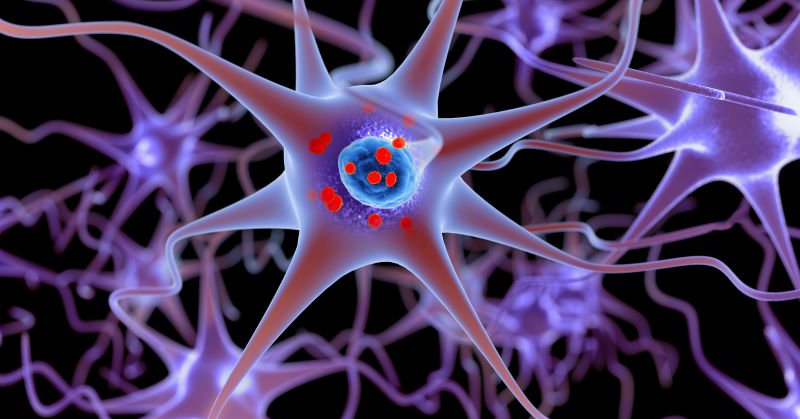
ucl.ac.uk
Machine learning can accurately predict subtypes of Parkinson’s disease using images of patient-derived stem cells, finds a new study by researchers at UCL and the Francis Crick Institute.
0
6
14
A great collaborative effort from @LabGandhi @GurvirVirdi @DilanAthauda @MineeChoi @faculty_ai @MathewHHorrocks @EdBiophysics
0
1
1

We're learning more about Parkinson's disease through innovative #AI research💡 Our Life Sciences team is working with @TheCrick and @ucl Institute of Neurology to use #machinelearning to accurately predict subtypes of Parkinson’s disease based on stem cells images.👇
The @LabGandhi team took part in an intensive coding course when the pandemic disrupted their research – and now they’ve published work with @faculty_ai showing that computer models can classify types of Parkinson’s from images of stem cells 🧠 @UCLIoN
0
3
4

Machine learning on patient cells can accurately classify subtypes of Parkinson's, which could open the door to personalised medicine, finds research by PhD candidate James Evans @evansrjames & Prof Sonia Gandhi @LabGandhi @UCLIoN @TheCrick
ucl.ac.uk
Machine learning can accurately predict subtypes of Parkinson’s disease using images of patient-derived stem cells, finds a new study by researchers at UCL and the Francis Crick Institute.
0
8
6