Chirag Krishna
@chirag_msk
Followers
425
Following
608
Media
2
Statuses
281
@pfizer systems immunology
Cambridge, MA
Joined December 2017

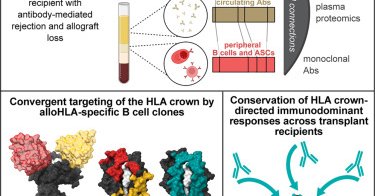
Online now: Topography of the HLA-A protein enforces shared and convergent immunodominant B cell and antibody alloresponses in transplant recipients
cell.com
Donor-specific antibodies against mismatched HLA proteins cause allograft failure, but the structural epitopes recognized by these antibodies are not well defined. Killian et al. identify immunodom...
0
4
27

🤯Three (!!!) new papers today in @ScienceMagazine on the application of generative AI for the de novo design of peptide/HLA binding molecules! Completely unique 3D structure and binding mode compared with natural TCRs and TCR mimics! Links to papers 👇
8
135
687

Thrilled to share our preprint! We introduce TCRAFT, a method to assemble tens of thousands of TCRs at <$1 each, unlocking high-throughput functional TCR screening from single-cell data. 🧵@kochinstitute @MEBirnbaum @MITChemE @MIT
https://t.co/zifGBP4p7k

biorxiv.org
T cell receptors (TCRs) mediate antigen recognition in adaptive immunity, yet large-scale mapping of TCR-antigen interactions remains a major challenge. Current approaches to synthesize and functio...
5
23
103

Poli et al. present the 2024 update of the @iuis_online classification of human #InbornErrorsOfImmunity including 67 novel monogenic defects and 2 new phenocopies. https://t.co/A1J17zNhlf See also Bousfiha et al.’s accompanying guide for physicians https://t.co/0vtISMtQHy
0
10
19

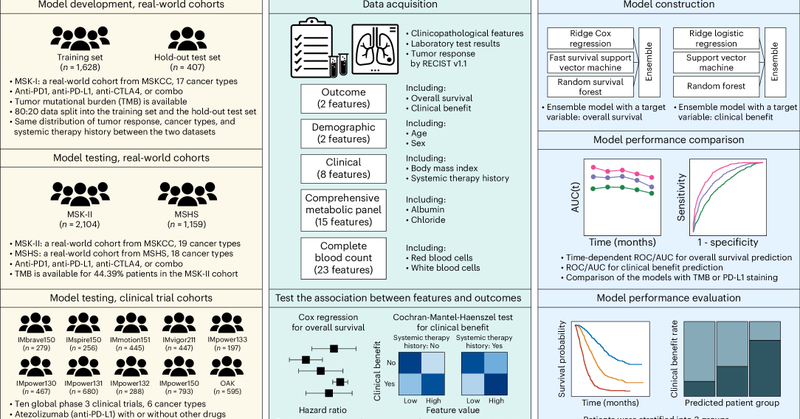
Who would benefit from checkpoint inhibitor immunotherapy for cancer? A machine learning model based on routine lab tests and basic clinical data outperformed FDA approved biomarkers (such as PD-L1) https://t.co/8zjYuF7aPx
@NatureMedicine from nearly 10,000 patients
nature.com
Nature Medicine - Using multiple datasets from real-world evidence and completed trials, a machine learning model using routine blood and clinical data is shown to be predictive of patient response...
6
115
332
There is an increased risk of autoimmune diseases after Covid, and 2 constituents of the virome (anellovirus and HHV-6) may help to explain this link https://t.co/7JnTNgxf5w
@NatureGenet a study of 5 different autoimmune diseases in over 6,300 Japanese individuals with Covid or

nature.com
Nature Genetics - Analysis of the blood DNA virome in patients with COVID-19 and autoimmune disease associates endogenous HHV-6 (eHHV-6) and high anellovirus load with increased disease risk, most...
1
565
1K

What Happens When Some Cells Are More Dad Than Mom (and Vice Versa)? Latest from us. Published today. News here https://t.co/oztCApIL4v article here: https://t.co/YdZvOAtcp5
@stewart_ojay @BogunovicLab and a huge international team thank you 🙏🏼 @KidsAtColumbia @SinaiImmunol

cuimc.columbia.edu
A new study shows that some of our cells favor genes of one parent or the other and can explain a longstanding mystery of why some people with disease-causing genes experience no symptoms.
18
62
185

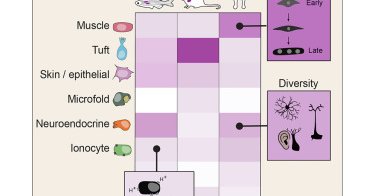
Excited to share our latest work on the thymus, out @ImmunityCP! We define thymic mimetic cells in humans and show they are an evolutionarily ancient component of adaptive immunity. Terrific collab w Cardiac Surgery @BostonChildrens and @leonard_zon lab.
cell.com
Thymic mimetic cells are chimeras between medullary-thymic-epithelial cells (mTECs) and peripheral cell types. Huisman, Michelson, et al. perform high-resolution profiling of human mimetics, reveal...
3
11
58
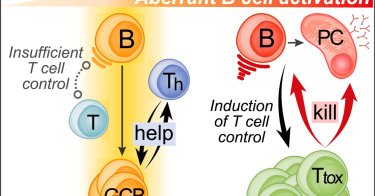
Online now: Hyperreactive B cells instruct their elimination by T cells to curb autoinflammation and lymphomagenesis
cell.com
Aberrant immune signal strength in B cells is associated with autoimmune diseases and lymphoma. Diehl et al. show that hyperreactive B cells trigger cytotoxic T cell-mediated elimination. Less...
2
25
82

Thrilled to share our latest work on broadening T cell help for developing better flu vaccines @ScienceMagazine @sarah_h_ross Grateful for Mark Davis’s invaluable mentorship @StanfordMed @stanfordimmuno
https://t.co/qeY0bQhXyU 1/n
7
18
101
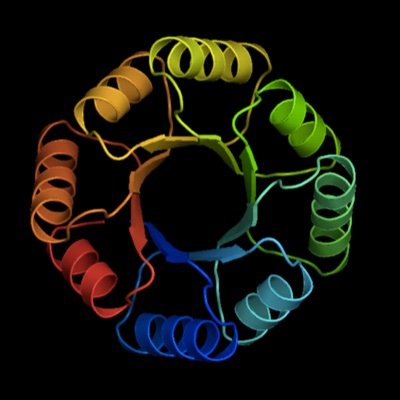
1/ In two back-to-back papers, we present our de novo TRACeR platform for targeting MHC-I and MHC-II antigens TRACeR for MHC-I: https://t.co/AGzIC4Ooun TRACeR for MHC-II: https://t.co/U4lRENyrGu
@HaotianDu4 @ljjchem @SgourakisLab @StanfordBiosci @UPennAllergyImm @CHOP_Research
5
70
286
Excited to share our HLA-pQTL study revealing widespread HLA trans effects on protein expression in @uk_biobank- now out at @NatureComms with @xinlisea, @JoshChiou, @soumya_boston, @saorisakaue, @joycebkang, and many more @pfizer! https://t.co/mPzsyqe2UW
2
10
56
Thrilled to share our latest work out now in @ScienceMagazine demonstrating a heterozygote advantage at HLA-II in protecting against lung cancer risk in smokers! Check out @diegochowell’s tweetorial below👇

Does the immune system protect against cancer? Today our study on HLA immunogenetics and lung cancer risk has been published in @ScienceMagazine led by @chirag_msk @AnniinaTervi @MiriamSaffern @EricWil39327976 @HannaMOllila @rsamstein
4
6
51

🥳🥳🥳Couldn't be happier to see our study on mucosal-associated invariant T (MAIT) cells in HCC published today in @CellCellPress. Article: https://t.co/s7HEXLNN7U Brief summary of this exciting collaborative work between @TimGreten lab and @claassenlab below (1/11):
9
27
95

Always been a bit surprised by the low % of colocalization of eQTLs and GWAS hits. One rationale is that we weren’t looking at the right cell type we need single cell gene expression. New paper presents evidence for another reason: context specific eQTLs
biorxiv.org
Disease-associated loci discovered through genome-wide association studies (GWAS) are primarily located in non-coding regions with putative regulatory effects on gene expression[1][1]. Steady-state,...
0
5
21
These fine-mapped HLA-pQTL have important implications for our understanding of HLA biology and the mechanisms underlying immune-mediated diseases. Very grateful to all of our amazing co-authors- @JoshChiou , @soumya_boston, @saorisakaue, and many more!
0
0
0
Excited to share our HLA-pQTL study from @pfizer with @xinlisea- we show that disease-associated HLA alleles exert widespread trans effects on plasma protein expression using data from @uk_biobank @OlinkProteomics- 45K individuals, 2940 proteins! https://t.co/7mvjnOQ0Cj

biorxiv.org
Polymorphism in the human leukocyte antigen class I (HLA-I) and class II (HLA-II) genes is strongly implicated in susceptibility to immune-mediated diseases. However, the molecular effects of HLA...
3
13
44

Our work on fine-scale identity-by-descent clusters in the UCLA ATLAS Biobank was published online today! I'm immensely proud of this work and its implications for the health of diverse populations in my home, Los Angeles 🌴 https://t.co/TLvfxvGelR
1
35
71

Exciting news from our lab! 🧵👇 Our latest study on tissue T cell heterogeneity, led by @maxevrard is now published in @ImmunityCP @TheDohertyInst
8
51
238

Chancellor, Simmons, De Libero @UniBasel_en, Lepore et al. show that promiscuous recognition of MR1 by canonical MAIT TCRs endowed w/ dual reactivity to both microbial and self-antigens enables MAIT cell responses in the absence of microbial infection. https://t.co/C2weYKfpRc
0
3
8