
Ales Varabyou
@av_sparrow
Followers
78
Following
72
Media
5
Statuses
28
Genomics Scientist and Engineer; Cooking and Calisthenics Enthusiast
Baltimore, MD
Joined December 2011
All annotations are available in HIV Atlas - an interactive web portal powered by JBrowse2 for browsing and downloads. Special thanks to JBrowse2 team (@usejbrowse and Colin Diesh)! 📜 https://t.co/YmTSjB227M 🔗 https://t.co/oYv699g9Kl
ccb.jhu.edu
Interactive genome browser and comparative analysis tools for HIV research. Download HIV genome annotation files (GTF/GFF) and FASTA sequences. Developed by Ales Varabyou at Johns Hopkins University...
1
0
1
Using public datasets, we demonstrate how HIV Atlas improves analysis: uncovering novel isoforms, condition-specific splicing patterns and more! We hope this resource supports more accurate and comprehensive HIV research in computational and bench sciences!
1
0
1
To scale beyond single isolates, we built Vira, a toolkit for transferring annotations across highly diverse viral genomes. Using Vira, we generated transcriptome annotations for 2,080 complete HIV-1 and SIV genomes from the LANL database.
1
0
1
We manually curated reference annotations for HIV-1 HXB2 and SIVmac239, drawing on decades of published knowledge. Our work uncovered and corrected significant errors in public HIV-1 annotations, such as the HIV-1 89.6 GenBank entry that truncates the Tat and Rev proteins.
1
0
1
Most RNA-seq workflows — alignment, assembly, quantification — depend on accurate reference annotations. Without them, HIV splicing studies have often been inconsistent, fragmented, and hard to compare across datasets.
1
0
1
HIV-1 produces all its proteins from a single message using a highly complex splicing program. This process controls replication, latency, and pathogenesis — yet no centralized, accessible catalogue existed that was compatible with standard RNA-seq tools.
1
0
1
Decades of HIV research. Thousands of RNA-seq studies. No transcriptome annotation. Announcing HIV Atlas: the first reference annotation of HIV. With @elapertea, @StevenSalzberg1, Diane Bolton, @MykhayloObolon, Sophia Cheng 📜 https://t.co/YmTSjB227M 🔗 https://t.co/oYv699g9Kl
1
7
25
check out the new paper from my PhD student Hayden (Hyun Joo) Ji, in which she uses #AlphaFold, splice site predictors, and other tools to identify hundreds of novel isoforms of human genes. Well done Hayden!

biorxiv.org
Several recent studies have presented evidence that the human gene catalogue should be expanded to include thousands of short open reading frames (ORFs) appearing upstream or downstream of existing...
3
31
138
our new paper led by @IliaMinkin describes how we used a very large multi-genome alignment to discover a striking degree of conservation among most splice sites in protein-coding genes. The paper is now out in @biorxivpreprint
1
13
47
The Ph.D. application deadline for the Quantitative Biomedical Sciences program at Dartmouth ( https://t.co/TF3etFRnWC) is this Friday. If you are interested in translational or this type of low-level data structure bioinfos, QBS is a great addition to your application list.

Thrilled to share the first preprint from my lab! We losslessly compressed FM-index using a novel technique called run-block compressed BWT (RBBWT). Building upon it, we implemented the Centrifuger method for taxonomic classification on sequencing data.
0
6
15
Thrilled to share the first preprint from my lab! We losslessly compressed FM-index using a novel technique called run-block compressed BWT (RBBWT). Building upon it, we implemented the Centrifuger method for taxonomic classification on sequencing data.

biorxiv.org
Centrifuger is an efficient taxonomic classification method that compares sequencing reads against a microbial genome database. In Centrifuger, the Burrows-Wheeler transformed genome sequences are...
5
34
110

Love to explore how HIV hides in CD4 T cells? Love single-cell multiomics, bioinformatics, genomics, and immunology? Wanna join Michelle and Sam, the freshly minted CROI New Investigator Awardees? About to graduate from PhD? Join our lab as a postdoc now! https://t.co/q6s3ERr1ey
2
14
43
Repeat elements introduce systematic errors during alignment, affecting assembly and introducing artifacts into major gene catalogs. Learn how to detect and greatly improve spliced alignments with EASTR. In @NatureComms from @IdaShinder1 and @elapertea.

nature.com
Nature Communications - The study reveals limitations in widely used RNA-seq aligners, which create 'phantom' introns in reference databases. The authors introduce EASTR, a computational...
0
1
3
@ImmunityCP Single-cell epigenetic, transcriptional & protein profile of latent & active HIV+ cells by DOGMAseq identified 4 states of HIV+ cells: IRF, cytotoxic, AP-1 & cell death. IKZF3 helps HIV+ cells proliferate. Congrats to our postdoc @Yulong_Wei!🎊 https://t.co/cKxg1Ljfc4
5
25
84
Our paper on the human gene annotation catalog CHESS, which now includes all of MANE and a more rigorous definition of genes of all types. With @elapertea @av_sparrow @thesteinegger @markusjsommer @ErdogduBeril @IliaMinkin and others:
link.springer.com
Genome Biology - CHESS 3 represents an improved human gene catalog based on nearly 10,000 RNA-seq experiments across 54 body sites. It significantly improves current genome annotation by...
2
39
121
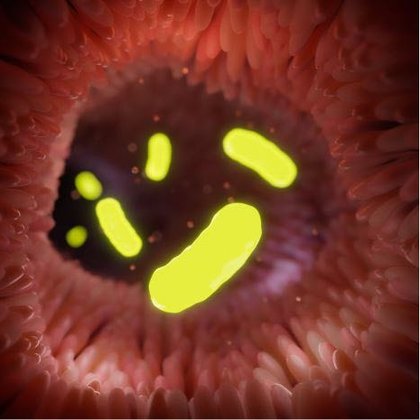
Our paper debunking the 2020 cancer microbiome results is now published, in @mbiojournal. We'll see if @nature (or the authors) will retract these deeply flawed results. h/t @ProfBootyPhD @EricTopol
journals.asm.org
Recent reports showing that human cancers have a distinctive microbiome have led to a flurry of papers describing microbial signatures of different cancer types. Many of these reports are based on...
22
233
757

Ales Varabyou, @ErdogduBeril, @StevenSalzberg1 and @elapertea present ORFanage, a method to search for open reading frames in protein-coding transcripts, guided by reference annotation to maximize protein similarity within genes. https://t.co/mGhRWWVQxt 👉 https://t.co/5yT9p5jAcu
1
3
7
A re-analysis of multiple studies that asserted the role of bacteria in cancer raises questions at to the veracity of the findings and the link https://t.co/Yibf6Zqv8e
@StevenSalzberg1 @AbrahamGihawi @YuchenGe1 and colleagues
biorxiv.org
We re-analyzed the data from a recent large-scale study that reported strong correlations between microbial organisms and 33 different cancer types, and that created machine learning predictors with...
8
84
259
ORFanage is new system by @av_sparrow @ErdogduBeril and @elapertea that finds protein-coding regions in RNA-seq assemblies, guided by annotation. Just published today in @NatComputSci: https://t.co/mumLqMN4BV
2
14
37