
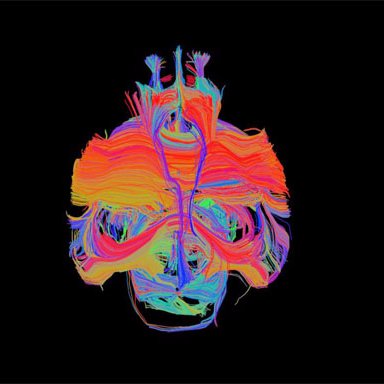
Alessandro Gozzi
@Gozzi_Ale
Followers
3K
Following
4K
Media
412
Statuses
2K
Senior scientist @IITalk 🧠 🐁 Neuroimaging, brain (dys)connectivity and autism @ERCGrantees
Rovereto, Italy
Joined July 2016
How do cortical perturbations affect fMRI connectivity? Not necessarily as one would expect! Our new work @NatureComms shows that cortical inactivation may unexpectedly INCREASE fMRI connectivity! https://t.co/Bhs9ulbn6N 🧵below explains how. Spoiler: δ oscillations are key! 1/n
14
99
346

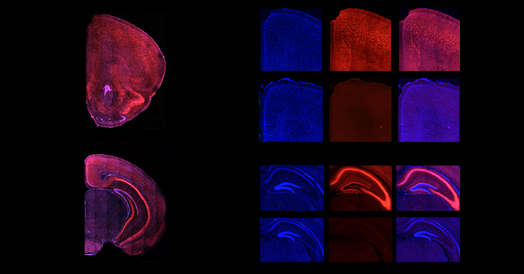
Over-active excitatory neurons in the cortex in infant mice lead to social deficits, according to a new preprint that study researchers claim can sway the debate over how signaling imbalances contribute to autism. By @DeWeerdt_Sarah
https://t.co/DRrx4PiJA3
thetransmitter.org
The findings add fuel to the long-running debate over how an imbalance in excitatory and inhibitory signaling contributes to the autism.
0
5
7
Interested in the mechanisms shaping the extraordinary complexity of the connectome? Then check out our new preprint, lead by @_francisnormand with a stellar team showing how geometry constrains connectome architecture: https://t.co/xKWm5R6x3N Peep the 🧵
2
24
37
Huge congrats to @StueferAlexia for steadily leading this tour-de-force 🥳, and to all the collaborators who generously contributed to this study. Special thanks also to @SimonsFdn @ERC_Research and @IITalk for funding this effort!
0
1
5
Chicken–egg solved? 🐣🥚 A brief early-life E:I imbalance ⚡ → transcriptional reprogramming 🧬 → disrupted social circuits 🧠 → lasting autism-relevant traits. Bottom line: early *developmental* E:I imbalance *is sufficient* to cause autism-related phenotypes!
1
1
1
Are these connectivity changes behaviorally relevant? Yes! In controls, PFC–dopaminergic (VTA, NAcc) connectivity tightly predicted sociability. But in manipulated mice, this relationship broke down → linking network dysfunction to social deficits.
1
0
1
But what’s happening at the circuit level? fMRI revealed selective hypoconnectivity between PFC & social brain hubs, sparing sensory networks. Intriguingly, dysregulated genes were spatially enriched in the hypoconnected regions → pointing to why social circuits are hit hardest!
1
0
1
How do these synaptic changes affect brain function? 🧠 EEG showed persistent cortical hyperexcitability in adult mice ⚡Strikingly, boosting inhibition with GABAergic drugs (R-baclofen, bumetanide) rescued sociability 💊
1
1
1
Why these persistent behavioral changes? We suspected activity-dependent transcriptional dysregulation might be at play. We indeed found evidence of lasting dysregulation of 530 genes. Notably this gene list is robustly enriched for synaptic autism-risk transcripts!
1
0
1
To this end, we boosted excitability in newborn mouse cortex (P1–P14) using chemogenetics. Result: manipulated mice showed persistent, autism-like social deficits 🐭 but not major motor, sensory, or memory issues. Crucially: no effect when manipulation was done in adolescence.
1
1
1
We thought, maybe these two opposing views can be reconciled using a developmental perspective: a short-lived imbalance during a critical early window might permanently derail circuit formation and produce autism-like phenotypes. This is exactly what we set out to test!
1
0
1
But critics note ↕️ E:I changes go both ways in autism 🧬 Evidence skewed to rare mutations 🐭 Research in autism models in fact suggests E:I imbalance may be compensatory (👉 https://t.co/1Fphcqiyfq) So, chicken or egg? 🐣🥚
cell.com
This study tests the E-I ratio hypothesis of autism in four mouse models. All show increased E-I ratio, but E-I changes are precisely coordinated to stabilize synaptic depolarization and spiking, not...
1
0
1
Evidence: 🧬 Many autism genes (SHANK3, FMR1, TSC2…) regulate E:I 🐭 Mouse models show seizures & hyperexcitability 👩⚕️ 30% of autistic individuals show epileptiform activity
1
0
1
The E:I imbalance theory posits that too much excitation / too little inhibition destabilize circuits, leading to hyperexcitability & autism-related dysfunction
1
0
1
Excited to share our new preprint led by our mighty @StueferAlexia Here we tackle a classic chicken/egg 🐣🥚 question in #autism and dev. neuroscience 👉Is excitation–inhibition (E:I) imbalance a "cause" or a "consequence of autism? 👉 https://t.co/VsbzK14lXK Find out below🧵
2
7
29

Developmental excitation-inhibition imbalance permanently reprograms autism-relevant social brain circuits https://t.co/nF6KAAqV36
#biorxiv_neursci

biorxiv.org
An influential theory proposes that an imbalance between excitation and inhibition (E:I) plays a central role in the etiology of autism and related developmental disorders. However, controversy...
0
4
18
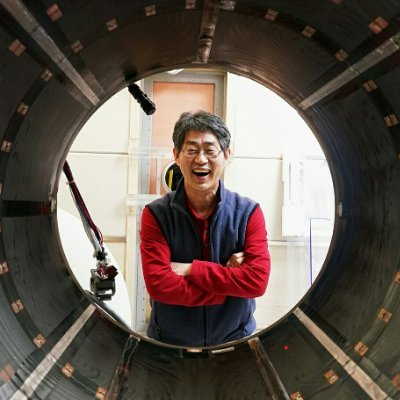
Excited to share our new PNAS paper! 🎉 We examined the neural source of rs-fMRI FC using patterned optogenetic manipulation in mice 🧲🧠. A step toward answering a long-standing question. Fantastic work by @HnSk_Moon @hong_seok_jun @CNIR_IBS
3
17
57
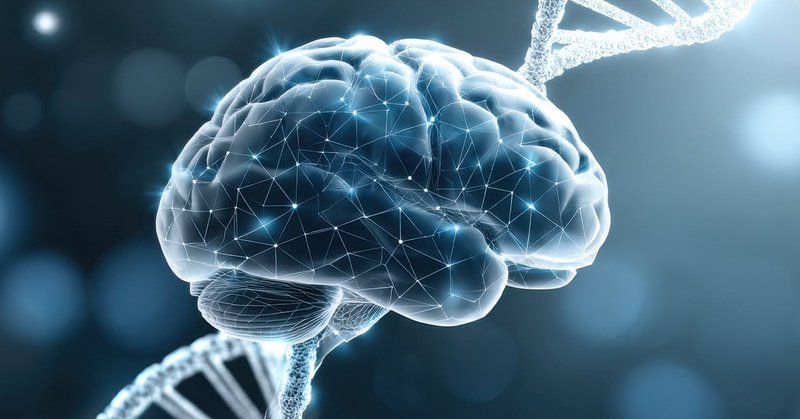
Scientists have uncovered how puberty reshapes brain connectivity in 22q11.2 deletion syndrome, a genetic condition linked to autism and schizophrenia. The findings highlight how changes in synapses and brain connections may shape social behavior and…
psypost.org
Scientists have uncovered how puberty reshapes brain connectivity in 22q11.2 deletion syndrome, a genetic condition linked to autism and schizophrenia. The findings highlight how changes in synapses...
1
8
16

First tweet on an exciting new manuscript online @NatureNeuro - in collab with @LucinaUddin and Catie Chang. We take a fresh look at the physiological dynamics associated with the global signal 🧠... #neuroscience #neuroimaging #fMRI Read here: https://t.co/KrLrLYOTUf
3
53
171
🚀 I will be presenting about our 🧠 🧲 BrainCAP toolbox at #OHBM in two weeks! 🎉 I'm on the job ⚡ market this year for a tenure-track assistant professor position in #psychiatry and relevant depts, and would love to meet you and chat about research and opportunities! 👇👇👇
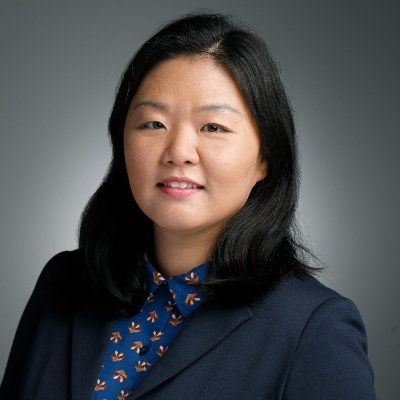
We will present "BrainCAP: an open-source neuroimaging toolkit to analyze 🧠 co-activation patterns" at #OHBM2025 in an #Oral session! A cool collaboration with Samuel Brege, Zailyn Tamayo, Youngsun Cho (@YalePsych) and Catie Chang (Vanderbilt) - See you all in Brisbane! @OHBM
1
5
19