
The Transmitter
@_TheTransmitter
Followers
4K
Following
714
Media
143
Statuses
1K
Dedicated to helping neuroscientists stay current and build connections. Subscribe to receive the latest news and perspectives on neuroscience: https://t.co/UUx8iyTIJW
New York, New York
Joined October 2023
The Transmitter @_TheTransmitter presents a portrait of the state of neuroscience in 2025 through four lenses: its focus, its output, its people and its funding. Each view features analyses of major trends and more. Explore the end of year report: https://t.co/PNiP1f2MJY
0
7
10
Want to stay up to date on the latest developments in human neuroimaging research? Subscribe to the quarterly newsletter in partnership with the Organization for Human Brain Mapping to receive news and announcements from both of our organizations:

thetransmitter.org
The latest news and perspectives on the neuroscience topics that interest you most, direct to your inbox
0
0
1

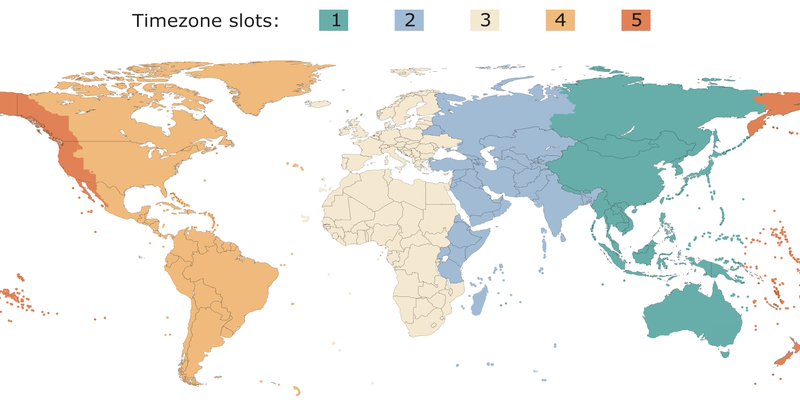
"Neuroscientists need better training in computational methods." We got you. Join us in July: https://t.co/2aGOKQ8EsY Our #ComputationalNeuroscience course is the perfect way to gain practical experience and build a strong foundation in this field.
neuromatch.io
Affordable, global online courses in Comp Neuro, Deep Learning and NeuroAI. Learn in small pods with a TA and an inclusive community.
As neuroscience expands, @_TheTransmitter asks, how can neuroscience training programs best meet the needs of students and the field? See what survey respondents had to say: https://t.co/M5lh8I0xnR
#StateOfNeuroscience
1
5
30
Most basic neuroscience research in the U.S. is funded by the federal government, but there is an entire funding landscape that lies beyond those federal agencies. To bring those sources together, @_TheTransmitter presents a funding source directory:
thetransmitter.org
Our list features expected and lesser-known governmental and nongovernmental sources of funding for basic neuroscience research.
0
8
17
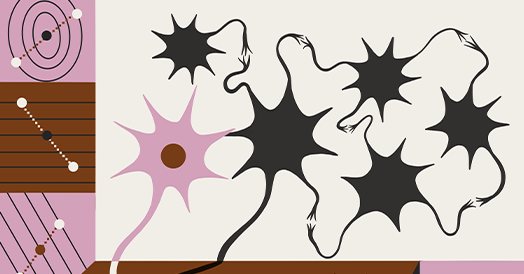
“I will die on the hill that population coding is the relevant level of encoding information in the brain.” In the latest “This paper changed my life,” Nancy Padilla-Coreano discusses a paper on mixed selectivity neurons. https://t.co/Jqf2MuYSBh
thetransmitter.org
The 2013 Nature paper by Mattia Rigotti and his colleagues revealed how mixed selectivity neurons—cells that are not selectively tuned to a stimulus—play a key role in cognition.
0
10
47
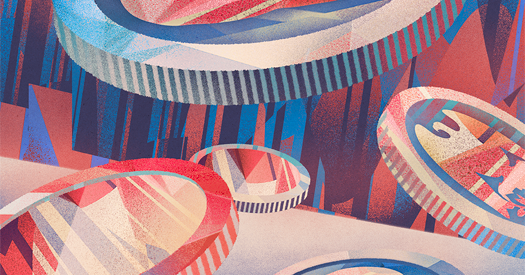
NIH funding for neuroscience-related projects has more than doubled during the past 16 years. But not everyone has benefited equally. https://t.co/Mwe7O9pdM0 By @natmesanash
#StateOfNeuroscience
thetransmitter.org
Funding for neuroscience-related projects more than doubled in 16 years, rising from $4.2 billion in 2008 to $10.5 billion in 2024.
0
0
5
Should neuroscience focus on big team science or the traditional model? Explore what survey respondents had to say about it: https://t.co/6CWMyrh9yR
#StateOfNeuroscience
thetransmitter.org
Learn which types of projects are better for big team science versus smaller-group support.
0
4
10
Did you pick up this flyer at #SfN2025? 📣 Calling all early-career neuroscience researchers! @_TheTransmitter and @neuromatch want to hear from you about the support you need to thrive in your career. ➡️ Take this short survey: https://t.co/fUW6JR7dD6
0
2
6
As neuroscience expands, @_TheTransmitter asks, how can neuroscience training programs best meet the needs of students and the field? See what survey respondents had to say: https://t.co/M5lh8I0xnR
#StateOfNeuroscience
thetransmitter.org
Training in computational neuroscience, data science and statistics is needed but must be balanced with grounding in the scientific method, say respondents.
0
3
12
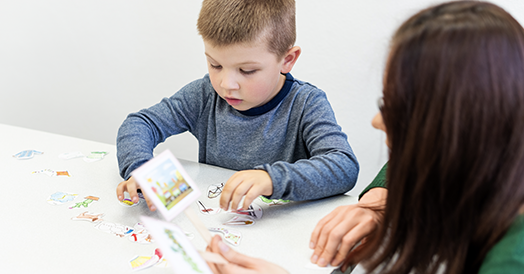
Age at autism diagnosis may reflect one of two genetic and developmental profiles, a new study finds. By @natmesanash
https://t.co/P8NTs9yiu7
thetransmitter.org
Age at diagnosis reflects underlying differences in common genetic variants and developmental trajectories among people with autism.
0
1
4

It was a big year for the @ChangLabUcsf at #SfN25! Congratulations to Edward Chang, MD, who was awarded this year’s @The_Gruber_Fdtn Neuroscience Prize, and to Shailee Jain, PhD, who was named one of @_TheTransmitter’s Rising Stars in Neuroscience. 🧠🌟 https://t.co/YcbPKZCaBg
1
5
24
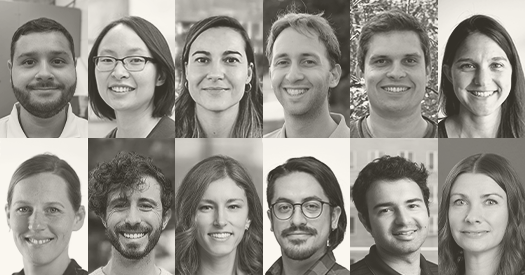
@_TheTransmitter’s “New Lab Directory” features a list of new neuroscience labs that opened in 2024-2025, and some set to launch in 2026. Check out the list to learn about the work of more than 50 new neuroscience labs. https://t.co/MlcuqApD4F
#StateOfNeuroscience
thetransmitter.org
Learn about neuroscience labs launched in the past two years, plus a few opening their doors in 2026.
0
1
4
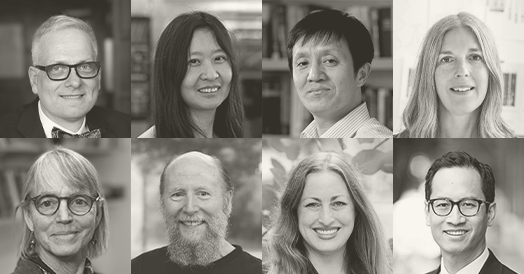
Who won the Kavli, and other neuroscience prizes this year? See our list here https://t.co/KR6Qi72HjD
#StateOfNeuroscience
thetransmitter.org
The awards honor recipients for lifetime achievements and new discoveries.
0
1
7
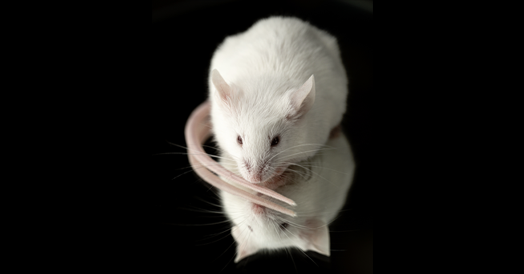
During the later stages of learning, the mouse brain progressively activates transcriptional regulators that drive memory consolidation. By @claulopezneuro
https://t.co/k4AuZCpKWH
thetransmitter.org
During the later stages of learning, the mouse brain progressively activates transcriptional regulators that drive memory consolidation.
0
1
7
The past three years marked the passing of neuroscientists Eleanor Maguire, Krishna Shenoy and Larry Young, among others. https://t.co/jIvOH2yidZ

thetransmitter.org
Learn more about the lives and legacies of the neuroscientists who passed away between 2023 and 2025.
0
2
5
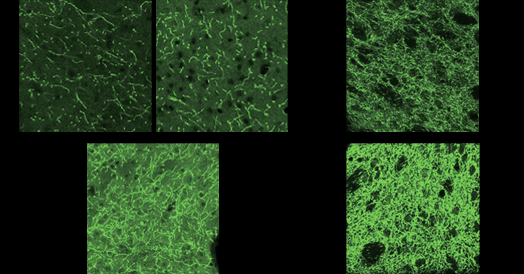
“It’s giving mechanistic insight into how estrogen modulates reinforcement learning—all the way down to the molecular mechanism,” says Ilana Witten. By @avaskham
https://t.co/ghpv4mThwa
thetransmitter.org
During the high-estradiol stages of their estrus cycle, female rats learn faster than they do during other stages—and than male rats overall—thanks to a boost in their dopaminergic response to reward…
1
3
8
By mapping connections among researchers, Neurotree makes it possible to trace how the field has evolved and to visualize how shifts in lab size, training and other factors can shape its direction, writes founder Stephen David. https://t.co/F6728dKdBb
#StateOfNeuroscience
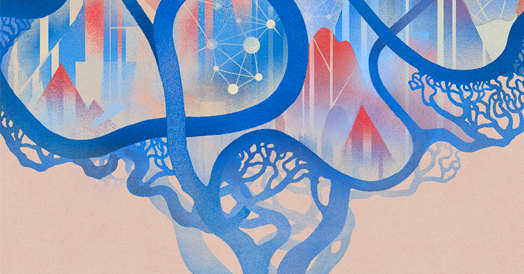
thetransmitter.org
By mapping connections among researchers, Neurotree makes it possible to see how the field has evolved and what factors shape its direction.
1
6
15
In the late 1980s, things were “a bit Wild West” in the transcranial magnetic stimulation field, says Mark George. “You could do things you couldn’t do now.” By @David_Dobbs
https://t.co/Dg6nkzIQtf
thetransmitter.org
The long-time NINDS researcher, best known for studying movement disorders, has died at age 82.
0
0
2
In @_TheTransmitter's Rising Stars of Neuroscience 2025, we recognize 25 early-career researchers who have made outstanding scientific contributions and demonstrated a commitment to mentoring and community-building in neuroscience. #StateOfNeuroscience
https://t.co/fq41nuJqiB
0
10
16
The CDC website now falsely suggests that autism-vaccine research is still an open question, prompting distrust among researchers—some of whom anticipate more unreliable statements. By @_TheTransmitter
https://t.co/3sykKEkWsT
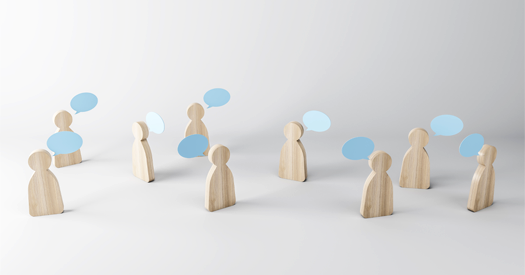
thetransmitter.org
The CDC falsely suggests autism-vaccine research still an open question, prompting distrust and dismay among researchers.
0
3
4
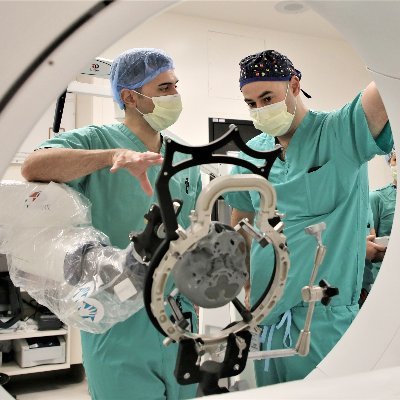
Jie Zheng, Ph.D., has been named one of @_TheTransmitter Rising Stars of Neuroscience 2025! She studies neural mechanisms and computational principles underlying the memory system in humans. 🏆 Award info: https://t.co/Aw21nrcwos 🧠 Lab info: https://t.co/pa3JzvwOgV
1
2
16