

Yoojeong Choo
@yoojchoo
Followers
60
Following
588
Media
0
Statuses
64
PhD student in @Wessel_Lab, at the Univ. of Iowa. set foot on the ground and take steps into the real world. 君子豹變
Iowa City, IA
Joined May 2022

Congrats to @Xinchi_Yu on contributing an Editor’s Choice article 🎉 - a well-deserved recognition! 👏

New research in JEP: Human Perception and Performance from @Xinchi_Yu et al. shows that prior semantic knowledge helps people remember brief glimpses of everyday objects, highlighting how memory and perception work together in daily life. Free-to-read: https://t.co/KhvC3YayOr
0
3
4
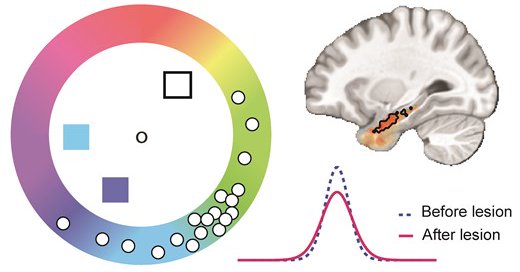
When brain lesions blur memories, they sharpen our theories. @yoojchoo et al. show that hippocampal damage supports mixture models of visual working memory, highlighting the limits of simple one-parameter accounts in real neurological data. @Brain1878
academic.oup.com
Choo et al. investigated how the medial temporal lobe, particularly the hippocampus, supports memory for simple visual features over short delays. They fou
0
3
9

We propose that six main mechanisms of neural #oscillations contribute to multi-timescale neural dynamics in #unisensory and #multisensory integration https://t.co/nPSkzuzaAX Over 8k accesses in 4 months - thank you 🙏 @SpringerNature @seeingwithsound
2
88
388

#Neuroimaging crowd, hear me out! 👀 Did you ever want to add #EyeTracking to your #fMRI study but found it too much hassle? Got existing data you’d love to add eye tracking to? Try out *MR-based eye tracking* (i.e. inferring gaze from eye voxels)! A few options below!🧵👇 1/9
1
24
129

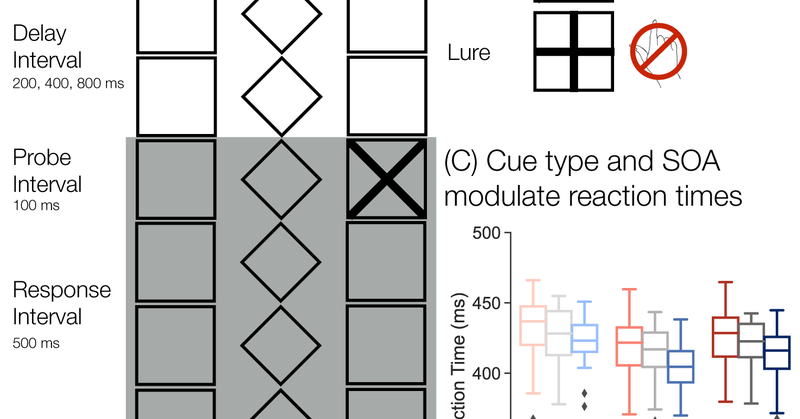
New paper out from my lab using cross-study MVPA which shows that the retrieval state is engaged by an attentional task when there are no episodic memory demands
nature.com
Nature Communications - People are thought to engage a retrieval brain state when they bring to mind past experiences. Here, using multivariate pattern classification analyses across experimental...
0
9
51
The human brain leverages multiple codes to efficiently represent information, such as by organizing the relative timing of neuronal firing within a population of neurons. Learn more about this in our upcoming research article in @Nature!

Our brain uses unique sequences of neurons firing over time within a population activity burst to correctly categorize visual cues. Learn more about it from a paper out today in Nature: https://t.co/Tj74SBSJby
#NeuralCoding #HumanCognition
2
12
32
(1/5) Very excited to announce the publication of Bayesian Models of Cognition: Reverse Engineering the Mind. More than a decade in the making, it's a big (600+ pages) beautiful book covering both the basics and recent work: https://t.co/5dnLpcMQzu
20
454
2K

Understanding the difference between Standard Deviation (SD) and Standard Error (SE) is crucial for accurate data interpretation. SD measures the variability within your data, indicating how spread out the individual data points are from the mean. In contrast, SE measures the
44
1K
7K

🌟 Cai Lab @Nature paper alert! In new work led by @mysteriousjoe_, we find that rest periods after learning not only stabilize new memories BUT ALSO integrate new memories with older ones from days past! (1/9) Read it here: https://t.co/Ur8dbGfuP3
39
136
591

Our brain operates at various spatial scales, from local to global. Do they govern different functions? A broad review on multiscale brain & cognition, out in @TrendsCognSci spanning Cog/Sys/Comp Neuro work in 🐭🐵🧑! Team @JeongjunPark2 @monicarosenb
https://t.co/UwNk9E5G1U
2
42
161

I'm looking to recruit a PhD student (maybe even two!) to work in my lab in the Psychology Department here at SUNY Albany! The application deadline for the Cognitive Psychology PhD program for Fall 2025 is January 15th. Read more here:
1
8
21

Excited to share a new project! 🎉🎉 https://t.co/A36dZL55ar How do we navigate between brain states when we switch tasks? Are dynamics driven by control, or passive decay of the prev task? To answer, we compare high-dim linear dynamical systems fit to EEG and RNNs🌀 ⏬
7
108
519

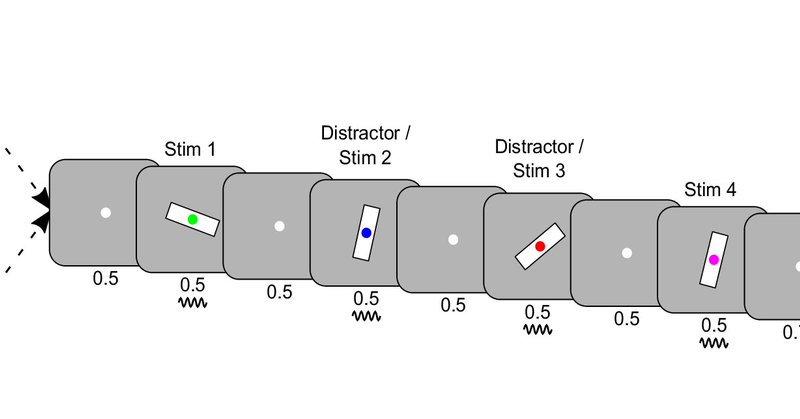
Distinct functions for beta and alpha bursts in gating of human working memory https://t.co/jDNIEUPDFQ
#neuroscience
nature.com
Nature Communications - Oscillatory beta bursts are linked to cognitive control in primates, but their role in humans is less clear. This study demonstrates an analogous role in humans and suggests...
0
19
98

I'm recruiting a Ph.D. student for the upcoming school year (Fall 2025). If you are interested in studying the neural bases of attention and working memory, I would love to hear from you! You can submit an application from now through Dec 1, 2024.
1
34
60

C3 gang on the scene today! Posters, talks galore all day today. Last day of #SfN24 let’s get it
1
1
17

BREAKING NEWS The 2024 #NobelPrize in Literature is awarded to the South Korean author Han Kang “for her intense poetic prose that confronts historical traumas and exposes the fragility of human life.”
612
36K
61K
In the novel 소년이 온다 (2014; ‘Human Acts’, 2016), Han Kang – awarded this year’s #NobelPrize in Literature – employs as her political foundation a historical event that took place in the city of Gwangju, where she herself grew up and where hundreds of students and unarmed
70
6K
11K
Great news: The Cognitive Control Collaborative (@IowaControl) is going to be in full effect at #sfn2024 @SfNtweets. Presentation times below. Bad news: As every year, cognitive control is largely relegated to the last day of the conference. Change your travel accordingly 🙂
2
13
25

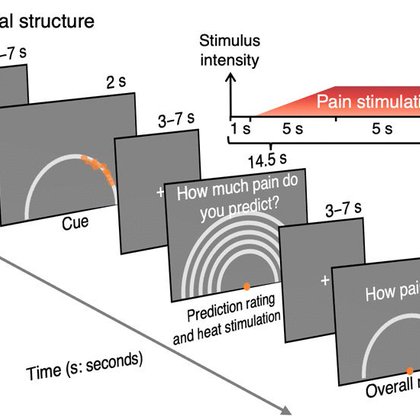
Different brain regions encode different pain-related information, such as the expectation of pain or the intensity of a stimulus. But where and how is this information integrated? My paper has just been published in @ScienceAdvances! (1/13)
science.org
Neural subspaces and trajectories identified with fMRI reveal a computational mechanism integrating pain cues and stimuli.
1
35
99