
Springer Nature
@SpringerNature
Followers
83K
Following
12K
Media
12K
Statuses
36K
Leading research publisher empowering researchers, educators, and health professionals with our trusted brands for 180+ years. Site notice: https://t.co/UvwNQMwOxw
Berlin / London
Joined February 2011
Have you considered publishing your #SDG-related research as a book? Publishing it #OpenAccess ensures your insights reach a global community of academics and policymakers. https://t.co/kbx7gG242i
0
1
4
Have you already seen the world’s largest spider web spanning 106 square metres? Check out November’s sharpest science shots, selected by Nature’s photo team:

nature.com
The month’s sharpest science shots, selected by Nature’s photo team.
0
1
4
One of our top-rated posts on @altmetric this past week was published open access in @NatureGeosci. You can read 'Bio-essential sugars in samples from asteroid Bennu' here:
1
4
4
We are excited to share that Springer Nature and @CAPES_Oficial announced the signing of a historic Transformative Agreement for Brazil, a milestone that strengthens Open Access in Latin America and the Caribbean. Learn more: https://t.co/IzaWV3UtEK
2
3
3
It also highlights gaps in our knowledge: only 2.7% of roads are precisely located, while most remain uncertain or hypothesized. Dive into the full story here: https://t.co/my7pyMmJEZ
@NaturePortfolio @ScientificData

nature.com
Scientific Data - Itiner-e: A high-resolution dataset of roads of the Roman Empire
0
1
2
Why does this matter today? This map could help researchers explore how infrastructure influenced connectivity, governance, and even the spread of diseases in ancient times.
1
1
2
The team combined archaeological records, historical sources, satellite imagery and topographic maps to create this open-access dataset. It shows how roads wound through mountains, linked cities, and shaped trade, migration and administration across centuries.
1
0
0
Researchers have added over 100,000 km to previous estimates, bringing the total to nearly 300,000 km of roads crisscrossing an area of 4 million km². These routes connected more than 55 million people from Britain to Egypt and Syria at the height of the Empire around 150 CE.
1
0
0
Ever wondered how far Roman roads stretched? A new high-resolution digital map called Itiner-e has just revealed the most detailed picture yet of the Empire’s vast network. And it’s bigger than we thought!
1
1
3
Conversations with AI chatbots have the potential to influence the attitudes and intentions of voters, according to a study in Nature. The results suggest that AI-based approaches to persuasion may have an important role in future elections:

nature.com
Nature - Human–artificial intelligence (AI) dialogues can meaningfully impact voters’ attitudes towards presidential candidates and policy, demonstrating the potential of conversational...
0
1
4
Measurements of the properties of exotic particles called all-charm tetraquarks, reported by CMS Collaboration at the Large Hadron Collider, are published in Nature. Results can be used to test theories about forces that hold protons and neutrons together:

nature.com
Nature - The CMS Collaboration reports the measurement of the spin, parity, and charge conjugation properties of all-charm tetraquarks, exotic fleeting particles formed in proton–proton...
0
1
3
As the research ecosystem transforms, institutions and publishers are rethinking knowledge creation and sharing. David Rosowsky discusses AI's impact on scholarly communication, the need to rebuild public trust, and the role of early career researchers: https://t.co/yzf6AYbOTg
0
2
4
Why the Social Sciences matter now more than ever? On the 10th anniversary of #SocialScienceMatters, 10 of @Palgrave's authors reflect on why social science research is essential for understanding our complex world and addressing urgent challenges: https://t.co/OnEpytiQ5f
0
1
3
#OnThisDay in 1996, NASA launched the Mars Pathfinder. Its Sojourner rover explored the Martian surface, paving the way for future missions and revealing Mars was once warm and wet. A milestone in space exploration! 🚀
0
0
2
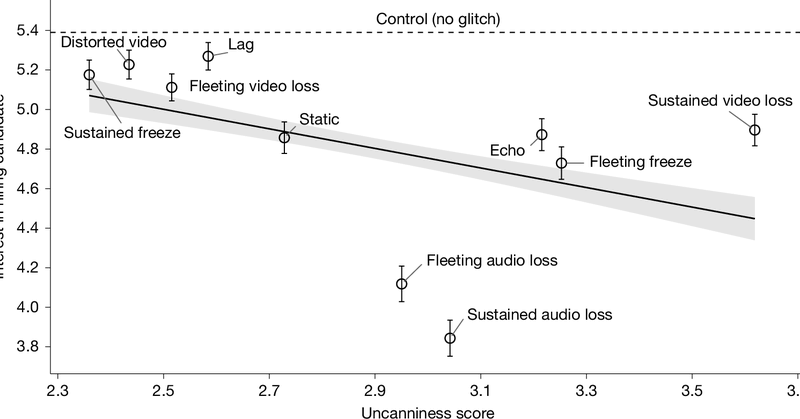
Interrupted connections to video calls can impact many aspects of life, including parole decisions, medical appointments, or hiring decisions. Glitches break the illusion of face-to-face conversations, causing negative effect on interpersonal judgements:
nature.com
Nature - Glitches in video calls can have a negative effect on the judgement of the people involved and correspond to worse outcomes in major areas of life such as job interviews and parole hearings.
0
2
3
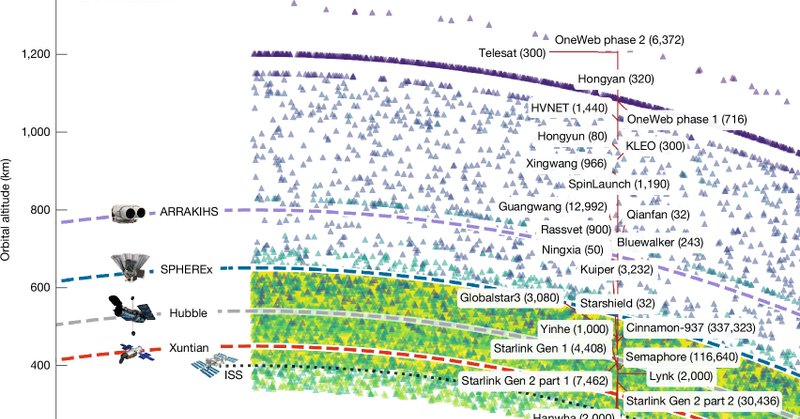
Approximately 96% of images from space observatories in low Earth orbit may be affected by light pollution from satellites over the next decade, highlighting the need to minimize this contamination for effective research:
nature.com
Nature - Rapidly growing satellite constellations pose a substantial threat to astronomical observations, with projections indicating that future space telescopes will have more than 96% of their...
0
4
5
Ein plötzlicher Herzstillstand kann jeden Menschen ereilen und auch jeder Mensch könnte zufällig danebenstehen. Es gibt nichts Schlimmeres, als wenn man nicht weiß, was zu tun ist. Dieses @springer1842 Buch zeigt wie Sie richtig handeln: https://t.co/RuzfwabKYa
0
3
7
Your car needs a service to stay safe—so do our journals. Our SN RIG Assurance team audits research integrity processes, benchmarking against COPE & best practices to keep science running smoothly. More here: https://t.co/5CmaBodiS1
#ResearchIntegrity #AcademicPublishing
0
4
7
Scientists are testing whether blockbuster drugs that mimic the hormone GLP-1 — sold under brand names such as Ozempic and Mounjaro — can help to cut cravings other than those for food:

nature.com
Nature - Scientists are testing whether GLP-1 drugs can help to cut cravings for cigarettes, alcohol and opioids — as well as food.
0
1
5
Sick, immature worker ants produce a signal that triggers their nestmates to destroy them, according to a study of a single ant species published in @NatureComms. This act is thought to benefit the colony as a whole by preventing the spread of infection:
0
1
4