Lei Wang
@WangUCSF
Followers
271
Following
24
Media
4
Statuses
31
Professor @UCSF, @PharmChemUCSF, CVRI, and @UCSFCancer Genetically encoding unnatural amino acids to study biological processes and to develop biotherapeutics.
San Francisco
Joined December 2021

Each year, we highlight companies that received sizeable early-stage funding in the previous year. Enlaza Therapeutics is developing protein-based therapeutics that bind irreversibly to their target https://t.co/xeaeXYACHs
0
2
6

The first session ‘Cell surfaces and their interactions’ features talks from @CarolynBertozzi, @ZevGartner, Balyn Zaro @ZaroLab, Lei Wang @WangUCSF & @AashishManglik
1
1
14

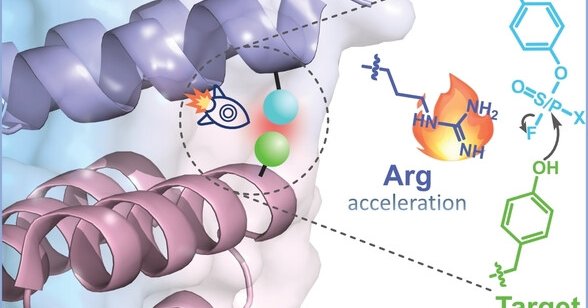
Arginine Accelerates Sulfur Fluoride Exchange and Phosphorus Fluoride Exchange Reactions between Proteins (Lei Wang and co-workers) @WangUCSF #openaccess
onlinelibrary.wiley.com
Introducing an arginine (Arg) residue adjacent to the latent bioreactive unnatural amino acid (Uaa) significantly accelerates both SuFEx and PFEx reaction rates between proteins. This offers a...
0
13
50
Our department is hiring! Ladder Rank Faculty Position – Assistant, Associate, or Full Professor: We seek creative, innovative scientists who define and address fundamental questions in diverse areas relevant to our Department. https://t.co/JPlGGF0jPq.
1
0
8

Calling all chemists, biologists, geneticists: Dr. Lei Wang (@WangUCSF) discusses biospecific chemistry, covalent targeting, and new pathways for biological and genetic research, today at 2 p.m. ET—an @NIH lecture. Check it out here: https://t.co/8QX5cX5esv.
#Biotech
0
1
3
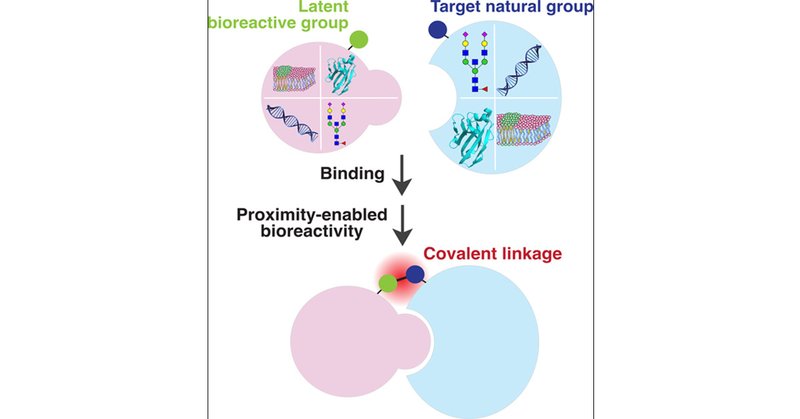
Biospecific Chemistry allows for the selective covalent targeting of endogenous biomacromolecules in vivo without altering the biomacromolecules themselves. https://t.co/oK66BtjjoT
pubs.acs.org
Interactions among biomacromolecules, predominantly noncovalent, underpin biological processes. However, recent advancements in biospecific chemistry have enabled the creation of specific covalent...
0
2
16
The forefront of click chemistry, Phosphorus fluoride exchange (PFEx), reaches new heights in protein environments! Our research reveals PFEx activates through proximity, showing unique properties. https://t.co/dhBO2e7POr
@Chem_CP
cell.com
The phosphorus fluoride exchange (PFEx) is a cutting-edge click reaction recently developed in small molecules. In this work, we expanded PFEx to proteins by genetically encoding two latent bioreac...

Online now: Genetically enabling phosphorus fluoride exchange click chemistry in proteins https://t.co/7Jz4drhzsf
0
1
19
How does proximity-enabled SuFEx (the new generation of click chemistry) behave in protein context? - find out in Chemical Science https://t.co/aA1vvya3VB
@ChemicalScience @PaulKlauser
0
2
21
What if we have AI as editors!

Rejection of your paper or grant has NO relevance to the opinion of #research community. It is nothing but the opinion of one person. Several examples: 1. The first paper on graphene was rejected from Nature because “it did not constitute a sufficient scientific advance”.
0
0
4
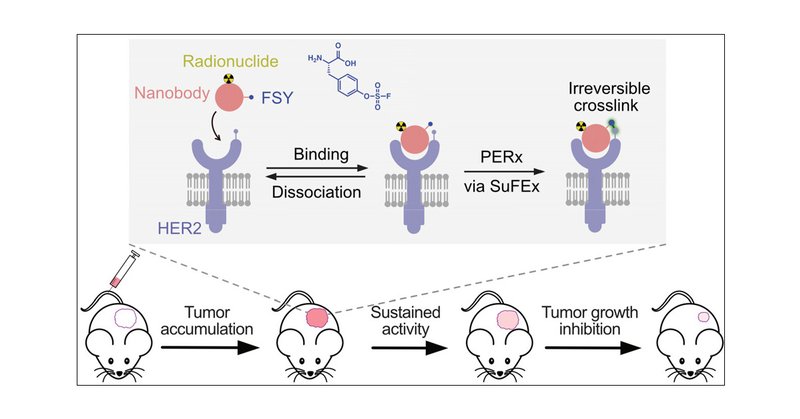
We have developed a covalent nanobody that binds its target irreversibly via PERx. Using this nanobody as delivery vehicle for radionuclides enhances PET imaging and antitumor effects! Thanks to fantastic colleagues at UCSF. @PaulKlauser @mikeevans_ucsf
pubs.acs.org
Molecularly targeted radionuclide therapies (TRTs) struggle with balancing efficacy and safety, as current strategies to increase tumor absorption often alter drug pharmacokinetics to prolong...
0
5
37
Amazing science and tremendous impact! Congrats to Kevan! Science World Honors Kevan Shokat for High-Impact Cancer Research
cancer.ucsf.edu
1
0
5

When two seasons collide ❄️🍁 One of my favorite photos I’ve ever taken
368
5K
64K
We feel so very honored! Lucky to apply click chemistry to glycobiology; both fields are pioneered by this year's Nobel Laureate!
1
0
8
Our latest #research on creating covalent linkages between proteins and carbohydrates, published with @SpringerNature in @NatureChemistry, allowing one to irreversibly lock proteins with bound carbohydrates for researching and engineering. https://t.co/ebVPOMxNa1
4
28
208
Our latest #research with @YinShenLab on creating covalent linkages between proteins and RNAs, published with @SpringerNature in [@NatureChemistry], allowing one to irreversibly lock proteins with bound RNA in vivo for researching and engineering. https://t.co/YYy3N5LgWV
2
4
32
Congrats to Barry for the awoken "sleeping beauty"! Congrats to @CarolynBertozzi -- seeing her group started from UCB when I was a graduate and being amazed ever since! Thanks all for the great chemistries for our chemical biologists.
BREAKING NEWS: The Royal Swedish Academy of Sciences has decided to award the 2022 #NobelPrize in Chemistry to Carolyn R. Bertozzi, Morten Meldal and K. Barry Sharpless “for the development of click chemistry and bioorthogonal chemistry.”
2
1
9
Amazing day 1 at #QBIChemBio22 with ~500 chemical biologists from @UCSF @UCB_Chemistry @Stanford_ChEMH
0
0
8
Two drugs are better than one—blocking drug action in the periphery while maintaining CNS pharmacology (mTOR, Lrrk2 and Her2). #Glioblastoma @bignerdzzy and https://t.co/TfDaZ3irEB
@UCSFCancer @HHMINEWS @UCB_Chemistry @MichaelJFoxOrg
https://t.co/6BSAn3Jyh1
11
97
422
#Tumor cells can be tricky and good at evading the #ImmuneSystem, but an exciting new therapy can help target those cells for destruction. “We suspect that this could lead to deeper and longer responses for cancer patients,” UCSF’s Charles Craik says.
0
10
24