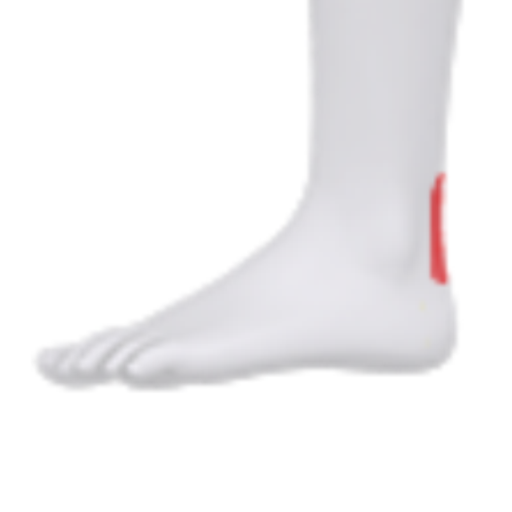
Achilles Tendons
@Seth0Neill
Followers
30K
Following
43K
Media
3K
Statuses
41K
Seth is an Associate Professor at the University of Leicester. PhD on Achilles Tendinopathy (tendon disorders) and still studying/learning.
University of Leicester
Joined May 2012
How to test calf strength (plantarflexors) and it's relevance to Achilles tendons and sport. A thread🧵
25
186
681
This might account for why many interventions including "neuromuscular" exercise programs have disappointing effects on pain outcomes.

1
14
74

Chat we are so back 🔥 @jumpman23 stole the show at ComplexCon!! Jordan Family showed out, AJXI City pack dropped early and Jumpman capped off the weekend with a Sneaker of the Year win. Jordan brand couldn’t miss at ComplexCon 2025
0
13
103
Day 5 of the #AdventCalendarOfUltrasoundPics2025 DVT in the proximal region of the MG after an injury.
0
3
21

📣 NEW Infographic - Evolving the control-chaos continuum Shifting "attention" to progress on-pitch rehabilitation in elite soccer ⚽️ Article ➡️ https://t.co/a8vdQX9yZ5
0
13
95

This meta-analysis finds that, as resistance training volume (weekly sets) increases, both muscle hypertrophy and strength gains tend to increase, with stronger diminishing returns for strength gains, and as frequency (sessions per week) increases, there is a negligible effect
1
32
127

🚀 You asked. We delivered. Check out Dashboard 2.0! + New signup flow + Keyboard shortcuts + New dashboard with quick links + Curated voices for enterprise agents + Improvements to pronunciation QA + Use case demo in the dashboard And we won’t stop shipping! Wish the Rime
2
4
15

Back on this platform after a good gap. Recently dipped back in and still much more good content than bad, IMO. Thanks to some great clinicians and researchers who share lots of useful material. Time to share and learn again #tendons #tendongeek
1
1
9

NIHR INSIGHT Programme – East Midlands Fully funded Master’s-level research training for recent graduates! Find out more: 📅 Session 1: Wed 10 Dec, 3:15–4:15 PM 🔗 Register: https://t.co/BaGKKwSjao 📅 Session 2: Wed 28 Jan, 12:30–1:30 PM 🔗 Register: https://t.co/xTMMeGHJjG
#NIHR
0
2
1
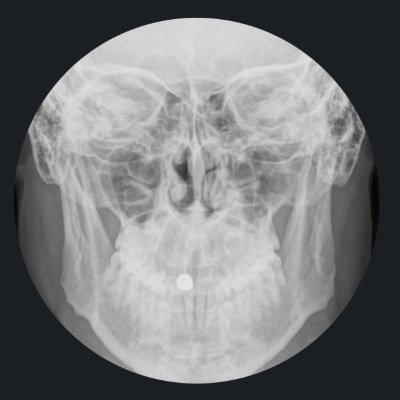
@DerekGriffin86 You also see infra-patella bursitis with OGS - its almost analogous to the adult enthesopathy, where you will see peri-entheseal BMO, soft tissue changes eg bursopathy, tendon changes etc (synovial-entheseal complex) Ultimately - seeing tendon changes on MRI / US in apophysitis
1
1
4

Great research from Tjerk Visser & colleagues has given us normative values for calf testing that go beyond reps alone! Assessing peak height, total work & total displacement can provide valuable insight into calf function. Visser et al. (2025) 🔗 https://t.co/uVY5VfdpDW
0
12
66

Not too long ago, the idea that AAS could stimulate muscle growth independently of strength training was denied fiercely by many adherents. Now, it is very common knowledge.
0
8
35
Osgood-Schatters isn't just an apophyseal problem; there are also insertional tendon changes on ultrasound. https://t.co/7uWjygvXnQ
onlinelibrary.wiley.com
Osgood Schlatter's disease (OSD) is characterized by pain at the tibial tuberosity provoked during knee-loading activities, and is common in adolescent athletes. The aim of this study was to charac...
2
14
63
@DrJN_SportsMed @NoContextHumans Jesuschrist... Just seen this one... 🙄🤦🏻♂️
0
1
5

Yesterday, @ccouppe defended his doctorate of medical science (DMSc) investigating the Effects of Loading on Human Tendon in Health & Disease. Big thanks to the opponents @TaijaFinni & @LarsLAndersen, chair @PerHolmich, & Jørn Wulff Helge for leading the ceremony 🥳 Congrats!
1
2
15

Excellent work Sam. Hopefully see you presenting this at SportKongress 😁
1
1
2
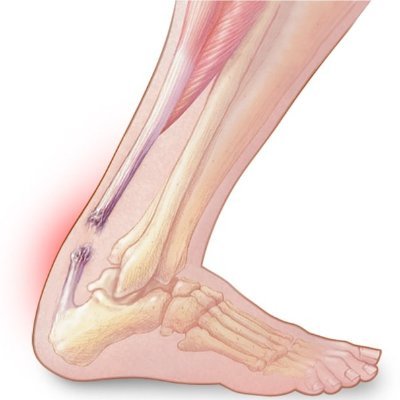
AND MORE … - What ‘normal’ isometric calf strength is so you can compare your patients to age matched healthy individuals - What is the experience of patients going through ATR rehab (Qual) - What do world tendon experts think is an optimal ATR rehab programme (Delphi)
0
2
6
We have more studies on the way. Follow and we’ll let you know - How these results compare to individuals with ATR measured longitudinally for 12 months - What the activity levels and sleep outcomes are post ATR using accelerometers
1
1
2
So why was the strength, structure and PROMs not returning to healthy levels by 1 year? Many things to consider…but rehab could be a large part For clinicians insights on ATR rehab, read our publication interviewing NHS clinicians about ATR rehab https://t.co/veKXwV4F6P
2
3
5
A 33% MVIC strength deficit remained at 1 year. The ATR limb only returned to 0.7 x BW! (This is approx 50% of healthy strength for that age) This could provide an insight into why the ATRS is stuck in the 70s for UK studies The non-ruptured side was also below healthy strength
1
2
2
The non-ruptured side also showed more disorganised fibres than typically reported in healthy individuals. This may offer a clue as to why people are far more likely to rupture the contralateral side after an initial rupture.
1
2
1