
Matteo Fabbri
@tetaneuron
Followers
2K
Following
13K
Media
43
Statuses
2K
Assistant Professor at the Center for Functional Anatomy & Evolution, School of Medicine, Johns Hopkins University
Baltimore, MD
Joined November 2017

How animals detect the Earth’s magnetic field remains a mystery in sensory biology. In a new Science study, researchers used whole brain activity mapping, tissue clearing, and light sheet microscopy to identify neuronal populations activated by magnetic stimuli in the pigeon.
2
25
79
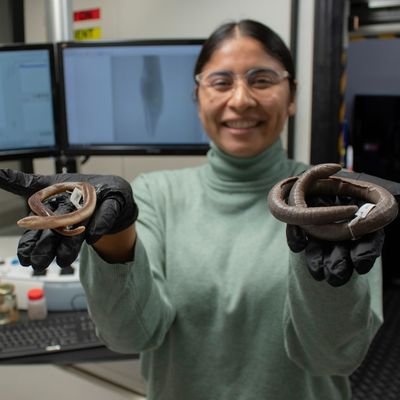
Thrilled to be part of this amazing work!🎉🎉 Olfaction written in bones 🦴👃🏽🧠🧬 Find more exciting details below 👇🏽

Olfaction written in bones 👃🧠🦴🧬 Thrilled to see our latest study showing that the olfactory bulb endocast is a reliable proxy for mammalian olfaction, now published in @PNASNews
https://t.co/fjpbuNDmvH Thread 👇
0
1
3

A novel strategy to determine rough age in dinosaurs — counting rings in throat bones — shows that Nanotyrannus was a distinct tyrannosaur group. https://t.co/mpyf8TeFh1

sciencenews.org
Nanotyrannus wasn’t a juvenile T. rex but a petite adult of a separate species, a new study of fossil hyoid bones finds, bolstering a recent report.
0
5
12
New paper out: Nanotyrannus is a different species, not a juvenile T. rex. Growth record of the throat bone in the original skull of Nanotyrannus shows this is a grown-up individual, rather than a growing teenager, that lived alongside the tyrant lizard.

science.org
Whether Nanotyrannus lancensis represents a distinct taxon or an immature Tyrannosaurus rex is a decades-long controversy. The N. lancesis holotype is an isolated skull and ceratobranchials, but limb...
1
14
60

A recent benchmarking study highlighted in @NatureComms championed Xenium for consistently delivering higher transcript counts per gene compared to other platforms, without sacrificing specificity—a result of its robust signal amplification and sensitive probe design.
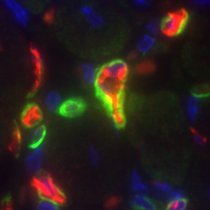
Comparative analysis of commercial Imaging-based #SpatialTranscriptomics methods Xenium CosMx 1k MERSCOPE Tissue Microarray 17 tumors + 16 normal tissues Transcript count Corr. with reference bulk TCGA GTEx RNAseq or scRNAseq Segmentation (Precision Recall F1 score) Accuracy:
1
6
33

The final PDF of our XROMM study on bird shoulders w/@JohnRHutchinson & @fieldpalaeo is now available at @J_Exp_Biol! This study would not have been possible without the support of an @EAVPalaeo research grant (OED), @ERC_Research Horizon 2020 grant (JRH) & @UKRI_News FLF (DJF)
1
10
21

Happy to be a part of this big project led by Mario Bronzati & Matteo Fabbri—out today #OA in @CurrentBiology
https://t.co/uK0XDsPa4I—on the brain endocast of a close pterosaur cousin & what it means for pterosaur brain evolution...maybe different from bird brain evolution. 1/2
1
37
158
Do you need a big brain to fly? Pterosaurs say no. New paper today on brain evolution of lagerpetids and pterosaurs: the first flying vertebrates, pterosaurs, have more similar brains to early Mesozoic gliding birds as Archaeopteryx in volume and shape https://t.co/1ZsFn2K7rl

cell.com
Bronzati et al. show that pterosaurs, the first flying reptiles, evolved brains resembling bird precursors but not modern birds. They also demonstrate that, unlike birds, which built on inherited...
0
22
44
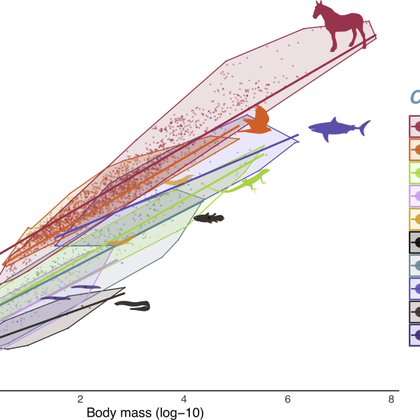
Parental investment and body temperature explain encephalization in vertebrates | PNAS
pnas.org
The systematic variation in relative brain size among vertebrate classes remains poorly understood. Here, based on the expensive brain hypothesis, ...
3
11
39
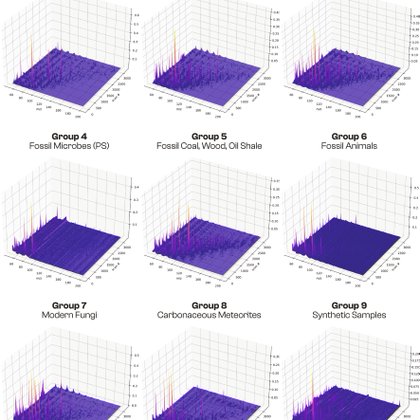
Organic geochemical evidence for life in Archean rocks identified by pyrolysis–GC–MS and supervised machine learning | PNAS
pnas.org
Throughout Earth’s history, organic molecules from both abiogenic and biogenic sources have been buried in sedimentary rocks. Most of these organic...
0
5
21

Thanks to everyone who attended my @SVP_vertpaleo talk in Birmingham (UK) last week, despite the early start and quintessentially English weather! #SVP2025
0
1
31

New MADEx paper led by @gravelmonkey_76 in @sedimentology: we refine the geology & paleoenvironment of Mongolia’s Bayanshiree Fm, home to iconic taxa like Segnosaurus & Garudimimus. A 95.5–89.6 Ma age ties it to the peak of the Cretaceous Thermal Maximum🌡 https://t.co/5JrIDqx0wz
3
40
114

An extremely specialized optic nerve morphology in the chameleon’s oddball eyes. "Chameleons have some of the most unique eyes in the animal kingdom. The reptiles can cast their peepers in two different directions at once, a rare trait in the animal kingdom that gives them a
0
9
61

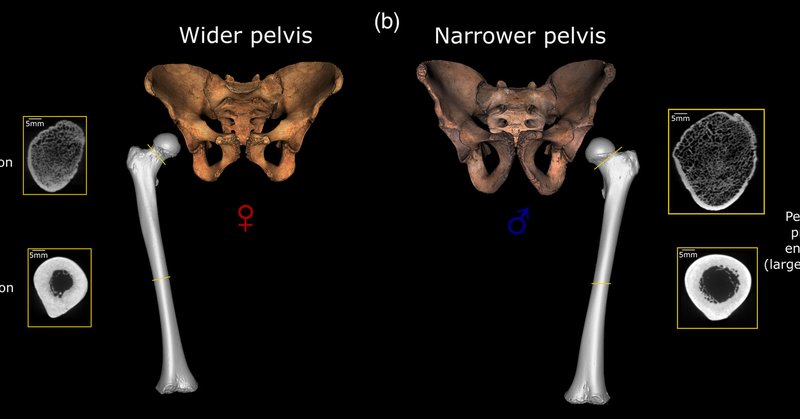
🦴💫 Our new paper reveals how the femur records adolescence: during puberty, girls show a clear medullary contraction in bone microstructure, while boys expand the periosteum. A skeletal window into hormonal change! @LaboratorioEH @antrobiolubu1
anatomypubs.onlinelibrary.wiley.com
Medullary contraction during adolescence follows distinct region-specific trajectories along the femur. At the midshaft, contraction appears earlier and more clearly—especially in smaller females—t...
0
3
13

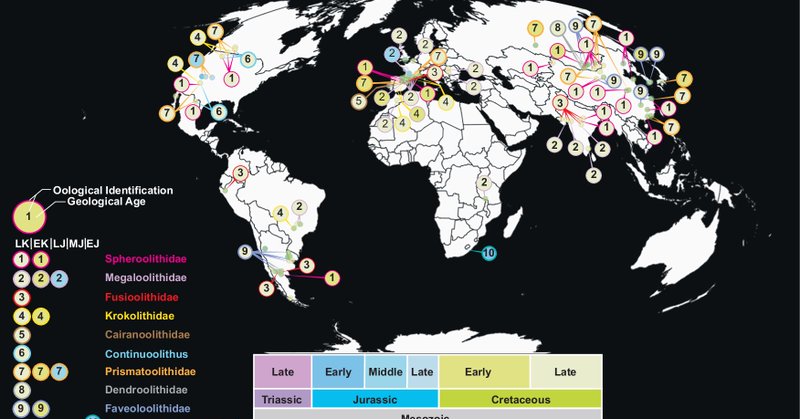
NEW PAPER ALERT: U-Pb calcite age dating of fossil eggshells as an accurate deep time geochronometer https://t.co/YA0Aqextfo
nature.com
Communications Earth & Environment - Biogenic carbonate of eggshells can be used as a new geochronometer through direct calcite U-Pb dating, producing high accurate ages, as revealed by two...
0
10
41

Bittersweet to see our obituary of Mark Norell published in @CurrentBiology this week. Godspeed Mark, from Pete, Jim, and me--and the whole AMNH community.
1
10
50

🚀 1 BILLION molecules clustered on a single workstation (55 GB RAM, CPU only) in just 2.5 hours. Presenting the most time & memory-efficient method (so far!) for clustering ultra-large molecular libraries. 📄 Preprint: https://t.co/81syEy1T30 💻 Code: https://t.co/tWnj0bDmu6
3
46
243
Novos materiais crânio-dentais de Falcarius utahensis (Theropoda: Therizinosauria) revelam padrões de variação intraespecífica e evolução craniana em celurossauros primitivos https://t.co/ToTwDxAkxo
0
22
77
New paper out today in @ScienceMagazine dating the Naashoibito Member (New Mexico) to 66.4–66.0 Ma, coeval with the Hell Creek, with important remarks on pre-extinction dinosaur diversity in North America. Artwork by @WryCritic🦖🦕☄ 🔗 https://t.co/Ux7nNkrXi5
8
130
784