

Ivan Liachko 🇺🇦 @ivanliachko.bsky.social
@ivanliachko
Followers
2K
Following
6K
Media
591
Statuses
3K
scientist, father, founder/CEO of @PhaseGenomics; tweets are my own and probably not the position of the company.
Seattle
Joined October 2013
Time for our End of Year sale! If you need an excuse to talk to me about science, this is one way to get there (but also, I'll do it for free 🧬 ❤️ )

Save 25% on Hi-C kits through Dec 31. From complex plant genomes to metagenome binning, Phase Genomics brings clarity to your toughest research questions. Email info@phasegenomics.com with "25 in '25 Kit Promo" in the subject line to claim your discount.
0
2
3
Discover how the research team used our Proximo™ Hi-C plant kit in the full paper:
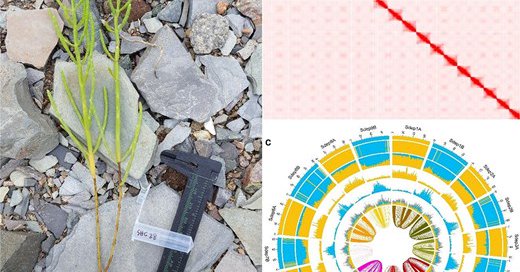
academic.oup.com
Abstract. Salicornia depressa (American pickleweed) is the most widespread member of its salt-loving genus in North America. Pickleweeds typically colonize
0
1
1
🌿 Scientists have produced a high-quality, chromosome-scale genome for American pickleweed, a salt-loving, tetraploid marsh plant. With ~80k genes and detailed methylation data, this resource paves the way for understanding salt-tolerance and supporting salt-marsh conservation.
1
2
3
New at #AMPath2025: He Fang, PhD, will showcase Genomic Proximity Mapping® (GPM) and CytoTerra® in #sarcoma. Stop by Level 2, 258ABC on 11/13 from 2:30 – 3:30 pm ET to discover how GPM uncovers hidden structural variants and mosaicism in challenging archival samples.
0
2
5
🌿 New in @NaturePlants! Researchers used Phase Genomics’ Hi-C to build a haplotype-resolved chromosome-scale #genome of a hybrid eelgrass (Zostera marina × Z. pacifica), revealing genomic clues to low-light tolerance that could boost coastal restoration.
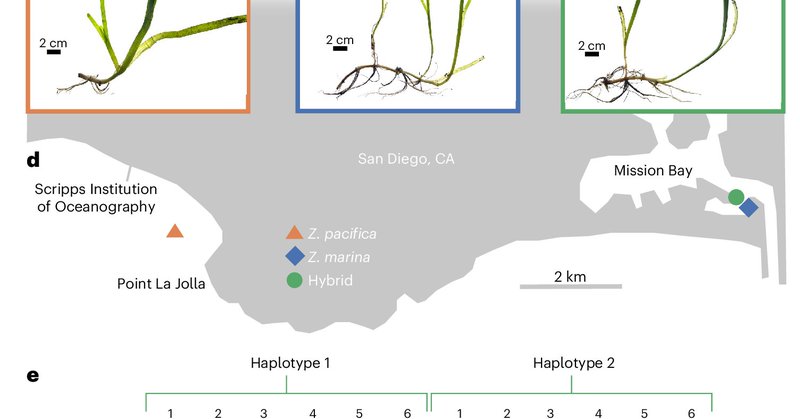
nature.com
Nature Plants - Seagrass genomes of the deep-water Zostera pacifica and shallow-water Z. marina from the Eastern Pacific Ocean provide evidence for low-light adaptation exemplified in the wild...
0
2
6
Big spotlight on Genomic Proximity Mapping® (GPM®) from @JMDiagn: See how @UW researchers use our GPM platform, CytoTerra®, to detect cryptic structural variants and mosaicism missed by standard tests. Full press release from @Elsevier: https://t.co/rABTqZIOjZ
0
1
3
Hi-C at scale is reshaping plant biology. With Phase Genomics’ kits, @aeharkess & @HudsonAlpha have published dozens of genomes, uncovered how rising CO₂ alters chromatin structure, and explored how climate change ripples through living systems. 🔗 https://t.co/tP9Q9a1zJi
0
1
3
Phase Genomics’ Hi-C tech helped undergrads assemble the “best duckweed genome yet,” giving them hands-on research experience, boosting PhD prospects, and advancing plant biology. Full story from @aeharkess at @HudsonAlpha on YouTube: https://t.co/dtKNM6ffH5
0
1
3
Happy #WorldPhageDay. Tiny, abundant, and anything but boring, phages shape microbial communities, move genes around, and can tip the balance in all kinds of ecosystems. The catch: to know a #phage only you must know its host. ProxiMeta Hi-C technology gives us that link.
0
1
5
🌳 New chromosome-level Ulmus minor (field elm) genome unlocks clues to Dutch elm disease resistance. Using long reads and Hi-C, the team built this 2.1Gb genome and mapped clusters of resistance genes conserved across elm species to aid restoration. https://t.co/xSxKrSAVeN
0
1
3
ProxiMeta™ Hi-C fills the missing link in shotgun metagenomics, connecting viruses to hosts & revealing hidden microbial relationships. Hear more from Phil Hugenholtz & Phase Genomics CEO @IvanLiachko on how Hi-C unlocks the microbiome. → https://t.co/m4lKSzQrv4
0
3
4
Skip the computational guesswork. Hi-C / proximity ligation reveal complete chromosomal architecture based on actual intracellular contacts. From plant genomes to metagenomes, Phase Genomics delivers chromosome-scale assemblies traditional methods can’t: https://t.co/xJLRUTYAqy
0
1
1
In this great new paper, the authors use metagenomic Hi-C to show that #phage with broad host range are fairly common, contrary to the prevailing view on their biology. Cutting edge methods like Hi-C are shedding light on our scientific blind spots. https://t.co/zECkkws5qE
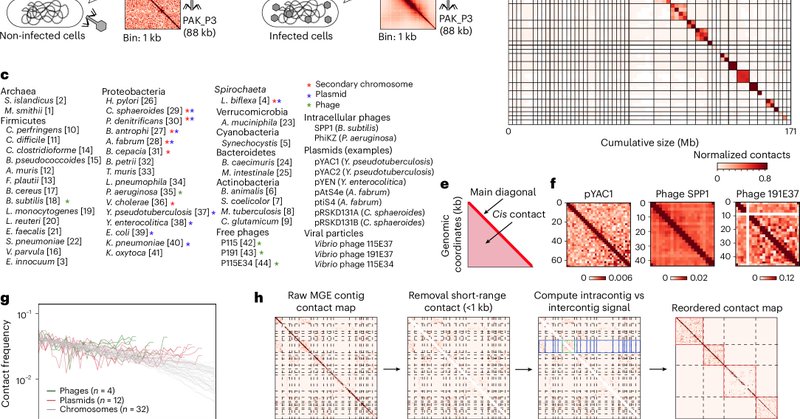
nature.com
Nature Microbiology - Proximity-ligation-based sequencing from 111 samples and 5 environments reveals that a substantial proportion of phages infect multiple species.
0
1
2
ProxiMeta™ turns your benchtop box into a Hi-C metagenomics powerhouse. Order before Sept. 30 to lock in 20% savings on the 8-sample ProxiMeta Classic Hi-C Kit, or 50% on the 2-sample ProxiMeta Starter Hi-C Kit. 🔗 https://t.co/0mQ5iLe4vU
0
1
1
Don’t let your lab’s grant dollars go to waste. Order before September 30 to save 20% on ProxiMeta™ Classic Hi-C Kit, or 50% on the ProxiMeta Starter Hi-C Kit. ✔️ Hands-off workflow ✔️ Flexible timelines ✔️ PGShield™ to keep samples shelf-stable 🔗 https://t.co/tZT8bPWDR9
0
2
5
Join us at the Microbiome Innovation One Health Conference in Oxford on Sept 15! @IvanLiachko will present how ProxiMeta™ maps microbes, viruses, plasmids & resistance genes, bringing clarity to complexity across human, animal and environmental health.
0
2
6
Make your research dollars go further before they expire on Sept. 30. For a limited time, bundle and save 50% on ProxiMeta™ Starter Bundles or 20% off ProxiMeta Classic Bundles. Contact one of our scientists to get started: https://t.co/iv5Wh04DFg
0
3
5
🧬 Important Slug News! Researchers assembled a chromosome-scale #genome for Deroceras laeve using Proximo Hi-C and @PacBio - making it a useful model for study of functional #genomics, #evolution, and slimyness... Congrats to @slugatlas & team! 🔗 https://t.co/CznFXD72au
#HiC
0
1
6
🧬🦠 Hi-C reveals the hidden dynamics of AMR in early childhood. In rural households, ARGs persist, but their hosts & plasmids shift rapidly. Hi-C links mobile elements to hosts & shows how AMR spreads across species. 🎉🎉 to @sagaciro @paulcarald 📄 https://t.co/GZTLZkwtFb
0
4
6
Stanford researchers just achieved another 1st: Using ProxiMeta™, helped isolate p-crAssphage, a common gut virus and shape shifter that can switch between producing viruses and quietly living in bacteria like a plasmid. Read more in @cellhostmicrobe: https://t.co/sPkXyTw4gZ
0
2
6