
Bedoor AlShebli
@alshebli
Followers
468
Following
107
Media
4
Statuses
260
Assistant Professor of Computational Social Science @NYUAbuDhabi
Abu Dhabi
Joined June 2009
Finally sharing our work on the impact of retractions on scientific careers. A project that’s both long overdue and deeply personal. So grateful for my coauthors @shahanmemon and Kinga Makovi who joined me on this meaningful journey. #SciSci #Retractions #AcademicIntegrity

Through the Eye of Agamotto (and @RetractionWatch data), our new research in @NatureHumBehav navigates the multiverse of academic chaos to reveal the impact of scientific #retractions on publishing careers. Here's a true story.. They say Dr. Stephen Strange was the master of
0
4
6

More than 40 percent of #postdocs leave academia. Those who landed a coveted faculty position were more likely to have had a highly cited paper, changed their research topic between their #PhD and postdoc, or moved abroad after receiving their doctorate.

pnas.org
Postdoctoral training is a career stage often described as a demanding and anxiety-laden time when many promising PhDs see their academic dreams sl...
15
529
2K

🚨 NYUAD hiring open-rank Computational Social Science faculty position. Anyone still on the market and interested, please apply. We start reviewing applications next week. Application: https://t.co/yI4ikB771m
#econtwitter @Econ_jobs_ @NYUAD_SocialSci @nyuniversity
1
15
21
Check out our latest PNAS paper in @shahanmemon’s thread :) How important are your postdoc years in the likelihood of you staying and succeeding in academia?
What is the significance of #postdoc training? What factors drive the success (as measured by citations) of early career scientists? Should they shift their #research focus or move to a more prestigious institution post-PhD to excel in #academia? In our newly published brief
0
1
4
Proud of our latest paper. Check it out in @shahanmemon thread!
📢 Excited to share our latest publication in @Nature @SciReports "China and the U.S. produce more impactful #AI research when collaborating together." 🇺🇸🤖🇨🇳 in collaboration with @alshebli, @profjamesevans, & @talalrahwan 🧵1/12 @UW @uwnews @NYUAbuDhabi @DSI_UChicago
0
3
9

We evaluated #ChatGPT across 32 university courses; its comparable, if not superior, to students in 1/3 of courses. Surveyed students across 5 countries plan to use it to solve homework. Educators can no longer ignore AI. @Scir @NYUAbuDhabi @YasirZaki82
https://t.co/so1XUvmMdn
0
6
9
We are now accepting applications to the first Winter Institute in Computational Social Science in the Arab region! Those selected will receive financial support to cover their travel and accommodation! Deadline is August 31st 2023. Apply today! https://t.co/aGynlNOE07
1
10
24

Our latest work compares ChatGPT against students in 32 university-level courses at NYUAD. ChatGPT excels, and AI-text classifiers struggle to detect it. Students find it valuable, while educators debate its status as plagiarism. Read more: https://t.co/MkF6SpVsK1
#ChatGPT
1
4
14
My latest with @McLiu98 and @talalrahwan out in @PNAS today! Non-white scientists appear on fewer editorial boards, spend more time under review, and receive fewer citations. #inequality #scienceofscience #diversity #DEI #NYUAD
pnas.org
Disparities continue to pose major challenges in various aspects of science. One such aspect is editorial board composition, which has been shown t...
0
7
12
Here is my current paper, https://t.co/lOAVfuR1JW, addressing how unconditional cooperators and conformist transmission help to establish cooperation.

nature.com
Scientific Reports - Cooperation without punishment
0
3
6
Check out our latest paper published in @NatureHumBehav. We show that gender inequality and self publication is common among editors. @talalrahwan @pholme @McLiu98 #genderinequality #scienceofscience #dei #inclusion

nature.com
Nature Human Behaviour - Using publication and editorial team composition records from more than 1,000 journals, Liu and coauthors uncover pervasive gender inequalities among academic editors. Only...
0
10
23
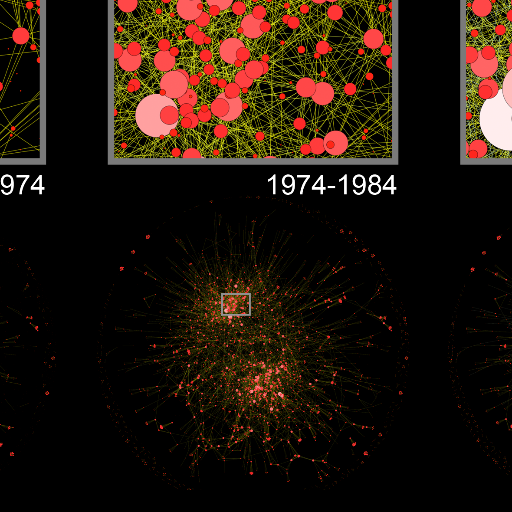
Gender inequality and self-publication are common among academic editors
nature.com
Nature Human Behaviour - Using publication and editorial team composition records from more than 1,000 journals, Liu and coauthors uncover pervasive gender inequalities among academic editors. Only...
1
8
16

Explore Lite-Web, a mobile web browser optimized for low-bandwidth and budget phones, designed to address digital inequality between rich and poor countries. In PNAS: https://t.co/clzbLcMn66
0
5
10
An article @Nature covering our findings on gender inequality and self-publication rates among scientific editors @NYUAbuDhabi @NatureHumBehav #genderinequality #ScienceOfScience with coauthors @alshebli @pholme @McLiu98
1
9
18

Is it poor practice to publish most of your papers in the journal that you edit? New study identifies several editors who publish majority of their work in their own titles

timeshighereducation.com
Some editors publish most of their papers in their own titles, study finds
0
7
15

A quarter of academic editors self-publish at least 10% of their own papers in the journal they edit. @mollymking unpacks the implications of these findings for research in a great N&V
3
33
61

Around 12% of scientific editors at a major publisher publish at least one-fifth of their own academic articles in the journal they edit, find @talalrahwan @alshebli @McLiu98. The study finds that only 14% of the editors are women. @NYUAbuDhabi
https://t.co/Cwx9dUlGXd
1
9
20
## POSTDOC OPPORTUNITY ## Postdoc opening at the Data Science & AI Lab at NYU Abu Dhabi. Looking for postdocs interested in Data Science, Computational Social Science, and AI. The position offers a competitive salary and generous benefits. For details: https://t.co/kLbtfN4lwH
0
13
13
A study in PNAS uses satellite imagery to quantify war destruction. Sadly, most data comes from my hometown Aleppo. I wonder if it captures the neighborhood were our family home was bombed and destroyed, along with all childhood photos of me & @iyadrahwan
https://t.co/MNhn5B5XYN

pnas.org
Existing data on building destruction in conflict zones rely on eyewitness reports or manual detection, which makes it generally scarce, incomplete...
0
6
26

"I’d like to thank 🇰🇼, which today is becoming one of the largest donors, with a total of USD 60M. WHO’s Solidarity Response Fund has now raised over USD 127M from over 219K individuals & orgs. I’d like to thank @TencentGlobal for its contribution of USD 10M"-@DrTedros
179
2K
2K