
Aaron Lefohn
@aaronlefohn
Followers
4K
Following
542
Media
42
Statuses
952
Vice President of Graphics Research at NVIDIA. Opinions are my own.
Joined June 2011

Methods like NeRF and Gaussian Splats model the world as radioactive fog, rendered using alpha blending. This produces great results.. but are volumes the only way to get there?🤔 Our new SIGGRAPH'25 paper directly reconstructs surfaces without heuristics or regularizers.
4
91
495
If you try to optimize geometry using a differentiable renderer, there is an elephant in the room: geometry causes discontinuous visibility changes, which mess up the derivatives. To use indirect cues like shadows in geometric reconstructions, this issue must be fixed. (1/7)
3
56
321
The free web version of "Physically Based Rendering: From Theory To Practice" is now based on the 4th edition of the book. Enjoy! (Link: https://t.co/N7CroKjKLC)
5
267
990

so excited by the explosion of gaussian splatting; cant wait for the community to start playing with painterly styles; on dreams, we used splats with tiny alpha-textured meshes called 'flecks' (not flat!) that selectively can replace the little 'blob' with painterly texture 1/n
18
84
602

Our new conditional resampled importance sampling (CRIS) opens up possibilities for designing resampling algorithms where marginal probabilities are unknown. As an example, we show that ReSTIR PT can be de-correlated like applying final gather to photon mapping.

Thrilled to announce our work "Conditional Resampled Importance Sampling and ReSTIR" (SIGGRAPH Asia 2023). We extend RIS and ReSTIR into conditional probability spaces, enabling novel forms of sample reuse. 1/7
1
8
62
This great foundational advancement in ReSTIR now enables reuse of sub-paths. Our theory research directly targets the needs of real-time rendering.
Thrilled to announce our work "Conditional Resampled Importance Sampling and ReSTIR" (SIGGRAPH Asia 2023). We extend RIS and ReSTIR into conditional probability spaces, enabling novel forms of sample reuse. 1/7
0
11
65
Differentiable Slang easily integrates with existing codebases—from #Python, PyTorch, and #CUDA to HLSL. Here we introduce code examples using differentiable Slang to demonstrate the use across different rendering apps and ease of integration. 🧵 2/2 https://t.co/e7RMjdXWbX
2
2
28
New #NVIDIAResearch paper: SLANG.D: Fast, Modular and Differentiable Shader Programming: shows how a single language serves as a unified platform for real-time, inverse, and differentiable rendering. Collaboration with @MIT, @UCSanDiego, & @UW. 🧵 1/2 https://t.co/5DHzQldMMV
1
40
171

The Slang project is seeking experienced GPU/graphics/AI compiler programmers who want to be part of the development of an ecosystem for AI-powered real-time graphics. My DMs are open.

New #NVIDIAResearch paper: SLANG.D: Fast, Modular and Differentiable Shader Programming: shows how a single language serves as a unified platform for real-time, inverse, and differentiable rendering. Collaboration with @MIT, @UCSanDiego, & @UW. 🧵 1/2 https://t.co/5DHzQldMMV
1
16
44

I have been working with machine learning in graphics for a few years now and SLANG.D is the tool I wished I had from the start. Being able to easily sprinkle some gradient descent on your HLSL code & learn from data is invaluable. This is a major milestone for rendering. 🧵1/2
New #NVIDIAResearch paper: SLANG.D: Fast, Modular and Differentiable Shader Programming: shows how a single language serves as a unified platform for real-time, inverse, and differentiable rendering. Collaboration with @MIT, @UCSanDiego, & @UW. 🧵 1/2 https://t.co/5DHzQldMMV
3
27
142

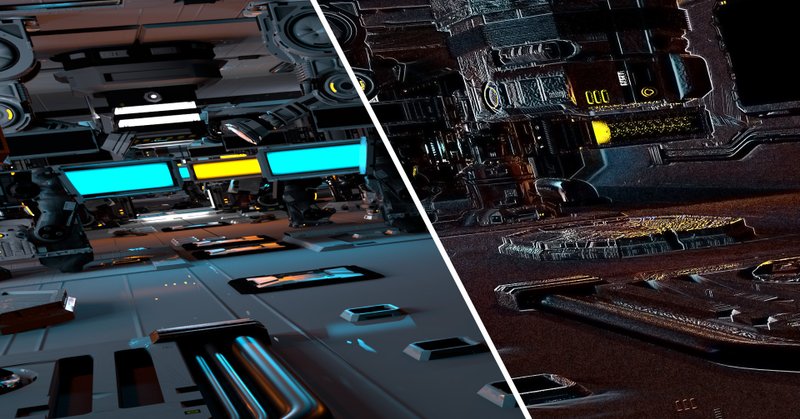
Some awesome work of my teammates on differentiable shading language, compatible with HLSL, and interoperable with CUDA/Python/PyTorch/C++. https://t.co/CSVTnoSmPY This makes ML + graphics *significantly* easier. I'm excited to see what researchers and engineers do with it.:)
developer.nvidia.com
NVIDIA just released a SIGGRAPH Asia 2023 research paper, SLANG.D: Fast, Modular and Differentiable Shader Programming. The paper shows how a single language can serve as a unified platform for real…
3
50
247
Bringing autodiff to shaders is a challenging task. It takes years of effort to design the language that integrates differentiation as a first-class citizen, allowing autodiff to work seamlessly with custom types, arbitrary control flow, generics and dynamic dispatch.
New #NVIDIAResearch paper: SLANG.D: Fast, Modular and Differentiable Shader Programming: shows how a single language serves as a unified platform for real-time, inverse, and differentiable rendering. Collaboration with @MIT, @UCSanDiego, & @UW. 🧵 1/2 https://t.co/5DHzQldMMV
0
7
26
Slang's Visual Studio Code extension fully supports the autodiff features.
0
4
10
Slang is now fully differentiable. Generate PyTorch plugins from shader code. Create rendering algorithms using appearance-based optimization. Build differentiable renderers using your current shader codebase. DiffSlang connects real-time rendering and learning.
Slang is an open-source, cross-platform shading language that targets D3D, Vulkan, GLSL, CUDA and C++. Today, it is fully differentiable, which means you can autodiff your existing shader code!
0
4
42
0
16
57
Fantastic collaboration with @FidlerSanja's team. Working together to improve the quality of geometry extracted with inverse rendering.

Excited to share our #SIGGRAPH2023 project for better mesh extraction in learning & reconstruction pipelines. Project page: https://t.co/lADmnKmETj Joint work w/ @yoslber Jon Hasselgren @kangxue_yin @zianwang97 @ChenWenzheng @ZGojcic @FidlerSanja @nmwsharp @JunGao33210520 (1/n)
0
0
6
🎾 Haotian's AI tennis players are back... in 3D. 🎾 AI characters learn to play full 3D simulated tennis points by watching professional play depicted in large numbers of broadcast tennis videos. https://t.co/rtrkfDp5Zh 1/
2
9
52

Honored to see that our work on Precomputed Radiance Transfer (2002) made it onto the SIGGRAPH Seminal Graphics Papers list: https://t.co/GVDbeQav57. Joint work with Peter-Pike Sloan and John Snyder.
dl.acm.org
2
13
76

The FlexiCubes technique by Nvidia (Flexible Isosurface Extraction for Gradient-based Mesh Optimization) seems very promising. https://t.co/cpySU2bD9W
2
39
246
Buildings graphics systems for RL is an opportunity to completely rethink graphics system design.

Why does RL need large-scale computing resources? Spoiler: it can get by with a lot less! Stanford's Madrona project is an ECS-based game engine that runs 10,000s of environments in parallel on a single GPU, reducing training from hours to minutes. https://t.co/TrKf1jfy8z 1/
1
1
4