
SerafiCambray
@SerafiCambray
Followers
306
Following
4K
Media
79
Statuses
2K
Científico, profesor y padre. Trabajo en UdL/IRBLLEIDA. Interesado en enfermedad cardiovascular, nefrologia y genética. Opinions are my own.
Joined May 2019
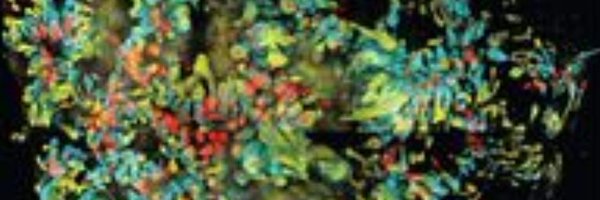
How do the metabolic waste products get cleared from our brain? And how does this process intersect with the brain's immune system? An exceptional review by @jonykipnis and colleagues @NeuroCellPress
https://t.co/zS5VSOlcZa
9
174
789

🆕 cat_ 🎄✨ Aquest Nadal, gaudeix d’un dolç amb cor 🎗️ La pastisseria El Rusc presenta el seu panettone solidari: 5 € de cada unitat van destinats a IRBLleida per impulsar la recerca biomèdica. 💛 #PanettoneSolidari #IRBLleida #Nadal2025
1
2
2

Study - AI is contaminating medical study with false "hallucinated" info. "across all six reviews, nearly one-fifth of the citations, 35 out of 176, were entirely fabricated. Of the 141 citations that corresponded to real publications, almost half contained at least one error"
88
1K
3K

New content online: Oestrogen changes at menopause: insights into obesity-associated breast risk and outcomes https://t.co/K7JMRCX1Kg
1
41
143

We analyzed changes in physiology relative to menopause using two large scale studies that include millions of lab tests. Rather than align by age, we used statistical inference to align tests to final menstrual period. (1/2)
2
45
242
"The fall of a prolific science journal exposes the billion-dollar profits of scientific publishing." https://t.co/yC28iXtLJi
8
141
392

#Microplastics are increasingly detected in human tissues, with potential links to cognitive, cardiovascular, and inflammatory outcomes. 💡 Learn more in this JAMA Insights: https://t.co/1uLuLYMAmG
5
188
398
Today in Current Affairs, professor Ron Purser exposes how AI's destruction of the university is even worse than you think, and goes well beyond students cheating with ChatGPT: https://t.co/TAUD4R7gxK
228
2K
8K


Glycolytic diversity drives immune complexity in cancer https://t.co/zKQIaLFFQW
#immunology
0
38
108

Plaque, fat or flow? This comprehensive meta-analysis assesses multiple #YesCCT approaches, including #FFR-CT, plaque assessment, & coronary & epicardial adipose assessment to evaluate the association with cardiac events. https://t.co/QRHXvKJX9h
#JACCIMG @BURZOTTA_F @PruthviCR1
1
36
89

First-Line Therapy in High-Risk Hypertension – 2025 Update (ACC/AHA, ESC/ESH 2023–24, ADA 2024, KDIGO) https://t.co/1W3VHFDueT
#Hypertension #Cardiology #Nephrology #Diabetes #Guidelines2025 #fblifestyle #MedTwitter #CardioTwitter
1
97
333

En pacientes hospitalizados con enfermedad renal crónica, cada 1 mEq/L de incremento o reducción en el sodio sérico a partir de 138 mEq/L, se asoció a ↑9% y ↑11%, respectivamente, al riesgo de muerte NDT 2025 https://t.co/KdbRnG4XzI
1
22
40

Global study maps trends in cardiovascular disease due to hypertension from 1990 to 2021 — and projects patterns through 2060. The findings highlight growing inequalities across countries & underscore the need for global preventive efforts. https://t.co/jVHqR8MOYO
#GlobalHealth
1
7
17
A new, outstanding review of non-invasive imaging for coronary artery disease —"Most acute coronary syndromes occur in arterial segments with non-obstructive disease, which can be appreciated on CT coronary angiography but not on functional tests only detecting ischemia."
13
132
554

Cholesterol isn’t the whole story 🫀 Learn about the relevant particles & lipid parameters: 1️⃣ Low density lipoproteins (LDL) PMIDs: 28444290, 40326333 2️⃣ Triglyceride-rich lipoproteins (TRL) & remnant cholesterol (RC) PMIDs: 34472586, 39356419 3️⃣ Lp(a) PMID: 34647487
17
154
521

Do you really understand p-values? The p-value histogram can reveal a LOT about your data. Let's break it down using real examples.👇
1
16
64

Evolving strategies in cardiovascular disease prevention: 2025 American society for preventive cardiology highlights @AJPCardio @ASPCardio
@analyzeF @DrMichaelShapir @FaRodriguezMD @SethShayMartin @DrMarthaGulati @RonBlankstein @DLBHATTMD @NMHheartdoc
https://t.co/pxomOkrkIk
3
39
87

The model of gene expression taught in school is highly misleading! Transcription factors are proteins that bind to DNA and then help repress, or activate, the expression of genes. Cells have hundreds of different types of transcription factors, each tuned to regulate different
18
240
1K