
Dr Marco Camaiti
@Scincomancer
Followers
324
Following
697
Media
31
Statuses
171
Vertebrate morphologist. Science fiction would-be writer. Skink nerd. Currently based at NHM.
London, UK
Joined April 2019
What happens to a lizard's skeleton when it reduces or loses it legs? In our latest paper, we examine the evolution of girdle shapes in limb-reduced skinks, uncovering surprising and bizarre skeletal changes. Check it out here:
royalsocietypublishing.org
The evolution of limb reduction in squamates is a classic example of convergence, but the skeletal morphological patterns associated with it are underexplored. To provide insights on the biomechani...
0
5
13
New review paper on using AI to analyse Evolutionary Morphology is officially out! Was great to part of a large collaborative team writing this. https://t.co/2gRSHAxpey

academic.oup.com
Synopsis. Artificial intelligence (AI) is poised to revolutionize many aspects of science, including the study of evolutionary morphology. While classical
7
23
73

Our new paper on #AI for evolutionary morphology is out @ICB_journal! This massive team effort covers the history of AI for studying morphology, reviews new tools, provides many case studies & a prospectus for using AI to progress diverse topics in evolutionary morphology.

New review paper on using AI to analyse Evolutionary Morphology is officially out! Was great to part of a large collaborative team writing this. https://t.co/2gRSHAxpey
2
24
88

How do lizard skeletons adapt to the evolutionary reduction of limbs? https://t.co/Dx2hK05mkf
#ProcB #OpenAccess @Scincomancer @chapple_lab @DrTeethAl @EvoMorphoLab_KU
0
66
199
We got the whole gang together (actually a few gangs) for a 9 hour power session to finish off our new team-written review paper on #AI for evolutionary morphology. 50 pages and 6 case studies later, the preprint is out! https://t.co/OqOTpNDXpm. Website w/ links to tools up soon!
2
27
138
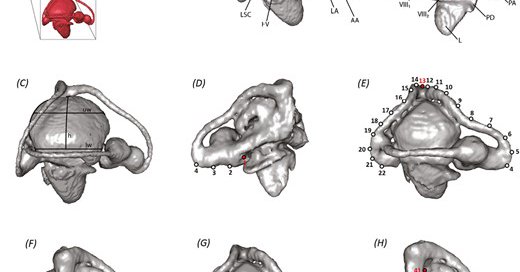
This months #EditorsChoice describes the ecomorphological correlates of the inner ear labyrinth of #Australian skinks! Find out more below 👇🦎 https://t.co/cSTC76dPPO
@LinneanSociety @OxfordJournals @Scincomancer
academic.oup.com
Abstract. The inner ear labyrinth is an organ able to perceive balance and spatial orientation, but the drivers of its morphological variation across and w
0
4
14

🚨🦎Have you been wondering what a skink is? Check out our new paper🦎 🚨 We’re certain that the term “kebabs to noodles continuum” will be widely used by scientists in no time 😂 https://t.co/irFYPJynJy
@chapple_lab @skinks_IUCN @AlexSlavenko @Scincomancer @uncshai @r_tingley
onlinelibrary.wiley.com
There are currently 1743 described species of skink, which represents 24% of global lizard diversity. The success of skinks appears to be both a result of them hitting upon a winning body plan and...
2
18
62

WE ARE ONLINE OMG

🪐💫 Universe for Sale is out NOW on PC 📢🫶 From European comics veterans at @tmesis_studio comes an introspective #adventuregame ⛈️ Form universes in the palm of your hand, meet cultists donning detached body parts & uncover personal pasts on acid rain-drenched Jupiter. 🔮
1
5
18

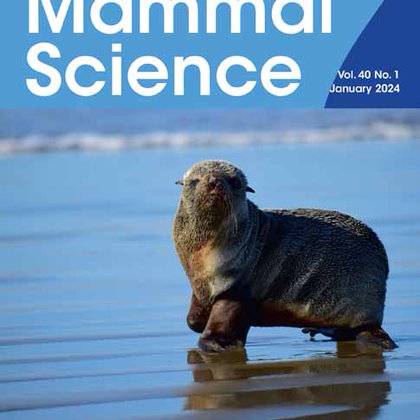
New paper by my colleagues and I on the reproductive anatomy of a leopard seal 🦭 Leopard seal reproduction is mostly unknown. This note from a @MonashUni dissection discusses the importance of morphology in providing some clues. Open access paper here:
onlinelibrary.wiley.com
Click on the article title to read more.
1
24
66
Interested in the hidden sensory superpowers of limb-reduced skinks? Look no further than our new publication on the inner ears of these critters! https://t.co/cdI0vQOYxu
1
15
43
More journals should do these ECR features. They're a nice way to publicise research, and researchers!

ECR feature: Marco Camaiti @Scincomancer shares his recent study on biogeographic patterns of limb reduction in the world's skinks. Read more here: https://t.co/FmA0AVa3cm
#biogeography #skinks #lizards
1
3
26
New paper alert!! We in the Oceania branch of @skinks_IUCN just published a paper in Pacific Conservation Biology @CSIROPublishing on the skinks of Oceania, New Guinea, and Eastern Wallacea https://t.co/k2NTOJhZpU 1/n
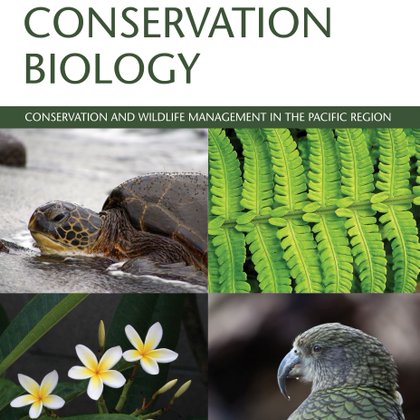
connectsci.au
The region encompassing Oceania, New Guinea, and Eastern Wallacea houses ~300 species of skinks (almost a fifth of all skink species in the world) on <1< /div>
1
13
25
Dramatic evolutionary transitions: Morphological data show that the relationships between limb length and trunk elongation have unique evolutionary patterns across the world's skink clades. https://t.co/NuToqQIP4E
1
8
32

Check out this great new research by @P_hazael on the weirdest of weird marsupials!

New paper from @P_hazael, @DSRovinsky, Justin Adams and @DrTeethAl enabled by NIF @Mon_Bio_Imaging: Inferring the palaeobiology of palorchestid marsupials through analysis of mammalian humeral and femoral shape https://t.co/HhOzlBTW20
@museumsvictoria @EvansEvoMorph
1
9
36
What does the relationship between body shape and substrate tell us about limb reduction in skinks? Marco Camaiti et al find environmental adaptation, in particular to substrate, is a major driver of body-shape evolution in skinks. https://t.co/giHAuvoQGD
@chapple_lab @DrTeethAl
0
5
20
[6/7 – two approaches to explore the drivers and associations of skink limb reduction]
1
1
5
[5/7 – morphological patterns and idiosyncrasies of limb reduction in skinks]
1
0
4