Georg R. Zoidl
@RZoidl
Followers
418
Following
3K
Media
658
Statuses
2K
Neuroscientist, Mentor, Humanist, Realist. Never give up. Today is hard, tomorrow will be worse, but the day after tomorrow will be sunshine.
Toronto, Ontario
Joined November 2016

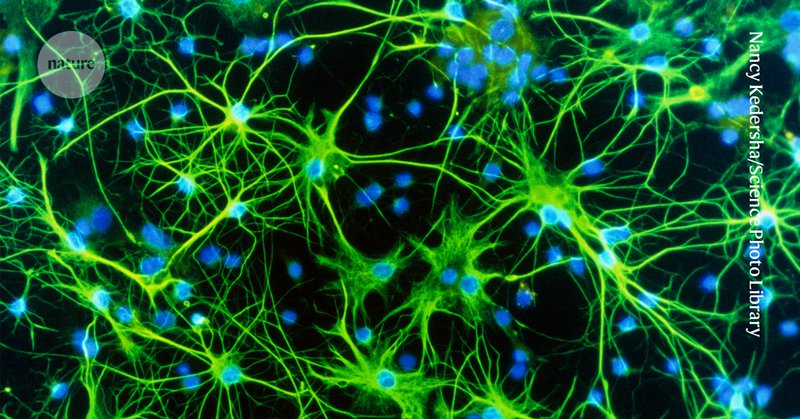
The ‘silent’ brain cells that shape our behaviour, memory and health
nature.com
Nature - Astrocytes make up one-quarter of the brain, but researchers are only now realizing their true value.
0
2
14
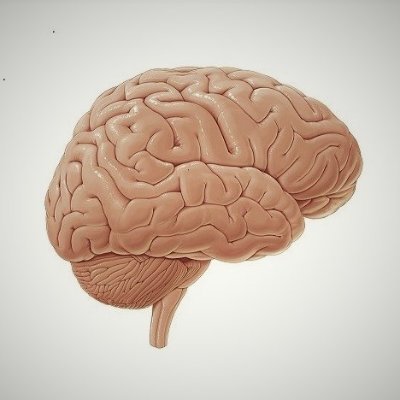
When the years ahead grow shorter than the years behind, one feels a deep gratitude toward the people who made it all possible.
0
2
9
What is the burden in the US of Parkinson's, Alzheimer's and other diseases? Spoiler alert: there are surges beyond the pure numbers and we need to raise awareness for the increases in both disability and burden. DALYs are a way to measure total health loss by combining years
7
24
76

I remember when we used to think that all neurons were specialized. Mixed selectivity: when neurons stopped looking like specialists https://t.co/4fmtutt9it
#neuroscience
nature.com
Nature Reviews Neuroscience - In this Journal Club, Fanny Cazettes highlights a 2013 paper that demonstrated the importance of mixed selectivity for cortical computations.
2
25
140
Another example of the role of oscillations in brain function. In this case, interactions between theta and higher frequencies. Episodic memory involves transient and sparse connectivity aligned to both internal and external events https://t.co/2ptzkZmPzk
#neuroscience
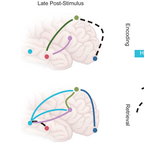
journals.plos.org
Episodic memory depends on the coordination of local processing with global organization. This study reveals that episodic memory relies on brief, sparsely connected brain states coordinated across...
4
39
196

A 2023 Review in @ScienceTM looks at the complex connections between astrocytes and other types of cells in the nervous system, including neurons, oligodendrocytes, and microglia. Learn more: https://t.co/kC2yZeyngQ
#ScienceMagArchives
4
195
662

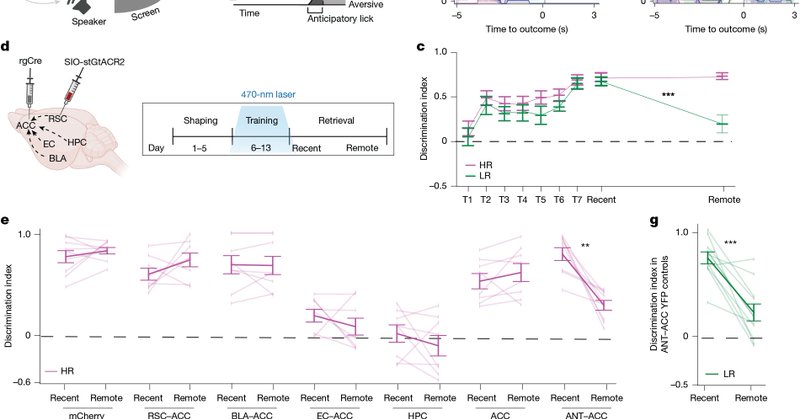
Nature research paper: Thalamocortical transcriptional gates coordinate memory stabilization https://t.co/oMlsS4fAoG
nature.com
Nature - The sequential recruitment of a thalamocortical transcriptional cascade enables memory maintenance over long timescales.
1
18
102
We have a great group of speakers lined up for our @YorkU_CIAN / @OfficialCSBBCS satellite symposium on 'Cognition and Action', June 4,5 '26 in Toronto. Calls for poster abstracts coming soon. https://t.co/7QXb2IReKO
yorku.ca
Laurel Buxbaum Professor and Institute Scientist, Jefferson Moss Rehabilitation Research Institute Theresa Desrochers Associate Professor, Brown University Randy Flanagan Professor Queen's University...
0
3
9

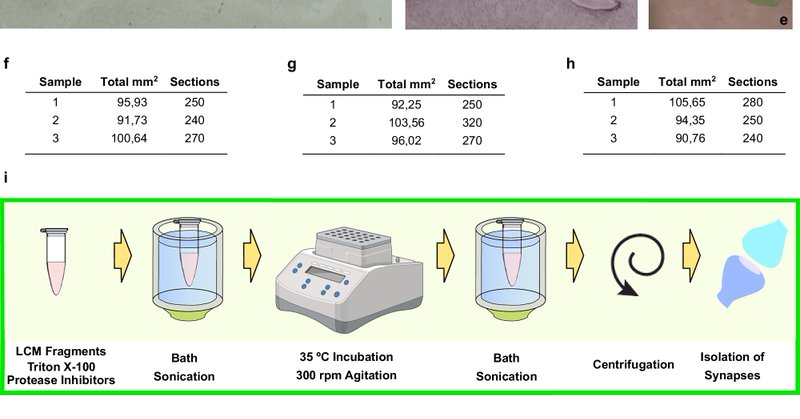
Synaptic proteome diversity is shaped by the levels of glutamate receptors and their regulatory proteins https://t.co/kFXveCRXKw
nature.com
Nature Communications - Proteomics must target specific synapse types to reveal how molecules shape their unique functions. Here, authors show that hippocampal synapses differ in proteome and that...
0
4
18
Ultrastructural membrane dynamics of mouse and human cortical synapses https://t.co/0brosaFH50
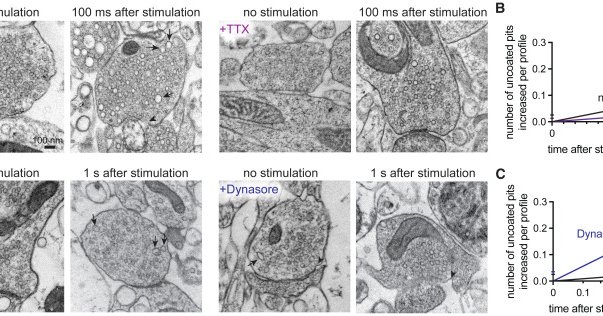
cell.com
Eddings et al. illustrate that synaptic membrane trafficking can be studied with millisecond resolution in resected human brain tissues using the technique “zap-and-freeze” time-resolved electron...
0
1
2
Dysfunctional oscillatory bursting patterns linked to working memory in adolescents with attention deficit hyperactivity disorder https://t.co/e1Co9jMoSS
#neuroscience
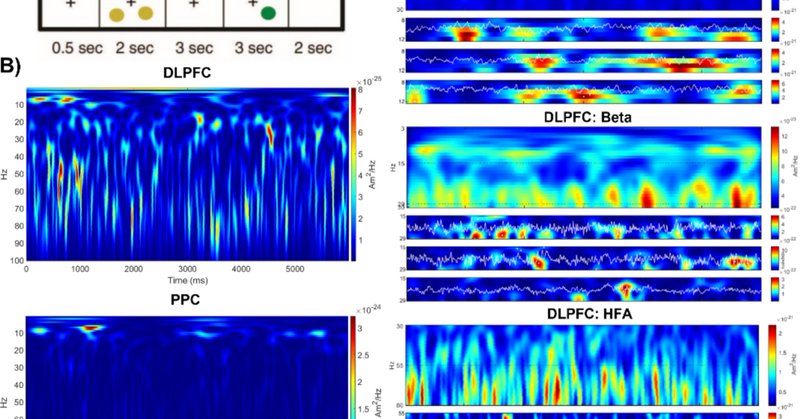
link.springer.com
Cognitive, Affective, & Behavioral Neuroscience - Identifying neural markers of clinical symptom fluctuations is prerequisite to developing more precise brain-targeted treatments in psychiatry....
1
22
76
A mouse brain atlas based on dendritic microenvironments https://t.co/BCtVJNKiPu
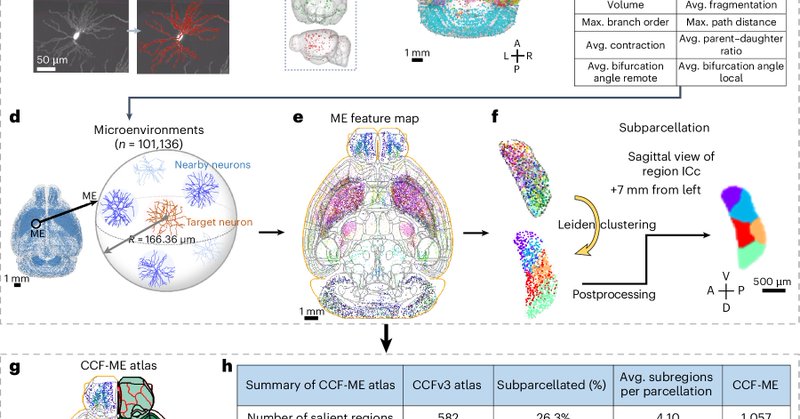
nature.com
Nature Neuroscience - The authors developed a mouse brain atlas using local dendritic morphological patterns from 101,136 neurons. This representation not only improves anatomical precision but...
0
9
67
Second last day with my NRSC3000 Class. Time for the group picture. It was fun to connect with them the dots from fundamental molecular and cellular aspect of nervous system function to brain disorders, to molecular neuropsychiatric problems.
0
0
2
This topic probably flies under the radar for most neuroscientists, but this paper is a big deal https://t.co/d8Md9jCqrz
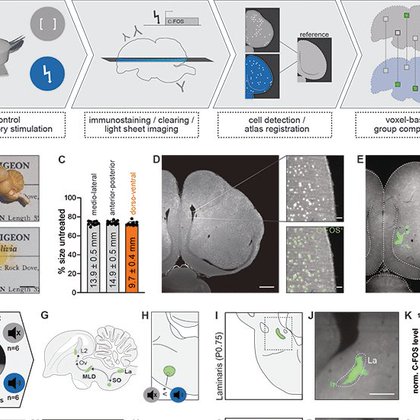
science.org
How animals detect the Earth’s magnetic field remains a mystery in sensory biology. Despite extensive behavioral evidence, the neural circuitry and molecular mechanisms responsible for magnetic...
4
39
190
Beta-band frequency shifts signal decisions in human prefrontal cortex https://t.co/dpRwzFW4DY
#neuroscience
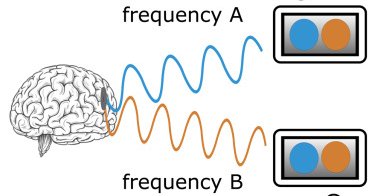
cell.com
Natural sciences; Biological sciences; Neuroscience; Clinical neuroscience
5
26
141
Christmas market time in Bochum, Germany. The local sausage, beer, baked fish, and German potato fritters are legendary. The picture covers a small section of the market.
0
0
1
@msahsorin @MillerLabMIT @BigSky_7 The more we learn, the more our minds open. But at some point, we need boundaries to that openness, hopefully driven by empirical science, experimental results. Otherwise, it becomes SciFi or magical realism :).
1
1
5
@MillerLabMIT one question that has always puzzled me. If a neuron can be reduced to an oscillator, why such a complexity of dendritic and axonal trees? And such a diversity of cell types that express different calcium buffers and neurotransmitters? And gets more complex in PFC
5
2
16