Lisa Bauer
@LisaBauerVirus
Followers
557
Following
3K
Media
30
Statuses
1K
Virologist| Assistant Professor @ErasmusMC | previous ESR in Marie Curie Network Antivirals @UtrechtUni| 🇦🇹🇪🇺🇳🇱| Opinions and Typos are my own
Joined May 2018
I am happy to share our new preprint on Enterovirus-D68 and its glycan receptor specificity! #Enterovirus #Glycotime
https://t.co/xtI2rbnqvH

biorxiv.org
Enterovirus D68 (EV-D68) emerged as a pathogen of increasing health concern globally, particularly due to its association with outbreaks of severe respiratory diseases and acute flaccid myelitis...
2
6
41
Save the date! June 27th is our 3rd GlycoScienceNL symposium...Geertekerk Utrecht! major #glycotime! @UU_Glycoscience @UUUIPS
https://t.co/DTkPWgOmQ4 Please tag and RT at will!
0
4
3
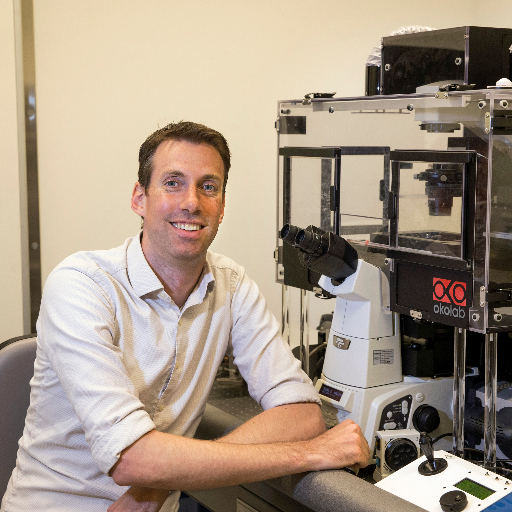
Our new paper is out: "Mapping the complete influenza A virus infection cycle through single vRNP imaging". Combining single-molecule imaging approaches with in situ transcriptomics, we identify many non-canonical infection pathways. https://t.co/3xV3Kaw7vL Movie: viral entry
4
32
96
Please see this fantastic thread by @LisaBauerVirus about our recent preprint on the glycan binding properties of enteroviruses. It was great working with her team at @ErasmusMC and, of course, with @DebbyvanRiel, as we started this project some years ago. #glycotime
I am happy to share our new preprint on Enterovirus-D68 and its glycan receptor specificity! #Enterovirus #Glycotime
https://t.co/xtI2rbnqvH
1
2
10
And to @RobertPdeVries1 and his PhD student Jaap for exploring with us the glycan specificities of enteroviruses and helping us with the glycan parts, and lastly big thanks to @DebbyvanRiel for giving me the opportunity to lead this fun project!
0
0
1
My special thanks go to Ashley and Anouk, as they worked incredibly hard on their Master's and Bachelor's thesis bringing this project together. Our former PhD student @Syriam0803 who started this project with me and was involved in generating the viruses for the glycan arrays
1
0
1
Key Takeaways: 1. Stronger evidence for HS binding as cell culture adaptation 2. EV-D68 is promiscuous towards various glycans 3. Glycolipids serve as a new receptor group 4. Different strains show remarkable variety in receptor use 5. Big question: How does this affect disease?
1
0
1
Lastly, we investigated the relationship between receptor binding and viral stability. We show that receptor preference does not influence capsid stability. We show that the requirement for acidic pH during entry varies and is also independent of their receptor preference.
1
0
1
What does this mean for disease? While glycolipids might help the virus infect nerve cells, previous work shows neurotropism doesn't depend on sialic acids. The exact role of glycolipids here remains a mystery!
1
0
1
What are the consequences of glycolipid binding? The exact role of gangliosides in viral entry we do not know, but we speculate that they serve as attachment and/or uncoating receptors. Likely similar to porcine sapelovirus and hepatitis A virus which also use glycolipids.
1
0
1
As expected, we found that EV-D68 binds to α2,6-linked SIA, but some strains were fond of specific disialylated gangliosides GD3, GD1c, GT1a, and GQ1b. We confirmed a functional relevance for viral entry using enzymatic inhibition and by using glycolipid mimetics as inhibitors.
2
0
1
Now for the most exciting part - sialic acids! We knew EV-D68 uses these, but we wanted to understand the sialoside receptor specificity. We used a complex glycan array containing α2,3-linked, α2,6-linked N-linked glycans and ganglioside structures.
1
0
1
Why is it important to know the HS binding profile? HS-binding is linked to cell-culture adaptation, and we did not find this polymorphism in naturally circulating strains. It might still matter for disease, as lab-adapted viruses differ phenotypically compared to other viruses.
1
0
1
Previous work found two EV-D68 viruses using HS to enter cells. Utilising a HS array, we confirmed this and found a third! The secret? They all share a special change at position 271 in their VP1 protein - switching from a negatively/neutrally charged amino acid to a positive one
1
0
1
Let's dive into our new exciting findings on Enterovirus-D68! EV-D68 is pretty crafty about how it gets into cells! We wanted to understand the receptor requirements of EV-D68. Using glycan arrays, we looked at two glycan types: heparan sulfate (HS) and sialosides.
1
0
1

I’m looking for a postdoc to join my team under a recently funded ERC Starting Grant. If you’re passionate about structural #virology and have experience in #cryoEM SPA and/or #cryoET, get in touch! Deadline: January 19th. Please share 🙏 https://t.co/K3nFfjYIgA
7
121
237

Looking forward to identify functional glycan receptor for influenza viruses, enteroviruses and noroviruses in respiratory, gastrointestinal and CNS tissues. Together with @LisaBauerVirus @miranda_graaf @bart_haagmans @RobertPdeVries1 @TheBoonsGroup and Karli Reiding.

I'm super excited that our consortium has been funded by the NWO! Can't wait to get started! @DebbyvanRiel @miranda_graaf @bart_haagmans @LisaBauerVirus @TheBoonsGroup @UU_Glycoscience @UUUIPS #glycotime
https://t.co/JRjZ3pHzx2
1
3
19
I'm super excited that our consortium has been funded by the NWO! Can't wait to get started! @DebbyvanRiel @miranda_graaf @bart_haagmans @LisaBauerVirus @TheBoonsGroup @UU_Glycoscience @UUUIPS #glycotime
https://t.co/JRjZ3pHzx2
nwo.nl
21 research consortia have the chance to reach a breakthrough thanks to funding from the Open Competition Domain Science - XL. From fundamental research on the effects of certain materials on the...
3
5
26
My posts on X will be even fewer, so come join me to the sky!
0
0
0
First, I want to thank my partner in crime @LonnekevNes who is not yet with me in the sky. I also want to thank @DebbyvanRiel and @thijskuiken for sharing their valuable knowledge and time for endless discussions when I needed trying to understand H5N1 viruses.
1
0
2