
Ku-Lung Hsu
@Hsu_Lab_UVa
Followers
869
Following
1K
Media
15
Statuses
342
Ku-Lung (Ken) Hsu is an Associate Professor of Chemistry at the University of Texas Austin
Austin, TX
Joined July 2017
New paper out! We report stereoselective, covalent inhibitors of diacylglycerol kinases that act as molecular glues to drive isozyme-specific degradation and boost T cell activation.Congrats to Minhaj Shaikh, Surya Mookherjee, Claire Weckerly (Hammond lab) https://t.co/501oqtvCHa
biorxiv.org
Stereoselective recognition is a powerful means to differentiate selective versus non-specific activity of small molecules in complex biological systems. Here, we disclose stereochemically defined,...
1
1
15
Congrats to Zhihong Li for leading the development of SuPUR chemistry — a chemoproteomics platform mapping 31K+ reactive Tyr/Lys sites across the human proteome. SuPUR revealed an ACAT2-Y237 ligand uncovering a cancer metabolic vulnerability. https://t.co/Ec6ioOzSVD
biorxiv.org
Purines are essential bioactive molecules that interact with a large fraction of the human proteome. Despite their importance, the scope of actionable purine-binding pockets for ligand discovery...
0
3
31
Excited to share new findings led by postdoctoral fellow Xiaoding Jiang. We developed an electrophile-drug conjugate (EDC) that site-specifically and proteome-wide selectively activates PFKL coupled to delivery of a cytotoxic payload in vivo
biorxiv.org
Glycolysis fuels vital cellular functions and its dysregulation is implicated in cancer, neurodegeneration, antibiotic resistance and diabetes. The glycolytic dependency of cancer, known as the...
0
1
17
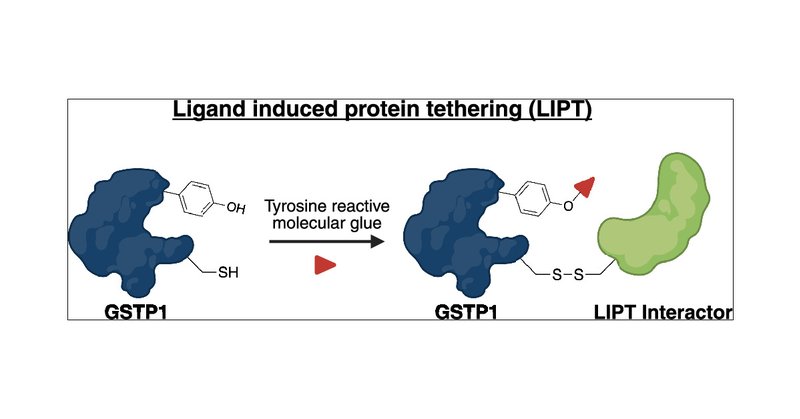
Congrats to my graduate student Dave Leace and team on the new paper! They discovered a ligand-induced protein tethering (LIPT) molecular glue mechanism — revealing new PPIs, altered protein localization, and disrupted cancer metabolism. https://t.co/WWxFkdSwe0
pubs.acs.org
Here, we discovered a tyrosine-reactive GSTP1 inhibitor can function as a molecular glue via a ligand induced protein tethering (LIPT) mechanism. Electrophilic modification of GSTP1 results in...
2
7
39
Congrats to my graduate student Dave Leace and team on the new paper! They discovered a ligand-induced protein tethering (LIPT) molecular glue mechanism — revealing new PPIs, altered protein localization, and disrupted cancer metabolism. https://t.co/WWxFkdSwe0
pubs.acs.org
Here, we discovered a tyrosine-reactive GSTP1 inhibitor can function as a molecular glue via a ligand induced protein tethering (LIPT) mechanism. Electrophilic modification of GSTP1 results in...
2
7
39
Happy to share our review on the exciting frontier of covalent chemistry aimed at non-cysteine residues — expanding the toolbox for ligand discovery and chemical biology. Congrats to Gibae Kim from my group! https://t.co/ZUPqRzGTkB
@CovalentMod @UTChemistry @UTAustin

pubs.acs.org
Targeting intractable proteins remains a key challenge in drug discovery, as these proteins often lack well-defined binding pockets or possess shallow surfaces not readily addressed by traditional...
0
9
47
Happy to share our review on the exciting frontier of covalent chemistry aimed at non-cysteine residues — expanding the toolbox for ligand discovery and chemical biology. Congrats to Gibae Kim from my group! https://t.co/ZUPqRzGTkB
@CovalentMod @UTChemistry @UTAustin
pubs.acs.org
Targeting intractable proteins remains a key challenge in drug discovery, as these proteins often lack well-defined binding pockets or possess shallow surfaces not readily addressed by traditional...
0
9
47
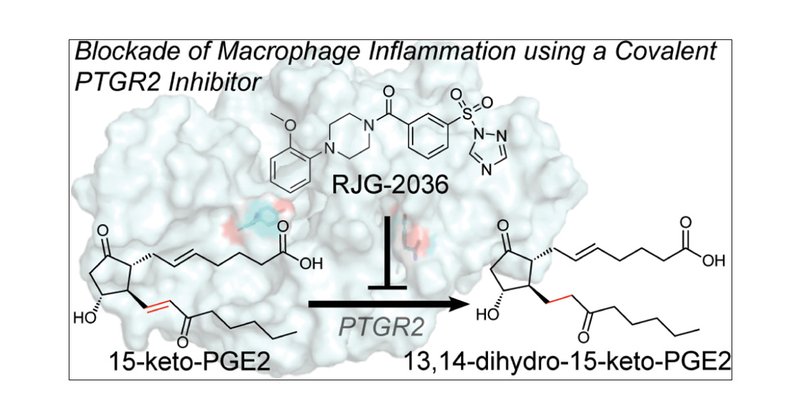
Human PTGR2 Inactivation Alters Eicosanoid Metabolism and Cytokine Response of Inflammatory Macrophages | ACS Chemical Biology
pubs.acs.org
Prostaglandin reductase 2 (PTGR2) regulates inflammatory lipid signaling through the metabolism of the PGE2 metabolite 15-keto-PGE2. PTGR2 inhibitors have been reported but whether small molecule...
0
0
6

Check out our work on protein editing!

A pair of split inteins—small protein segments that can undergo a self-sustained protein splicing reaction—enables endogenous protein editing in living mammalian cells, according to a new study in Science. 📄: https://t.co/s8Oz1zFvWf
#SciencePerspective: https://t.co/7qggLI9bSu
4
11
61
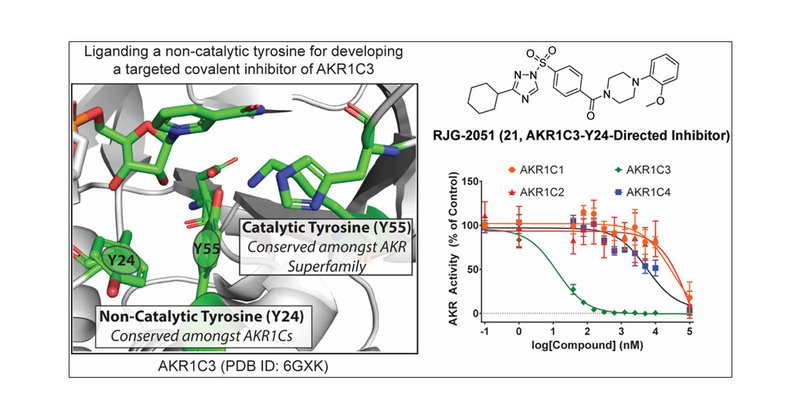
Thrilled to share our new covalent AKR1C3 inhibitor targeting a non-catalytic tyrosine (Y24) with proteome-wide selectivity! An enabling tool for probing metabolism in hormone-driven cancers. Big congrats to Justin Grams from my team! https://t.co/9xtMkzlsUv
pubs.acs.org
Aldo-keto reductase family 1 member C3 (AKR1C3) is a member of the AKR superfamily of enzymes that metabolize androgen, estrogen, and prostaglandin substrates that drive proliferation in hormone-de...
0
10
35

Exciting new work from @Hsu_Lab_UVa developing #covalent inhibtors that target tyrosine #SuTEx #ABPP #Chembiol
Thrilled to share our new covalent AKR1C3 inhibitor targeting a non-catalytic tyrosine (Y24) with proteome-wide selectivity! An enabling tool for probing metabolism in hormone-driven cancers. Big congrats to Justin Grams from my team! https://t.co/9xtMkzlsUv
0
1
4
Thrilled to share our new covalent AKR1C3 inhibitor targeting a non-catalytic tyrosine (Y24) with proteome-wide selectivity! An enabling tool for probing metabolism in hormone-driven cancers. Big congrats to Justin Grams from my team! https://t.co/9xtMkzlsUv
pubs.acs.org
Aldo-keto reductase family 1 member C3 (AKR1C3) is a member of the AKR superfamily of enzymes that metabolize androgen, estrogen, and prostaglandin substrates that drive proliferation in hormone-de...
0
10
35
Finishing the year with a review on applications of intact and native protein analysis for chemical proteomics. Congrats to postdoctoral fellow Alexis Edwards from my group @UTChemistry @TexasScience @UTAustin
https://t.co/nWaHtTQ9cG
0
0
14
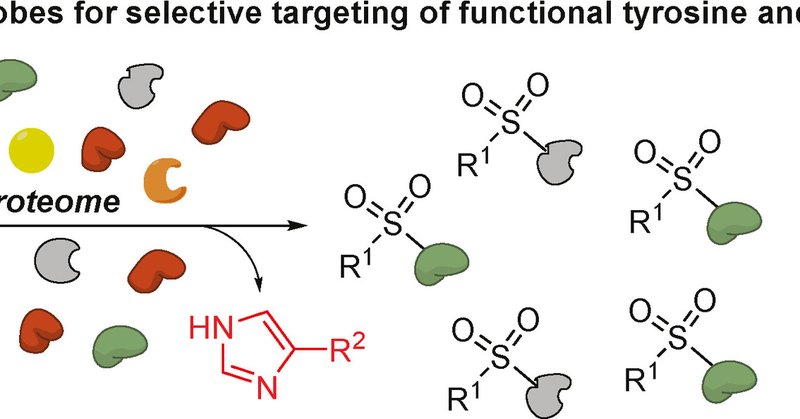
Congrats to my team @UTChemistry for developing sulfonyl-azoles as tyrosine-reactive electrophiles. Thank you to @WelchFoundation for the support.
chemistry-europe.onlinelibrary.wiley.com
Herein, we developed a series of sulfonyl-azole (SufAz) probes to investigate chemical reactivity and applications for chemical proteomics. Our studies identified aryl sulfonyl imidazoles as a...
0
3
33
We are excited to announce that Kurtis Carsch is joining our department! https://t.co/1ZPykaiONx
4
5
58

After 11 great yrs @DukeU, the Hargrove Lab is starting a new chapter @chemuoft & @UTM ! We are deeply grateful for everyone at Duke who has supported us, esp. in @DukeChemistry @dukebiochem, and the NC RNA & ChemBio communities💙 Look for more on our Canadian adventures soon!🇨🇦
39
13
339


𝐆𝐮𝐞𝐬𝐭𝐒𝐞𝐦𝐢𝐧𝐚𝐫𝐬@𝐔𝐂𝐈𝐁𝐈𝐎 | 𝐋𝐚𝐫𝐚 𝐌𝐚𝐡𝐚𝐥 Zoom Session | 27 Jun, 2024 - 15h00 (Lisbon time) https://t.co/XVhuPciYG9
@UCIBIO_Research
@NOVAunl
@glyconet_nce
@REA_research
#glycotime #glycotwinning #glyconet #glycoscience
2
3
27

I'm very excited to share the news of my promotion. Much of the credit goes to the trainees that drove the research forward, and the invaluable mentorship that I received along the way from Michael Hecht, @davidrliu, @KapoorLab_RU, my Princeton colleagues, and many others!

We are so very pleased to announce that @PrincetonChem’s Ralph Kleiner has been promoted to Associate Professor with tenure. Congratulations Ralph and the @KleinerLabRNA! Story here: https://t.co/nd97QKk1PO
35
4
131

Awesome news! Congratulations @KleinerLabRNA!!
We are so very pleased to announce that @PrincetonChem’s Ralph Kleiner has been promoted to Associate Professor with tenure. Congratulations Ralph and the @KleinerLabRNA! Story here: https://t.co/nd97QKk1PO
4
1
16