
GetGenome
@GetGenome
Followers
2K
Following
2K
Media
98
Statuses
2K
We empower scientists throughout the world by providing equitable access to genomics technology and genomics-related training and education.
Norwich, United Kingdom.
Joined October 2022
Check our November 2025 newsletter. Remember, you can find our previous newsletters here - https://t.co/Ipf6GoFZDf
0
2
8

Free Study in France with Stipend - Eiffel Excellence Scholarship Program 2026 in France Visit: https://t.co/x2CgIAGuaK Campus France’s Eiffel excellence scholarships Program is for international students who are interested in studying in French institutions in Masters and PhD
0
33
138

Conservation Genomics—Making a Difference Molecular Ecology | Wiley Online Library
onlinelibrary.wiley.com
Conservation genomics has increasingly transitioned from a promising concept to a science that integrates a range of advanced analytical approaches, providing new insights into inbreeding, genetic...
0
2
14
How can we learn more about the evolution of complex life by studying ants? 🐜 I’ve been getting a lot of questions about my research since the viva post went viral! My thesis isn’t out yet but you can learn more by checking out our recent paper! 👇 https://t.co/gyMgJ5JS0o

🎊 I passed my viva exam! After ~4 years of research, I successfully defended my thesis. You can call me Doctor 😎
79
231
2K
Some news: Open Philanthropy is now Coefficient Giving! Our mission is unchanged but the new name reflects our growing work with other donors to multiply the impact of their giving. 🧵 on our work to make philanthropy a more efficient "market" and plans going forward:
27
71
423

The model of gene expression taught in school is highly misleading! Transcription factors are proteins that bind to DNA and then help repress, or activate, the expression of genes. Cells have hundreds of different types of transcription factors, each tuned to regulate different
18
206
1K

Humans host diverse microbes that play a crucial role in the decomposition process after death. This work pioneers the use of 2bRAD-M sequencing to investigate microbial changes across human organs over increasing postmortem intervals. #JournalSpectrum: https://t.co/fw8jCl9fgQ
0
4
11

Some archaea—an ancient group of microorganisms—have an entirely novel genetic code, according to a new study in Science. Their genetic code reassigns a DNA “stop” signal to incorporate the rare amino acid pyrrolysine into their proteins. The findings expand our understanding
8
138
483

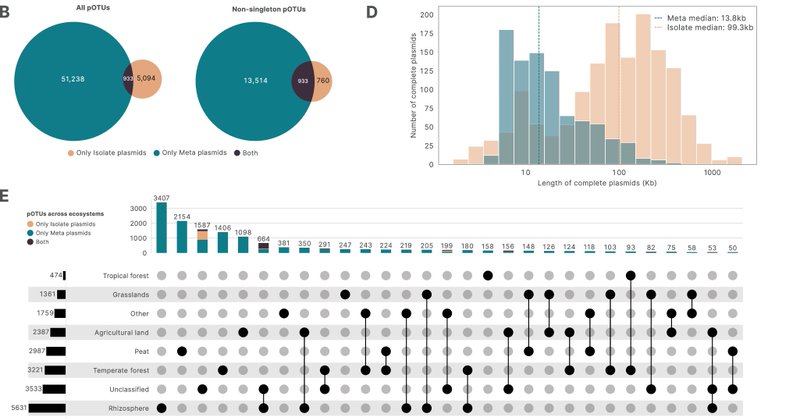
A global soil plasmidome resource unveils functional and ecological roles of plasmids in soil microbiomes https://t.co/TOBBd6gZ0Z
nature.com
Nature Communications - Here, the authors report the Global Soil Plasmidome Resource, a comprehensive plasmid soil catalog, that explores the roles of plasmids in microbial adaptation and host...
0
3
17

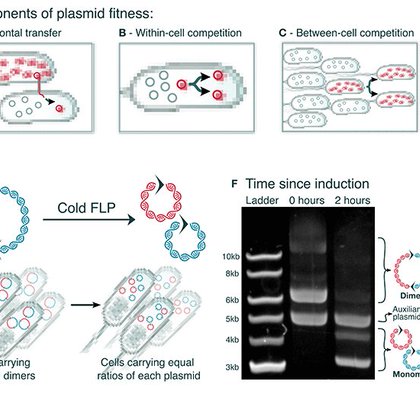
Now that we understood neutral dynamics, we turned to competition. What could cause one plasmid to replicate better than another? Our first thought was transcription might interfere with replication, and it turns out there was a much larger tradeoff than we expected! 7/
1
4
12
How the genes plasmids carry affect their hosts has been well studied, but this smaller scale of evolution has proven much tougher despite decades of theory. Plasmids are small and replication is fast and hard to measure. 2/ https://t.co/j3ybjBRZXA
science.org
From populations of multicellular organisms to selfish genetic elements, conflicts between levels of biological organization are central to evolution. Plasmids are extrachromosomal, self-replicating...
1
7
23
Hot off the press! Our latest paper led by @fernpizza , understanding how plasmids evolve inside individual cells. These small pieces of self-replicating DNA live inside bacteria and can transfer antibiotic resistance genes, but they also compete with one another to replicate. 1/
6
43
153
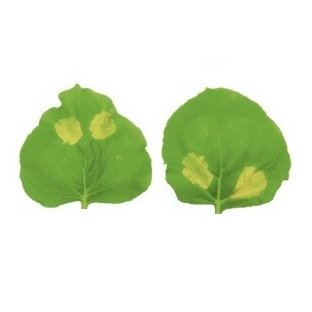
Amal @AmalBk11 is absolutely rocking it in Cotonou, Benin 🇧🇯 💪🏼
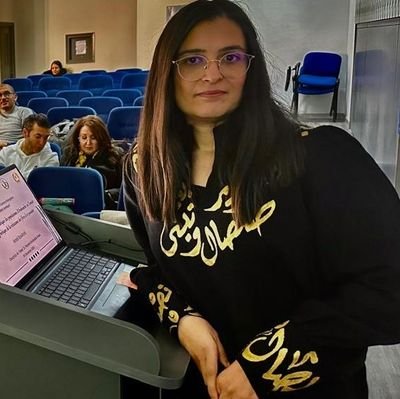
Proud to be part of the First #Bioconductor workshop in West Africa, hosted by the University of Abomey-Calavi in #Benin! 🇧🇯 #BiocInBenin A full week of #hands-on workshop in #data #manipulation, #visualization, and #RNAseq analysis @TunisRUserGroup #Africa #bioinformatics
1
3
11
IN PLANTA meeting in Toronto 🇨🇦 with nextgen plant biologists Sylvia Mutinda @MutindaSylvia 🇰🇪 and Mohammad Daud @itsmudaud 🇮🇩 #TheFutureIsBright #FoodSecurity
2
2
51

🚨Scholarship update🚨 🎓Name: KAUST Postdoctoral research fellowships 📌Value: Fully funded 📌Level: PhD 📌Eligibility: International students 📌How to apply: Follow the link below for details of the application process ⤵️ https://t.co/e17907gmiS

scholarships.penprofile.com
The King Abdullah University of Science and Technology (KAUST) is one of the most prestigious graduate universities in the world, welcoming international students and researchers from across the...
0
1
1
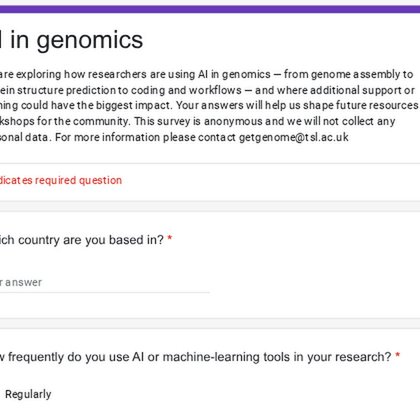
Our AI-guided structural modelling workshops are popular. Your feedback will be really useful to help us understand how researchers are using AI and inform future training opportunities. Please complete this short survey
docs.google.com
We are exploring how researchers are using AI in genomics — from genome assembly to protein structure prediction to coding and workflows — and where additional support or training could have the...
0
3
5

From Sequence to Insights Part 2: Genomic Context & Literature Context is critical to understanding our genomes and proteins. SeqHub shows where a gene is found in its native genomic neighborhood and connects it with papers and predicted functions. Start exploring →
2
20
79
Full Genome Annotation and Visualization in <1 minute! Upload a FASTA and see how SeqHub enriches your data with HMMs and other functional annotations. Annotate a genome → https://t.co/QXdOb1Olbb
2
38
137
A new computational method called FluWarning identifies divergent viral sequences to detect the early spread of zoonotic #viruses. Early detection of viral spread is a crucial aspect of mitigation strategies. Learn more in @ScienceAdvances: https://t.co/6XbqRRtTYn
6
22
86

Characterization of genetically novel chimeric plasmids from Salmonella Heidelberg conferring multi-drug resistance and increased ... https://t.co/XeidCi68Sz
#biorxiv_micrbio
biorxiv.org
Salmonella enterica serotype Heidelberg ( S . Heidelberg) is a significant cause of human salmonellosis, with resistance to extended-spectrum cephalosporins posing challenges for clinical management....
0
4
6