

David Castillo-Azofeifa
@David__C__A
Followers
721
Following
957
Media
49
Statuses
264
Principal Scientist/Group Leader @genentech, interested in the diverse regenerative strategies of tissues and how they fail later in life. From CR 🇨🇷
South San Francisco, CA
Joined November 2017
Perplexity and then… eureka! Could a cytokine predominantly associated with cell death and inflammation regulate cell differentiation and mucus? In our most recent paper @jclinicalinvest, we address this question. Check out the paper https://t.co/X3VCMeYaX9 Summary 🧵⬇️
4
8
36
Huge congrats to the whole team! A special shout-out to Tony Korcari, Helen Tauc, and Jeff Duggan for spearheading this work.
0
0
1
Our new preprint: https://t.co/VVV0ThnHy3 IFNγ is a double-edged sword for gut regeneration. Young guts: transient burst heals. Aged guts: prolonged upregulation impairs repair by trapping cells in a fetal-like state🔥📉 #immunology #inflammaging #aging #stemcells #regeneration
2
0
11
Huge congrats @LabMaxYav and @AnsethGroup 🎉
🎆🎇 Congrats to @LabMaxYav for his new paper, "Engineered epithelial curvature controls Paneth cell localization in intestinal organoids," out now in @CellBiomat. Max explored how local matrix curvature influences differentiation of confined intestinal organoids — link below!
0
0
4
So cool to see this story out. Congrats!!! 🎉

Excited to share our new paper @PLOSGenetics that reveals how Shh signaling promotes myosin II activity to regulate tooth morphogenesis in mice!
0
0
3

The sun is out for Day 3 of #Stemgastro24. Many exciting talks to look forward to with the poster awards & gala dinner this evening 🕺💃
2
14
33
Congrats @RKZwick, @OphirKlein and collaborators!!!! 🎉 The small intestine is organized in 5, yes 5, metabolic domains. Fantastic work! Check it out!

Our work to define the regional organization of the small intestine is online @NatureCellBio today: https://t.co/pjnlnXMuB9!! Make way for domains A – E and a new approach to track the molecular patterns of nutrient metabolism. Many thanks to @s_lefkopoulos & our reviewers!
1
4
7
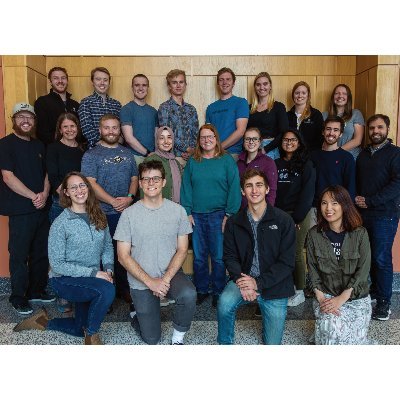
As we closed a fantastic year, we wish all the best for 2024 🎉 Pic below: End of Year Celebration @LlucMosteiro lab + Castillo-Azofeifa lab
0
1
11
It was so much fun having @Yueming_L as an intern this summer in the lab mentored by Yamini Nanduri. I very much enjoyed the great discussions and data on mechanotransduction and hydrogels 👏 Best wishes on your PhD studies in the @heilshornlab
1
0
7
It was a great privilege to be part of Efren’s PhD mentoring team with @OphirKlein and @ZevGartner and collaborate with @JeremieRispal and everyone involved in this project
0
0
2
(11/11) Here, we revealed new roles for TNF in intestinal cell differentiation and modulation of CFTR activity with implications in future interventions for IBD using anti-TNF therapy
1
0
1
(10/11) Using samples from donors: ➡️IBD non-inflamed ➡️IBD undergoing anti-TNF therapy ➡️Healthy We found that non-inflamed tissue and healthy donors had a similar proportion of goblet cells, whereas patients treated with anti-TNF had a higher proportion of crypt goblet cells
1
0
0
(9/11) Clinically relevant, elevated TNF levels associated with inflammatory bowel disease (IBD) can lead to decreased goblet cell numbers. And patients with cystic fibrosis are 7 times more likely to have IBD. Could IBD patients treated with anti-TNF have increased goblet cells?
1
0
0
(8/11) Using various genetic and pharmacological tools, we demonstrated that epithelial TNF-TNFR1 interactions control mucin flux via CFTR-induced fluid pumping
1
0
0
(7/11) Interestingly, cystic fibrosis patients with dysfunctional CFTR exhibit accumulation of mucin, increased bacterial load, and slow gut motility. Therefore, we asked if epithelial TNF acts as an upstream regulator of CFTR in addition to regulating epithelial differentiation
1
0
0
(6/11) There are various sources of TNF in the intestine. Thus, we explored if TNF expressed by the epithelium is required for mucin homeostasis. We determine that epithelial-derived TNF regulates mucin homeostasis, in part by inhibiting secretory progenitor bias to goblet cells
1
0
0
(5/11) We discovered that TNF does not affect secretory cell turnover but controls goblet cell number by regulating secretory progenitor cell differentiation
1
0
0
(4/11) Next, we evaluated the role of TNF in mucin homeostasis by analyzing Tnf −/− mice. TNF null intestines had increased luminal mucin, goblet cell numbers, intestinal transit time, and bacterial load, which we propose results from an increase in mucus-producing goblet cells
1
0
0
(3/11) We first characterized the expression pattern of TNF and its receptors in the intestine. We found that TNF, TNFR1, and TNFR2 are expressed in defined spatial domains along the crypt-villus axis
1
0
0