
Bryan Bunning
@BryanBunning44
Followers
46
Following
644
Media
7
Statuses
366
phd student biomedical informatics @stanford | immunologist➡️biostatistician | clinical trials | @columbiamsph @uchicago | swammer
Joined May 2021

The @US_FDA now says it will now allow *pharmacists* to prescribe @pfizer's Paxlovid pills to Americans who test positive for COVID-19, as long as they have "sufficient information to determine their eligibility" https://t.co/guV23WnYNX
10
92
240
The biopharmaceutical industry, and the patients who rely on it, have a stake in the outcome of challenges to FDA preemption that will be triggered by the Supreme Court's decision to overturn Roe v Wade. ($) https://t.co/HEjTooi6M4
0
9
21
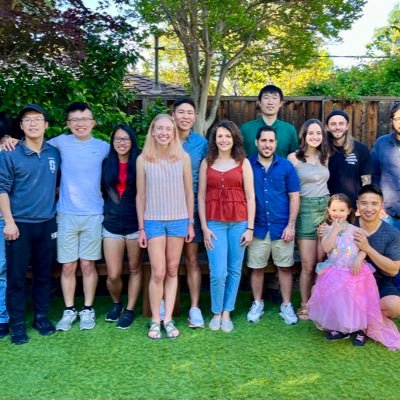
Fearless grad student @veronical1411 led this team science effort to answers the question, why don't you feel hungry after a hard workout? @nature @SnyderShot @StevenMBanik @proferikrichter @DrYongXu1 @Stanford_ChEMH @StanfordPath @WuTsaiAlliance
52
242
1K

Generalized Additive Models (GAMs) are fully interpretable ML models, unlike DNNs, but it's hard to make them efficient. We're sharing research on scaling GAMs to real world tasks w/o sacrificing accuracy or interpretability. https://t.co/9a9zaP4kdN
https://t.co/1IxxVceeu2 [1/4]

arxiv.org
Generalized Additive Models (GAMs) have quickly become the leading choice for inherently-interpretable machine learning. However, unlike uninterpretable methods such as DNNs, they lack expressive...
11
84
497

The brain's energy consumption is similar to that of a very bright LED bulb -- or 1/5th of that of a standard incandescent bulb. It's not exactly a data center.
3
15
228

1. FTC has voted to order the six largest pharmacy benefit managers (PBMs) to produce documents and data as part of an inquiry into PBMs and their impact on patients, pharmacies, payers, and doctors. https://t.co/YmRoV8SZil

ftc.gov
The Federal Trade Commission announced today that it will launch an inquiry into the prescription drug middleman industry, requiring the six largest
53
234
656

You must to read this JACC paper CI folks!! Observational studies is a false solution. https://t.co/AW8Wk09iey
@_MiguelHernan @yudapearl @EpiEllie @statsepi @stephensenn @f2harrell

pubmed.ncbi.nlm.nih.gov
Concerns about the external validity of traditional randomized clinical trials (RCTs), together with the widespread availability of real-world data and advanced data analytic tools, have led to...
4
6
20
Rarely are you so excited by a KM curve that looks like this! Half the chemo, same outcomes!
The MRD revolution has started. In this trial (n=455), stage II CRC pts were randomized to standard management or ctDNA-guided (no adj chemo if ctDNA negative). ctDNA guidance halved the use of chemotherapy, preserving outcomes. We need the same in #bcsm! https://t.co/yM9M0KNuci
0
2
9
Untitled118.ipynb
This is it. This is the notebook that will help me get my life together.
16
97
884

"Men who lose access to Medicaid eligibility are 14% more likely to be incarcerated in the subsequent two years relative to a matched comparison group. The effects are entirely driven by men with mental health histories." by @elisajacome
https://t.co/XxYpVwICo9
7
78
289
Ultimately, our goal is to show how hospitals are not all that far from implementing AI-QI. Maybe it’s time to bring together clinicians, statisticians, ML experts, IT specialists, and others to create AI-QI teams in the hospital. 4/4
0
1
3
Check out our paper out today in Nature Digital Medicine on quality improvement (QI) for clinical AI (aka AI-QI). https://t.co/6elJLBm5BS
@pirracchior 1/4

nature.com
npj Digital Medicine - Clinical artificial intelligence quality improvement: towards continual monitoring and updating of AI algorithms in healthcare
6
33
107
A rounding dashboard reduced data gathering time by ~50%. https://t.co/XiaPaVxVNl

jmir.org
Background: Multidisciplinary rounds (MDRs) are scheduled, patient-focused communication mechanisms among multidisciplinary providers in the intensive care unit (ICU). Objective: i-Dashboard is a...
0
1
3
I use wastewater data to inform my mask decision making, which has showed an uptick from early may. It’s easier, community specific, a leading indicator, and more consistent imo to make such decisions https://t.co/HgcXmWVang
0
0
0
"If you've chosen not to wear a mask in indoor public places recently, now is a good time to start again" After weeks of going maskless in the Bay Area, recently I chose to mask again until rates die down.

After two years of being the star pupil in terms of Covid case rates, rates in the Bay Area are now fairly high – including highest in California (Marin 45/100K/d; SF 40; Alameda 37; vs. CA overall 23). @nytimes on why that might be. I'm quoted.
1
0
0

@xkcd "Donate now to help us find a cure for causality. No one should have to suffer through events because of other events."
7
44
640
Google taps FDA’s former digital health chief for global strategy role https://t.co/VoPo3SQMMx via @statnews @caseymross @KBDeSalvo @_bakulpatel @cristianliu #googlehealth
statnews.com
Google has hired the former head of digital health at the U.S. FDA to lead its efforts to develop and commercialize artificial intelligence products to improve medical care.
0
1
9
RCTs won’t ever go away and no amount of brilliant causal inference methodology will change that. Both are useful, though! “Most importantly, real-world evidence complements evidence from randomized trials and does not replace it.”

Real world evidence: Lessons learned from an FDA pilot show the limits of emulating RCTs -
0
0
0
“The second lesson is about progress, generally: Invention is easily overrated, and implementation is often underrated.” EXECUTION MATTERS!!!
"What if humans invented a technology to save the planet, and then just refused to use it?" This isn't a riddle. It's reality. From COVID vaccines to nuclear power, Americans keep failing to implement or deploy world-saving inventions. I wrote about why: https://t.co/YytTqAqQek
0
0
0