
Simone Zuffa
@simonezuffa
Followers
647
Following
2K
Media
33
Statuses
250
Postdoctoral researcher @UCSanDiego 🇺🇸 Working 💻 on #microbiome 🦠 and #metabolomics ⚛️ Previously @imperialcollege 🇬🇧, @WUR 🇳🇱, and @Unibo 🇮🇹
San Diego, CA
Joined April 2010
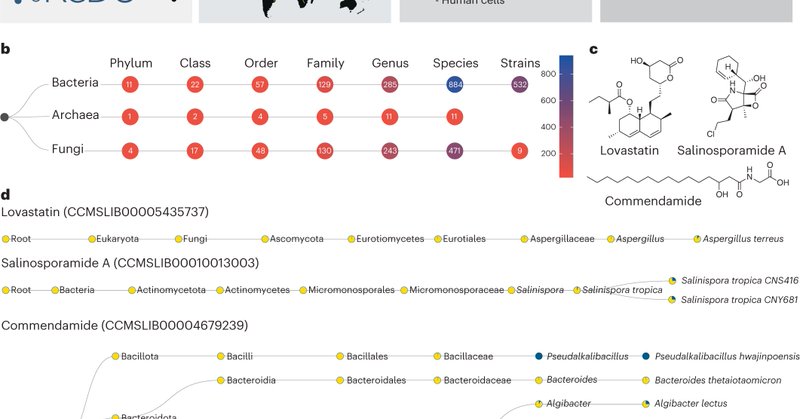
microbeMASST is finally out on Nature Microbiology! Massive thanks to all the co-authors and cannot wait to see how the #microbiome community is going to use it
nature.com
Nature Microbiology - microbeMASST is a tool to associate known and unknown metabolites to microbial producers leveraging untargeted metabolomics data.
12
91
243
✨ Wrapping up our final EMN meeting of the 2024–2025 term! ✨ A huge thank you to our outgoing team of amazing ECRs for their dedication and contributions over the past year. We'll miss you! 💙 Stay tuned, we will shortly welcome our new members for the 2025–2026 term! 💪
0
4
12
📢 Join the EMN Committee! Applications are OPEN—we want you on our 2025‑26 team. Make a difference, grow your skills, and connect with peers. 📷 Jul 28–Aug 10 2025 https://t.co/eYQkt6m62B 📷 Apply: https://t.co/SooANJN54j
#EMNCommittee #ECR #MetabolomicsSociety
0
7
10

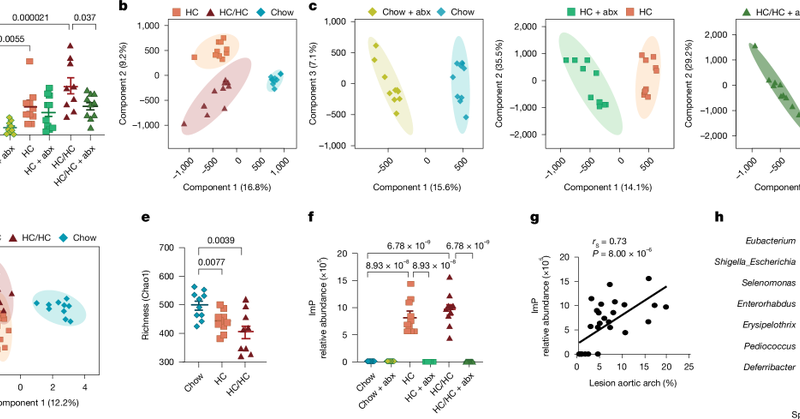
💥 A gut microbe metabolite that drives #atherosclerosis? Yes—Imidazole propionate (ImP) triggers vascular inflammation without changing cholesterol. 🧪 We show the pathway—and how to block it. https://t.co/ZazBw50FFC
#OpenAccess at @Nature
@CNIC_CARDIO
#microbiome #CVD
nature.com
Nature - Imidazole propionate produced by gut microbiota is associated with atherosclerosis in mouse models and in humans, and causes the development of atherosclerosis through activation of the...
30
155
388

My first #ASMS2025 was an incredible experience where I presented “Restoration of Antibiotic-Impacted Microbiome in Human Babies: Pilot Metabolomic Study on the Efficacy of Autologous Fecal Microbiota Transplantation” Huge thanks to Dr. Maria Gloria Dominguez Bello, Dr. James
2
2
13

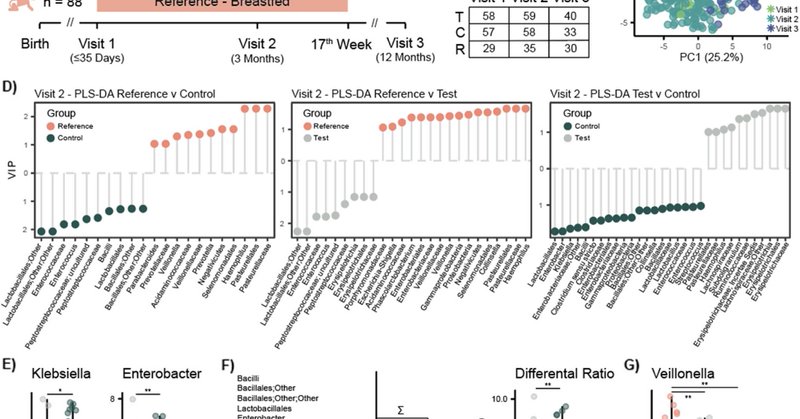
In #Microbiome 🔍Exploring the influence of a concept infant formula containing lipid droplets similar to human milk🍼 🚨Infants harboured fewer types of harmful & more types of helpful gut bacteria than babies fed on standard formula 👉 https://t.co/JvK0hYHnKd
1
3
7
The last of my PhD projects is finally out! This was a great collaboration with @Danone , looking at supplementing infant formula with a novel milk fat globule. #infant #microbiome #nutrition
link.springer.com
Microbiome - The supramolecular structure and composition of milk fat globules in breast milk is complex. Lipid droplets in formula milk are typically smaller compared to human milk and differ in...
0
4
12
As the manuscript is currently under review, I welcome any feedback or question 😁
0
0
2
This project was a massive collaborative effort between @DukeU , @Caltech , and @UCSD. A big thank you goes to the PIs who made this possible - Rima Kaddurah-Daouk, Sarkis Mazmanian, Rob Knight, and @Pdorrestein1 - and all the collaborators! 13/n
1
2
10
We believe this resource and its associated tools will aid future research in the pathophysiology of AD and in the broader context of #biomedicalresearch. Additionally, this dataset contains hundreds of yet-to-be-characterized metabolites that researchers can explore. 12/n
1
0
2
We then reprocessed 1.5k blood samples collected by the Alzheimer Gut Microbiome Project (#AGMP) and found phenylacetyl-carnitine to be correlated with #aging, #cognitive impairment, #physical exercise and AD #biomarkers in the cerebral spinal fluid (CSF). 11/n
1
0
2
Looking for these previously #uncharacterized carnitines, we observed phenylacetyl-carnitine to be enriched in inflammatory diseases. This workflow can be applied to any kind of (un)annotated MS/MS spectrum researchers are interested in. 10/n
1
0
2
We then developed #tissueMASST to translate animal findings to human datasets. This MS/MS search tool comprises ~50k LC-MS/MS samples captured from animal models and humans with associated metadata, such as tissue type, disease status, sex, and age. 9/n
1
0
4
Given their possible biological relevance, we did some magic 🪄 and annotated them as benzoyl-carnitine, phenylacetyl-carnitine, and phenylpropionyl-carnitine. We #synthesized the standards and their MS/MS spectra are now part of the GNPS libraries. 8/n
1
0
3
These molecules were classified as modulated by the microbiome and, in an external dataset, were observed responding both to #antibiotics and #prebiotics. Additionally, they positively correlated with #inflammation markers of the mesenteric lymph nodes of the mice. 7/n
1
0
3
Specifically focusing on #carnitines, which were dysregulated across multiple tissues, we generated a cross-tissue molecular network to capture a holistic view. We observed 3 putative carnitines that were not annotated via GNPS MS/MS libraries. 6/n
1
0
3
Having both SPF and GF animals also allowed us to putatively identify if molecular alterations were driven by the #genotype, the #microbiome, or both. Information available for all the molecular features differentiating AD animals from WT. 5/n
1
0
2
Thousands of metabolic features were driving these separations across tissues. Alterations were observed in the #bileacids pool (obviously😉) but also in N-acyl lipids, B vitamins, neurotransmitters, polyamines, and several other classes of molecules. 4/n
1
1
6
Murine models of #Alzheimers Disease (AD) present distinct metabolic profiles across five tissue types captured by this atlas - brain, serum, liver, cecum, and feces. 3/n
1
0
6
We have generated an untargeted #metabolomics atlas from more than 2,000 samples collected from tissues of 300 mice with different genetic backgrounds (3xTg, 5xFAD, C57BL/6J), colonization conditions (SPF, GF), sex, and age. Data and metadata are publicly available. 😁 2/n
1
0
3
I am excited to share the latest project I have been working on "A Multi-Organ Murine Metabolomics Atlas Reveals Molecular Dysregulations in Alzheimer’s Disease". 1/n
biorxiv.org
The etiology of Alzheimer’s Disease (AD) remains largely unclear but is likely driven by gene-environment interactions. Here, we present a multi-organ untargeted metabolomics dataset (2,271 samples)...
3
6
20