

Robin Forrest
@robinjforrest_
Followers
79
Following
355
Media
2
Statuses
41
Research Fellow @DeptPopMed / @HarvardMed || PhD candidate @LSEHealthPolicy
London, England
Joined January 2018
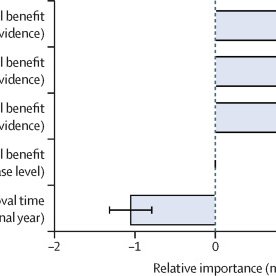
New paper in @TheLancetOncol. We explore the extent to which individuals could be willing to wait in exchange for greater certainty of the survival benefit of new cancer drugs. Thanks to co-auths: @mylene_lagarde, @AggarwalOnc, & Huseyin Naci. 🔗 https://t.co/lw3KPBTcZy
thelancet.com
Many cancer drugs approved through the FDA's accelerated approval pathway do not offer any survival benefit to patients. In this study, individuals expressed strong preferences for certainty that a...
0
2
4
Interesting piece from @VPrasadMDMPH on surrogate endpoints and their (potential) impact on efficiency and the cancer drug pipeline. Good to see our study discussed in context!

Just out in @NatRevClinOncol my latest on Surrogate Endpoints from the patient's perspective Despite writing on this topic for 15 years, hope to offer new ideas in this piece @vkprasadlab @Sensible__Med @Plenary_Session
1
1
7

To what extent would individuals be willing to wait in exchange for greater certainty of the survival benefit of new cancer drugs? New study in @TheLancetOncol by @robinjforrest_, @mylene_lagarde, @AggarwalOnc, & Dr. Huseyin Naci. Read now🔗 https://t.co/Sd5kU3kMWK
0
1
5

NEW 💊 Cancer patients could be willing to wait for certainty of the benefit of cancer drugs before they're approved by the FDA. More on @TheLancetOncol #CancerResearch by @robinjforrest_ & Huseyin Naci @LSEHealthPolicy & @mylene_lagarde @AggarwalOnc. https://t.co/fwe6z4VMWD

lse.ac.uk
The study estimates the duration individuals would be willing to wait for greater certainty that a new cancer drug would provide meaningful clinical benefit.
1
3
2

A very relevant and meaningful study. Understanding patients’ preferences for speed versus certainty of benefit- the trade-off of accelerated approval.

4
4
16

Interesting new work from authors @LSEHealthPolicy! 'Although people with experience of cancer place high value on faster access to new drugs, they also place utmost value on high certainty that new cancer drugs will ultimately offer survival benefit.' https://t.co/myGTr7rdQp
thelancet.com
Many cancer drugs approved through the FDA's accelerated approval pathway do not offer any survival benefit to patients. In this study, individuals expressed strong preferences for certainty that a...
0
3
3

Online First: Preferences for speed of access versus certainty of the #survival benefit of new #cancerdrugs: a discrete choice experiment https://t.co/saTfZIL4px
thelancet.com
Many cancer drugs approved through the FDA's accelerated approval pathway do not offer any survival benefit to patients. In this study, individuals expressed strong preferences for certainty that a...
0
6
12

🚨Our article out today in @TheLancetOncol Are countries harmonizing up or down? A 🧵 We examine the clinical benefit, #HTA review times, and prices of drugs reviewed through Project Orbis Cc: @VPrasadMDMPH @agentilini_ @AlysonHaslam
4
8
37
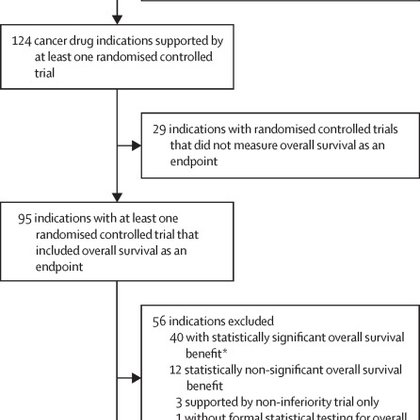
Also Online First: #Overallsurvival benefits of #cancerdrugs initially approved by the US Food and Drug Administration @US_FDA on the basis of immature survival data: a retrospective analysis https://t.co/zgPUDWoSC7
thelancet.com
Fewer than a third of indications approved with immature survival data showed a statistically significant overall survival benefit after approval. Notable inconsistencies in timing and availability...
0
14
18
In a new @bmj_latest editorial, the department’s @robinjforrest_ and Huseyin Naci discuss how the UK Government can prioritise patients in ongoing negotiations with the pharmaceutical industry over drug pricing. Access full editorial from here: ➡️ https://t.co/31zX5hvxNY
0
2
4

Every five years or so, an agreement is brokered between the UK government and the drug industry that shapes the pricing and reimbursement landscape for medicines. What do we need to know ahead of negotiations for the next version of the agreement? https://t.co/3FyMOu7r6x
bmj.com
Overpaying for medicines diverts funds away from other treatments and services For over six decades, an agreement has been brokered every five years or so between the UK government and the drug...
1
4
8
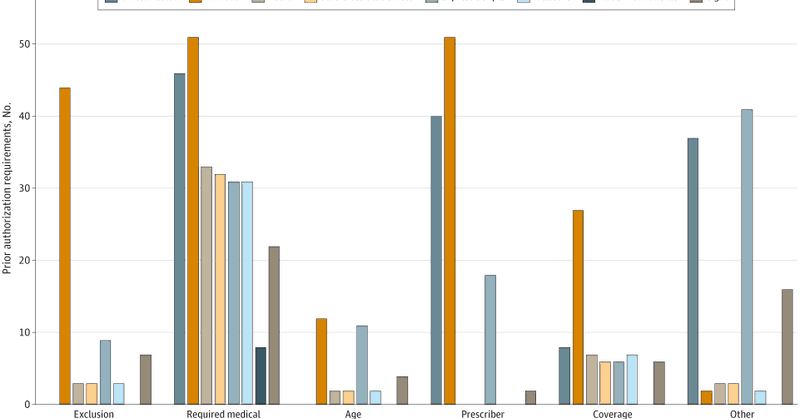
Prior authorization requirements for 1/3 of new drugs in Medicare Part D are more restrictive than FDA labeling, according this cross-sectional study. @LSEHealthPolicy @PortalResearch @akesselheim @robinjforrest_
0
5
3

NEW: Our #REALCentre commissioned @LSEHealthPolicy to research pharmaceutical policy in the UK. They identify 🔎 ▶️ shortcomings of current pharmaceutical policy ▶️ key principles for building a more coherent system. Read the final reports 🔽 https://t.co/NHCMebY0ef

health.org.uk
This project, led by London School of Economics and Political Science, reviewed the literature and relevant data to better understand pharmaceutical policy in the UK.
1
4
12
Want to learn more about pharmaceutical policy and economics? In a new report commissioned by @HealthFdn #REAL Centre, the Department’s Huseyin Naci & @robinjforrest_ explain pharmaceutical discovery, development, approval and adoption. ➡️ Access here: https://t.co/194uMOrvhc
0
15
29
Prior authorization requirements for 1/3 of new drugs in Medicare Part D are more restrictive than FDA labeling, according this cross-sectional study. @LSEHealthPolicy @PortalResearch @akesselheim @robinjforrest_
0
1
2
In new @JAMAHealthForum paper, @LSEHealthPolicy’s Huseyin Naci and @robinjforrest_ examine the insurer restrictions on new drugs in the US Medicare program➡️ https://t.co/gYNupVaVAm
@akesselheim @PORTAL_Research
jamanetwork.com
This cross-sectional study examines the characteristics of prior authorization policies for new drugs in Medicare Part D to understand whether they are consistent with US Food and Drug Administration...
1
5
11

Congratulations to our seven PhD Grant Recipients for 2022-23! Read more about our PhD grants scheme 👇 https://t.co/pDsCwPq2iX
2
8
27

The size of the US pharmaceutical market means that the US Food and Drug Administration has a disproportionately large global influence writes @robinjforrest_ of @LSEHealthPolicy
https://t.co/LsaTzQXmk6
0
1
2

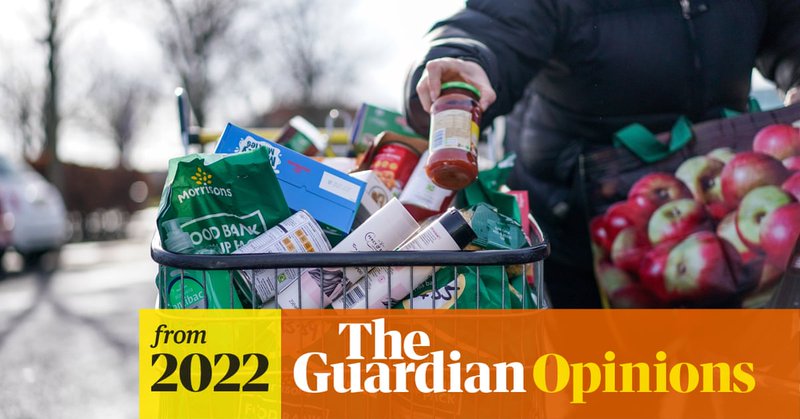
"If you have to worry about whether you have food for dinner that evening, and for the rent on Friday, you have little space to think about anything else. Such stress can permanently affect the development of your children".
theguardian.com
Poverty is literally a matter of life and death for those on the margins, and the government has so far failed to step in, says Michael Marmot, director of the UCL Institute of Health Equity
25
1K
2K
At the top of my contribution list: focus disproportionately on provision in UK regions with lowest screening uptake and lowest rates of early diagnosis.
0
0
0