
Dr. Kaitlin Creamer
@mumblerKC
Followers
242
Following
5K
Media
74
Statuses
762
🧬 Postdoc @BanfieldLab @igisci @UCBerkeley 🌿 PhD @Scripps_Ocean 🌊 🧫 she/her ~soil & ocean microbes are cool~ 🦋 https://t.co/kGKE1iNVko
Berkeley, CA
Joined August 2012
This was a big team effort- couldn't have done it w/o help of co-first author Gabe; Paul, Alyssa & all previous Jensen lab Salinispora experts for inspiration. Special thanks to then-undergrads Victoria & David: carefully sequencing hundreds of strains took massive effort! 7/7
0
0
0
Does deep sampling find new compounds? 💊 Yes. Gabriel & Ebru linked many unknown gene clusters to molecules. We also identified fridamycin E & ikarugamycin for the first time in Salinispora cultures: even well-studied bacterial genera have hidden chemical potential!
1
0
0
Where does this diversity come from? Horizontal gene transfer likely contributes. We found 18 biosynthetic gene cluster families that were unique to a single strain. This supports the "plug-and-play" evolution of secondary metabolites, reported previously in Salinispora.
1
0
0
Why 2 populations in 1 spot? We compared microscale vs. global strains. Result: Pop 1 & Pop 5 were separated by their biosynthetic gene cluster profiles. Specialized metabolism likely acts as an ecotype-defining trait, helping distinct populations coexist in the same sediment.
1
0
0
Turns out, specialized metabolite potential plays a huge part. From 96 "microscale" strains, we captured 67% of the entire S. arenicola global biosynthetic diversity (60 of 89 gene cluster families)! We even found 11 GCFs that were unique to the microscale plot..
1
0
0
The answer: Nope. They were not clonal. They resolved into 2 distinct S. arenicola populations co-existing inches apart! (We also isolated 2 other species). Shoutout to Victoria who led the strain isolation: check out these beautiful Salinispora colonies from each sub-quadrat👇
1
0
0
Our new paper on Salinispora is out in @AEMJournal! @Scripps_Ocean Ever wonder if an actinomycete living in 1m² ocean sediment is just one big clonal colony? We sequenced 99 Salinispora strains from a single Fiji reef plot to find out. 🧵1/7

journals.asm.org
The marine actinomycete genus Salinispora has become a model organism for natural product discovery and to address actinomycete diversity and distributions in marine systems. While biogeographic...
1
0
1
Taxonomic and biosynthetic diversity of the marine actinomycete Salinispora across spatial scales

journals.asm.org
The marine actinomycete genus Salinispora has become a model organism for natural product discovery and to address actinomycete diversity and distributions in marine systems. While biogeographic...
0
2
5

Some archaea—an ancient group of microorganisms—have an entirely novel genetic code, according to a new study in Science. Their genetic code reassigns a DNA “stop” signal to incorporate the rare amino acid pyrrolysine into their proteins. The findings expand our understanding
8
138
482
Congrats @AndrejaKust and team!!! Capturing the complex microbiome of Cyanobacteria, allowing for ecologically-relevant studies in the lab!
🚨 Fresh from the press! We created and analyzed over 100 in vitro cyanobacterial consortia using well-characterized model cyanobacterial hosts to better understand how cyanobacteria recruit and interact with their microbiomes. Check it out: https://t.co/VmhILhDrni
0
0
5

🥳🥳 Our paper using #metagenomics to explore the core species of stable #cyanobacteria #microbiome communities is now out in the @ISMEJournal!!! Excellent work by @AndrejaKust and company, and collaboration with @BanfieldLab. https://t.co/QwrR2MzNyU

academic.oup.com
Abstract. Cyanobacteria are integral to biogeochemical cycles, influence climate processes, and hold promise for commercial applications. In natural habita
1
8
24
Congrats @science_doodles and team, out today in Science!! The phylocline decoded!! 🧬🌊

Many of you gave me so much encouragement when I posted here earlier about my 10 year long passion project to make a microbial map of the ocean. Pinch me because I can't believe I get to update you that today that research was published in the journal SCIENCE! (@aaas)
0
0
6
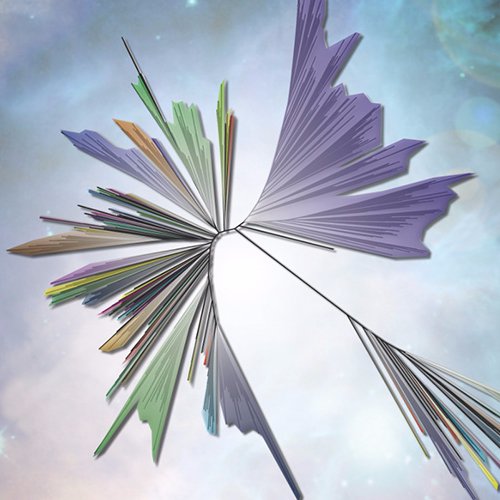
🌊 Through metagenomics and hydrographic data, Bethany Kolody and team uncovered 6 microbial cohorts and 10 functional zones structured by ocean circulation in the South Pacific. Congrats on this breakthrough in ocean microbial ecology!🌎 https://t.co/V9bqvaqRCN
I’m very excited to finally share the results of a passion project that has been on my mind for nearly a decade. You can find the pre-print below, but what follows is the saga of how this project came to be:
0
1
11
The MOANA tool is live now, so give it a try! A ready-to-run docker image of the app is available at https://t.co/qB9xFVhKTC prokaryotes (16S rRNA amplicons), https://t.co/ffHUzHPce9 eukaryotes (18S rRNA amplicons) and https://t.co/YZyvWmV7x2 reconstructed genomes. Here are the
@EricAllenSIO @andreweallen @Cathy_withaSea @jamesgiammona @BanfieldJill Of course, microbial species are unique and their distribution patterns are more nuanced than six spatial cohorts. To address this, I built a tool called the Microbial Ocean Atlas for Niche Analysis (MOANA) which allows you to interactively plot the distribution of any taxa of
0
7
14
This is such incredible work! I’ve been obsessed with this project and its implications ever since @science_doodles shared her dream of it when we first met at @Scripps_Ocean . What a journey, with amazing discoveries and definitely more to uncover! Congrats Bethany & team! 🎉
I’m very excited to finally share the results of a passion project that has been on my mind for nearly a decade. You can find the pre-print below, but what follows is the saga of how this project came to be:
0
0
6
🎓Congratulations to Hans Singh, who recently earned his PhD from Scripps! His research in marine microbiology & genomics focused on the #microbiome of the #deepsea, exploring its potential to produce compounds with applications in natural products. 🌎⬇️

scripps.ucsd.edu
Hans Singh recently earned his PhD from Scripps Institution of Oceanography at UC San Diego, where he studied marine microbiology and genomics. Singh grew up in Chapel Hill, N.C., and received his...
2
3
16

New work from @mfgrp lab! It was such an honor to work with the insanely talented @DjenetBousbaine and so fun to see it all come together here!

Today we report that an engineered skin bacterium, swabbed gently on the head of a mouse, can unleash a potent antibody response against a pathogen. Could lead to topical vaccines that are applied in a cream. @DjenetBousbaine led the charge... @Nature 1/55
1
5
29
And then there was one… Celebrating the final ‘cosm from our 7th & last 13CO2 experiment of 2024. We’re studying how the psY gene affects CH4 fluxes & soil C cycles. Much gratitude to Rina Estera @NeCesiTo1TiemP0 Pam Ronald Lab @SavageCatsOnly & many others @igisci
0
5
34
Pre-print 🚨 alert! We used AI protein structure prediction to analyze ~10,000 Borg proteins, revealing potential capsid proteins & viral-like features in these massive elements from methane-eating archaea. Could they be the first archaeal giant viruses? Check it out!
1
26
105
Four years later and this tweet is just as important today. Get out and #VOTE! There is STILL so much at stake.
0
0
3