
David Berron
@david_berron
Followers
1K
Following
4K
Media
33
Statuses
682
Cognitive neuroscientist | Group Leader @DZNE_de & @biofinder_study | memory | alzheimer | digital health | co-founder @neotiv_app | @davidberron.bsky.social
Magdeburg (GER) | Lund (SWE)
Joined January 2013
A lot has happened in the field of #remote and #unsupervised #digital #cognitive #assessments in #preclinical #Alzheimer's since our 2021 review. Here we summarize the recent updates and provide an overview of future developments in our new preprint! https://t.co/KBrmbwqPUs
12
10
27

Demenzdiagnosen sind aufwendig und werden oft spät gestellt. @david_berron und Kollegen am @DZNE_de haben eine Smartphone-App mit Gedächtnistests entwickelt. Diese kann früh Hinweise auf eine #Demenz geben. https://t.co/re3BjzrxJS
#alzstoppen
2
3
7

Die #DFG richtet zur weiteren Stärkung der #Spitzenforschung an den Hochschulen 7 neue #Sonderforschungsbereiche (SFB) ein. Die Themen reichen von Materialübergängen oder der Wiedervernässung von Mooren bis zur Immunregulation in der Leber. Einzelheiten: ➡️ https://t.co/kXJWN77KRp
1
6
40

I am happy to announce that our paper is finally out! We used a multivariate approach to identify a pattern of brain activity that moderates the detrimental effects of AD pathology (condensed to a single score) on cognitive performance 🧠💡📈 Read it here: https://t.co/o87IEgoXmG
2
7
34
Today I will be presenting "Use of plasma p-tau217 to identify Aβ-positive cognitively unimpaired participants for clinical trials: A multicohort stud" at @CTADconference (OC-29, 4:40pm CEST).
1
4
24

What if you could test your cognition using a smartphone? @david_berron and @lindsayrclark join #DementiaMatters to discuss their study looking at whether an app could be an effective tool for detecting cognitive impairment remotely. Listen 🎧 https://t.co/wBH9T5Yl8i
1
3
11

@lemwisse and I are involved in a super cool project to advance our ability to measure spatially-resolved omics data from human tissue. We are looking for a postdoc to help push this project forward. Details below! RT appreciated!! https://t.co/IGoJznmLLw
fens.org
0
15
23
@_michael_scholl @OhmanFredrik @neuroplebeian @PappKate Alexandra König and brilliantly led by Sarah Polk
0
0
1
with @_michael_scholl @OhmanFredrik @neuroplebeian Kathryn Papp Alexandra König and brilliantly led by Sarah Polk!
0
0
0
1⃣First, to investigate the amygdala, we developed a new and reliable T1-weighted MRI segmentation protocol for the whole amygdala that has been incorporated into the existing ASHS atlas @picslupenn which can be used by you!👇
1
2
3
We are #hiring a Postdoctoral Research Associate to join our interdisciplinary research team at Boston University, working at the intersection of cognitive neuroscience, neurotechnologies, and data analytics. Check out the full job posting here: https://t.co/voUdZDQrLy
0
100
223
We are at #AAIC24 @alzassociation in Philadelphia this week - please find us at our posters and talks on Monday and Wednesday!
0
1
26

Good morning #AAIC24! As day 2 dawns on Philadelphia, here are a few of our project partners who will be presenting their work today. Check out their presentations⤵️@Alzassociation
0
2
5
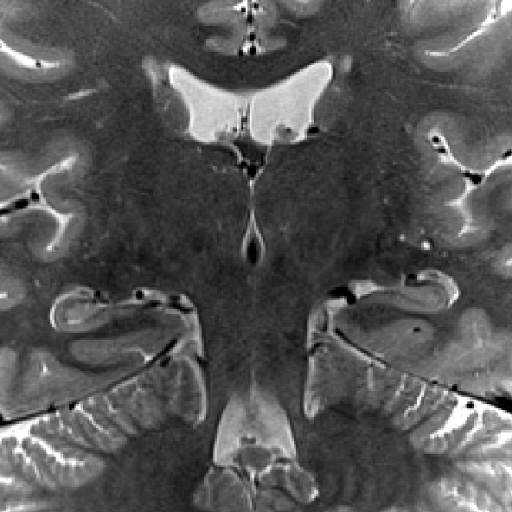
Attending #AAIC24!? Be sure to check out work by the HSG tomorrow (Monday) at Poster 386!🥳 Catch @jennanadams presenting “A harmonized, histology-based protocol for selection of medial temporal lobe cortical subregion ranges on magnetic resonance imaging” from 3:30-4:15pm! 🧠✨
0
4
10

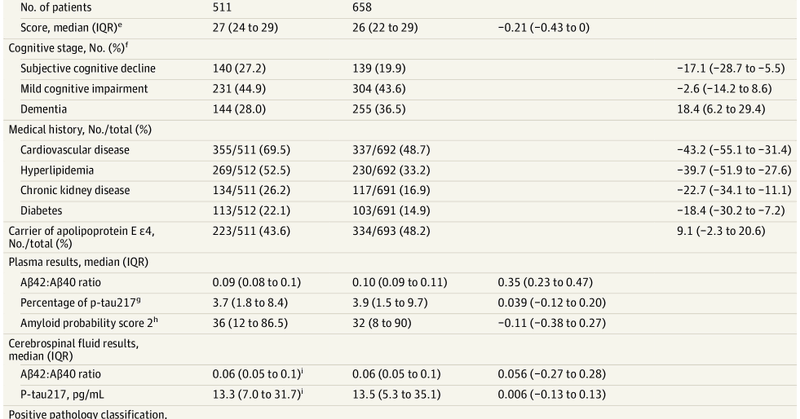
Can a blood test help primary care physicians to identify patients with Alzheimer’s disease? If you are interested in this question, please attend the talk at #AAIC24 (#AAIC2024). It will be in Hall A at 2 pm today. The paper is published in JAMA. https://t.co/VClxuyPLbk
jamanetwork.com
This prospective study evaluates a clinically available Alzheimer disease blood test in primary and secondary care using predefined biomarker cutoff values.
2
10
43

Very proud of this study! We have worked for many years now and finally show that BBMs work when implemented prospectively in primary and secondary care.

🚨Publication in @JAMA_current 🚨 Blood biomarkers to detect Alzheimer’s disease in primary and secondary care, published today in JAMA led by @SebastianPalmqv:
2
7
44
Interested in how memory and neural function change in early AD stages? Come by my #AAIC24 poster on Monday 29/8: “Longitudinal changes in brain activity during mnemonic discrimination over the course of Alzheimer’s disease” Poster number 868. Hope to see you there!
1
3
20

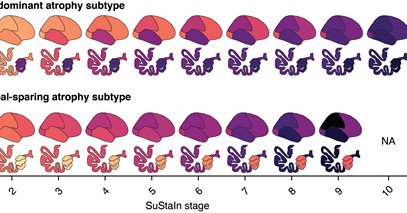
Very honoured to see our recent article on atrophy heterogeneity being so extensively discussed in the current @Brain1878 editorial. Editorial➡️ https://t.co/A91LxhAj7H Paper➡️ https://t.co/X4HFyHSYr2
@david_berron @DZNE_en
academic.oup.com
Using cross-sectional structural MRI, Baumeister et al. identify two distinct patterns of brain atrophy in a memory clinic-based sample of older adults. Th

The heterogeneity of Alzheimer’s disease New Editorial in this month's Brain:
0
3
18

Ever wondered how our brain may learn to distinguish between very similar stimuli? Check out our new preprint https://t.co/aVpXGwCqEA we found that the neural difference between object lures and repeats decreased in the perirhinal cortex following a 2-week online training

biorxiv.org
Mnemonic discrimination (MD), the ability to distinguish between similar experiences in memory, is essential for memory precision. We hypothesized that training mnemonic discrimination should improve...
1
1
5
The heterogeneity of Alzheimer’s disease New Editorial in this month's Brain:
0
6
22