

Berkeley Economics
@berkeleyecon
Followers
17K
Following
3K
Media
119
Statuses
2K
OFFICIAL Twitter of the Department of Economics at the University of California, Berkeley.
Evans Hall, Berkeley, California 94720
Joined October 2015

🆕 Who wins when public transit challenges private transit? Today on VoxDev, @danbjork @Columbia_CDEP, @Alice_Duh @WorldBank, @nagpal_geetika @wb_research & @NTsivanidis @BerkeleyHaas @berkeleyecon explore the impacts of new public buses in Lagos:

voxdev.org
Introducing new public buses in Lagos improved commuter welfare through lower fares and better service, but also reduced driver incomes and increased wait times in the private sector – highlighting...
0
5
10
2/2 Nakamura presents findings from "Beyond the Taylor Rule," her Jackson Hole paper co-authored with @JonSteinsson and Venance Riblier. The research shows the Fed's 30-year-old formula needs updating; supply shocks require different responses than demand-driven inflation.
0
0
0
1/2 Berkeley economist Emi Nakamura on @Bloomberg podcast Odd Lots: Central banks with strong credibility can raise rates more slowly without sparking runaway inflation.
1
0
2
Welcome to Berkeley Economics, Prof. Lanzani! In this Q&A with @serra_pelin1, @Giacomolanzani explains why polarization persists even when we have enough info to agree—and why leaders must adjust their trust in models as data changes. Read the interview: https://t.co/WJYnxVajNc
0
2
35
Does government defence R&D crowd out or crowd in private innovation? New research co-authored by @berkeleyecon's Enrico Moretti shows it crowds in. But is it most efficient? 🤔Read @VoxEU @CEPR_org: https://t.co/f2jqnZQqjI
#Economics #PublicPolicy
cepr.org
Defence R&D is a major component of government-sponsored R&D in many developed economies, and the effect of defence R&D expenditures on private sector innovation and economic growth has been a hotly...
0
0
1

Takatoshi Ito, scholarship on Japan’s economy transformed Kosuke Aoki @UTokyo_News_en, Alan Auerbach @berkeleyecon, Charles Yuji Horioka @KobeU_Global, Anil Kashyap @ChicagoBooth, Tsutomu Watanabe @UTokyo_News_en, @deweinstein @columbia_econ
https://t.co/NTKPmboEUB
0
5
6
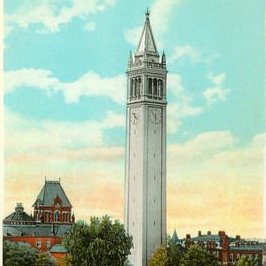
Douglass North, BA 1942, PhD 1952, born November 5, 1920, received the Nobel Prize in Economics in 1993 for his work on the role of institutions in the development of economies. North had only a "C" average as an undergrad, but triple majored in poli sci, philosophy & economics.
1
7
14

New CEPR Discussion Paper - DP20763 The International Monetary System in the Last and Next 20 Years Redux Barry Eichengreen @B_Eichengreen @berkeleyecon, Raul Razo-Garcia @Carleton_U
https://t.co/XbOaord686
#CEPR_IMF #EconTwitter
0
10
21

Submissions/Applications for the World Inequality Conference 2026 are now open Join us at the Paris School of Economics on June 4-5 2026 https://t.co/dJ6s5uTqMm
11
93
276

Do mental health treatment delays impact mortality? Sydney Costantini (@berkeleyecon) on how clinic congestion affects mortality for veterans: https://t.co/CrC9C54UgA
1
2
13
Berkeley's @DmitryTaubinsky in @AEAjournals: fuel economy labels and sugary drink warnings changed behavior but may have decreased overall welfare. They increased variance of choice distortions—helping some people while making others' decisions worse. https://t.co/5PReMhOKSu

nber.org
0
0
5

A new research series focuses on 5 "second look" policies in California, showing that about 12,000 people have been resentenced under these 5 reforms: https://t.co/546hUizDaL
#CJReform #California #CaLeg

capolicylab.org
Berkeley, CA, September 24, 2025 — A comprehensive series of reports released today by the nonpartisan California Policy Lab (CPL) and Committee on Revision of the Penal Code focuses on “second look”...
2
3
3

1/7 Do people really work less as countries get richer? New research by UC Berkeley’s Emmanuel Saez and Amory Gethin shows the story is more complicated. 🧵 🔗
1
1
3
7/7 Learn more about this groundbreaking work in the full article from The Atlantic. https://t.co/zi5OI3nvMj
#EconResearch #Taxation #EconomicInequality #UCBerkeley

theatlantic.com
A clever new paper puts concrete numbers to the taxes paid by members of the Forbes 400.
1
6
22
6/7 This research is a technical feat, combining anonymized IRS data with public company filings to create a comprehensive picture of wealth and tax payments. It shows how the wealthiest pay a smaller proportion of their income in taxes than many middle-class professionals.
1
0
16
5/7 These “paper losses” reduced the billionaires' taxable income by an average of $33 million a year between 2018 and 2020. 🤯
1
1
12
4/7 How? The team found the country’s tax code is regressive at the very top. Billionaires use creative accounting strategies, like making profitable businesses appear to be operating at a loss, to lower their taxable income.
1
1
17
3/7 They found the average tax rate for this group is just 24%, much lower than the reported 34% figure from the Joint Committee on Taxation.
1
3
17
2/7 The study, co-authored by Akcan Balkir, Emmanuel Saez, Danny Yagan, and @gabriel_zucman , focuses on the Forbes 400—the top 0.0002% of the population, including figures like Jeff Bezos and Elon Musk.
1
3
17
1/7 New research from our faculty @berkeleyecon reveals how America's wealthiest people avoid paying taxes. A team of UC Berkeley economists has put concrete numbers on the effective tax rate for the country's richest individuals.
1
49
192