

Daniel Björkegren
@danbjork
Followers
1K
Following
876
Media
20
Statuses
290
Machine learning/digital data for developing economies. Asst. Professor @Columbia. Head of AI and Development Initiative @Columbia_CDEP
New York City
Joined May 2009

My research team is looking for a full-time research assistant to be based in Lagos, Nigeria, to work on a project on the minibus transit industry
1
2
8
This is a great tool--it identified and helped us fix subtle errors in several papers

I am super excited to share a new AI tool, Refine. Refine thoroughly studies research papers like a referee and finds issues with correctness, clarity, and consistency. In my own papers, it regularly catches problems that my coauthors and I missed. 1/
0
2
2

I wrote a long blot post on the economics of AI, prompted by two great workshops (Windfall and NBER), and me leaving OpenAI for METR: TLDR: we driving in the fog. 1. There is no standard model of AI’s economic impact. Economists have been using a wide range of assumptions to
22
93
471
"Policy allocations reveal more than 𝐰𝐡𝐨 gets benefit — they reveal 𝐰𝐡𝐚𝐭 is valued. We show how to invert the targeting problem to uncover the hidden welfare weights behind policy decisions." New paper from @jblumenstock, @danbjork and Knight: https://t.co/UxXvDfBuuC
0
4
10
Working on AI and human capital in low income countries? Submit to this symposium at the World Bank / GWU
worldbank.org
Symposium participants explored how AI-driven innovations can help address critical human capital challenges in low-income and lower-middle income countries.
1
1
2

Governments invest a lot in public transit, but in developing countries transit is already privately provided. Examining how the private response shapes the impact of these investments, from @danbjork, Alice Duhaut, @nagpal_geetika, and Nick Tsivanidis https://t.co/KxGWFODP9A
25
13
24
Useful facts for the IO of AI

🚨 New working paper 🚨 Demand for LLMs: Descriptive Evidence on Substitution, Market Expansion, and Multi-Homing A key question for the business of AI is the extent to which LLMs are differentiated from each other. I use data from @OpenRouterAI to take a first look. cc
1
1
6

Great opportunity to join the team at Berkeley! I'm recruiting a postdoc to work at the intersection of CS and applied econ, to work on projects that address pressing global policy issues. Spread the word!

✨HIRING ✨ We invite applications for 4 new full-time Bellwether Postdoctoral Scholars with research in areas including social informatics, climate & sustainability informatics, digital communications, algorithmic justice & more! Please spread the word!
0
16
32

Very cool to see AI use cases in places with cost-constrained internet access that is actually cheaper than the web/google.
Could AI leapfrog the web? Only 37% of sub-Saharan Africans use the internet. Cost is the #1 constraint. In a study with 469 teachers in Sierra Leone, we find AI works better than the web--and is 87% cheaper. (more)
1
1
1

Bandwidth in sub-Saharan Africa is scarce and costly. AI responses require less bits and require less steps than search which wants you to connect to a website (particularly an advertiser's website). AI, FTW.
Could AI leapfrog the web? Only 37% of sub-Saharan Africans use the internet. Cost is the #1 constraint. In a study with 469 teachers in Sierra Leone, we find AI works better than the web--and is 87% cheaper. (more)
4
1
7

This is essential research. AI can do what the web cannot and give entire communities new tools to learn and create.
Could AI leapfrog the web? Only 37% of sub-Saharan Africans use the internet. Cost is the #1 constraint. In a study with 469 teachers in Sierra Leone, we find AI works better than the web--and is 87% cheaper. (more)
22
16
115
More details: https://t.co/ARM9ytbJmD and full paper:

arxiv.org
Only 37% of sub-Saharan Africans use the internet, and those who do seldom rely on traditional web search. A major reason is that bandwidth is scarce and costly. We study whether an AI-powered...
85% of sub-Saharan Africans have mobile broadband signal, but few use the internet. Internet users use WhatsApp—but seldom web search (see plot). We study a GPT-based chatbot accessible through WhatsApp. Sierra Leonean teachers use AI more than web search (leapfrog!)
0
1
10

Introducing the Stripe Economics of AI Fellowship: The economics of AI remains surprisingly understudied. The fellowship aims to help fill that gap, by supporting grad students and early-career researchers with $, data, a conference, and community –
25
185
1K

This is a fascinating paper. Remarkable stat: across 17 sub-Saharan African countries, just 17% of adults report owning a computer. Most access the web through mobile devices. But data is incredibly expensive. So AI helps produce targeted results for cheaper. E.G.
New working paper: Could AI leapfrog the web? Only 37% of sub-Saharan Africans use the internet. Cost is the #1 constraint. In a study with 469 teachers in Sierra Leone, we find AI works better than the web--and is 87% cheaper. https://t.co/Wb5O1hS10c Let's dive in... 🧵(1/X)
1
2
2
Exciting job

Exciting job I'm hiring for - Policy Demos! We've often found the best way to help people understand powerful AI technology is to 'show, not tell', and the best way to do this is to demonstrate the real capabilities of real systems. Help us do that!
0
0
0

‼️Job alert ‼️ Pre-Doc positions: Are you a highly motivated person that wants work on cutting-edge research exploring the role of AI technologies in Global South? @predoc_org @econ_ra
https://t.co/OrwJDpCUKl
0
28
82

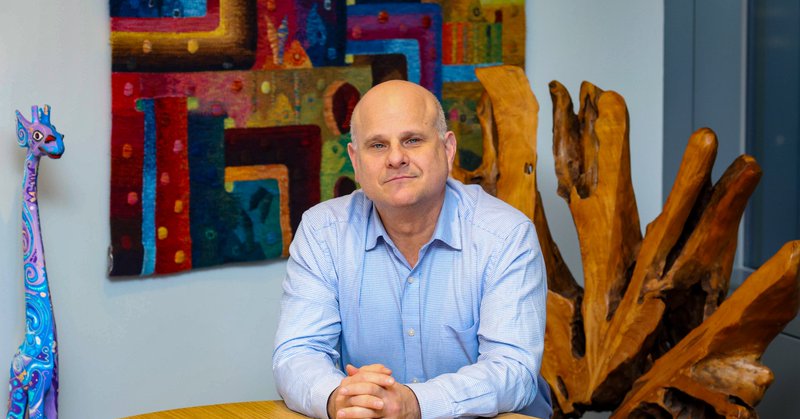
The research conducted with my students at Columbia Jun Ho Choi, @divyabudihal, Dominic Sobhani, and chatbot creators Oliver Garrod and @PaulAtherton13
0
0
3
This is together with the excellent folks at @Fab_Inc_dev who created the chatbot and are coordinating work at https://t.co/1YSYWliKkw
@AI_for_Educ. Also @EducAidSL in Sierra Leone
ai-for-education.org
A community to ensure equitable access and benefits from AI in Education
1
0
3