
Jon Steinsson
@JonSteinsson
Followers
22K
Following
4K
Media
64
Statuses
1K
Economics Professor at UC Berkeley
Joined June 2012
Excellent post about the mystique of banks creating money by Guido! I also discuss this issue at some length in section 7 of my Money and Banking chapter: https://t.co/uBrttIxJiT

A short post, based on my teaching notes, on the recurring mystique around banks “creating money” @dandolfa
3
29
118
A short post, based on my teaching notes, on the recurring mystique around banks “creating money” @dandolfa
17
43
176
The price-earnings ratio of the stock market has only once been higher than it is today (at the top of the internet bubble). Heady times. [Source: Robert Shiller]
11
44
214
On the Great Depression: I think the most compelling evidence is historical, narrative, and sociological. Basically, the notion that the people in the bread lines and living in Hoovervilles were not on vacation. These people were desperate due to a breakdown of the economic

Thank you Jon @JonSteinsson for this detailed response. We agree about all three of your statements although they are not all of the same ontological category. Point 1 comes closest to a theoretical component of a research program. Points 2 and 3 are falsifiable statements but
7
16
101
I have to say that I do not think of the three tenets Roger mentions as the "hard core of the NK program". To me, the core issues are empirical: 1) the Great Depression was not a Great Vacation. 2) Monetary policy has real effects. 3) Demand shocks seem to have sizable effects on
.@GautiEggertsson and @JonSteinsson have responded to my critique of the New Keynesian (NK) model. Let me explain why we interpret the same facts differently. First: a digression into the philosophy of science. Most economists are aware of Karl Popper. In his book Conjectures
12
13
149
The fact that inefficient fluctuations in employment occur largely on the extensive margin (unemployment) rather than the intensive margin has never struck me as a major problem for the NK model. Just a simplifying assumption. But many people seem to disagree.
.@JonSteinsson raises an interesting conceptual question. Is the framework we use to understand the price of a commodity in a single market subject to the same critique as one might levy against the representative agent New Keynesian (RANK) model? The theory of demand and supply
4
3
44
A lot of critiques of the NK model apply just as well to supply and demand in any market: Every time something happens in said market, you need to add a unique sequence of shocks to explain what happened. Does that mean supply and demand is not a useful framework?
9
5
76

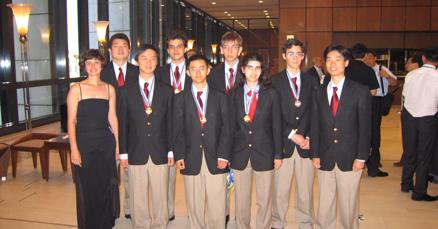
Unbelievable: the famed Berkeley Math Circle is being forced to shut down due to a bureaucratic requirement where a guest lecturer giving an hour long lesson needs to be officially fingerprinted. How is fingerprinting even still a thing in the 21st century? Chancellor Lyons
dailycal.org
After 27 years, Berkeley Math Circle has shut down its flagship program, BMC-Upper, due to “stringent” new campus background check requirements, according to a statement on BMC’s website.
34
79
772

A new approach to handling the age-time-cohort problem based on proxy variables and machine learning, from David Bruns-Smith, @eminakamura2, and @JonSteinsson
https://t.co/3vjfrFk8on
1
10
30
We also get much less erratic results when we apply our method to 11 other countries than the conventional method yields for these countries 9/9
0
1
8
Our main substantive conclusion is that the slope of the age profile of the cross-sectional variance of income is quite a bit smaller than conventional methods (which include cohort effects but drop time effects) yield. 8/
1
0
10
Since ours is a time series application, it is important to employ blocked cross-validation to avoid data leakage between training and test sets. We also use debiased machine learning to avoid the bias associated with typical shrinkage estimation. 7/
1
0
4
To solve that model selection problem, we use cross-validation to select among a huge number of possible proxy models. I.e., we choose the proxy model that fits best out of sample. 6/
1
0
6
To get identification, one must make additional assumptions. We choose to model the time effects as being a function of a set of “proxy” variables. But which variables? And which functional form? 5/
1
0
6
It is the slope of the age profile that is unidentified (absent additional assumptions) since it is colinear with the slope of the cohort and time profiles. Non-linear age effects are identified. 4/
1
0
6
This is an example of the age-time-cohort problem that arises in many contexts. For example, younger people are more likely to vote Democratic. Does this mean the future is bright for Democrats? Maybe. But maybe not. 3/
1
0
4
If the cross-sectional variance of income increases sharply with age, this suggests that people face large persistent income shocks over their lifetime. However, the slope of this age profile is not separately identified from time and cohort effects. 2/
1
0
6
I have a new paper on the age-time-cohort identification problem. The substantive issue we address is the age profile of cross-sectional variance in income (a key statistic for heterogeneous agent models). 1/
3
38
165
Looks like the Peruvians need to extend their EEZ. Iceland pioneered this about 75 years ago. Iceland only needed 200 miles. So, we stopped there and that is now the Int law. But some areas need more to protect coastal fishing stocks. They should extend further!

An interesting video. See how Chinese fishing vessels are stacked exactly at Peru’s 200 nmi EEZ line. Why? Because their AIS goes dark second they slip inside. So even if they look outside, they’re not. And fish don’t know EEZs. So they’re getting wiped out either way.
6
14
168
I stand corrected. It is four economic history Nobel Prizes in a row!!! (Bernanke 2022, Goldin 2023, Acemoglu, Johnson, Robinson 2024, Mokyr 2025)
Three economic history Nobel Prizes in a row! Go economic history! Congratulations Joel! (Perhaps more departments should reconsider letting economic history die???)
8
45
422