

Andrew J. Stier
@andrew_stier
Followers
108
Following
331
Media
7
Statuses
104
PhD Student in U Chicago's Environmental Neuroscience Lab interested in cities, brains, and mental health https://t.co/GCy0LJNdAW @EnvNeuroLab
Chicago, IL
Joined March 2019
I'm happy to announce our new paper out today in PNAS: "Evidence and theory for lower rates of depression in larger US urban areas" Working on this paper drastically shifted my understanding of the factors that influence depression. https://t.co/6ecEShSYxu 1/6

pnas.org
It is commonly assumed that cities are detrimental to mental health. However, the evidence remains inconsistent and at most, makes the case for dif...
1
7
22

🏙️ New study published in @NatureComms reveals how cities shape unconscious racial biases. The more populous, diverse, and integrated a city is, the less implicit racial bias exists. Segregation and lack of cosmopolitan spaces contribute to bias. https://t.co/nE5P2lLc83
1
14
31
This was incredibly fun to work on with folks at UChicago and @fariba_k and @Sajjadi_Sina that started with a conversation during a barbecue during last summer's @sfiscience complexity GAINs summer school.
1
1
6
Our newest work in Urban Psychology...uniting a complex systems approach to cities with social psychology, expertise based learning, and neurobiology evidence.

Living in cities requires constant learning: What are the consequences? We find that experiencing larger, more diverse and less segregated cities reduces implicit racial biases: https://t.co/J0u3UeV47x
@andrew_stier @EnvNeuroLab @miurbanchicago
1
0
3

Thankful to coauthors—esp 1st author Omid Kardan—for massive efforts! This is one of my favorite papers because it doesn't just ask wether we can predict behavior from functional connectivity, but also asks what we learn from patterns of predictive model success & failure.

Which #brain networks support #SustainedAttention & #WorkingMemory during development? @monicarosenb &co show that adult functional network models predict individual differences & within-person changes in pre-adolescents’ SA & WM performance #PLOSBiology
https://t.co/z12WopCwIy
2
22
65

Are there generalizable canonical brain states🧠 that underlie cognition as we rest, perform tasks, and watch engaging & boring🎥? What low-dimensional manifold underlies large-scale brain dynamics? How do these dynamics reflect our ever-changing minds? https://t.co/bWBsmdrn1o

biorxiv.org
Cognition and attention arise from the adaptive coordination of neural systems in response to external and internal demands. The low-dimensional latent subspace that underlies large-scale neural...
4
48
153
Imagine this was the Chicago lakefront 🤔

0
0
4

Our 🚨 New Paper🚨 validating the use of scale-invariance in #fNIRS is now published in Cortex! A LOT of work went into this paper and I'm super proud of it and excited to see it finally published. 🥳 ...wondering wtheck scale-invariance is and why it matters? 🧵below!
1
8
24

Just in case you needed a reminder of all the LIFE we can fit into cities when we rethink streets for cars. Space for green and nature DOESN’T compete with density of people or buildings. It competes with density of CARS. Image via @wattdesigns @LondonNPC
16
325
994
Here's our take on the BWAS paper & individual differences analyses in human neuroscience more generally @esfinn. Props to the original authors for such discussion-generating work https://t.co/nmCbTPIUGX
2
56
159

Wow. We're just blowing through nap time, aren't we...
8
99
1K
It has fun to be a part of this community the last 2 years! Highly recommend to anyone @ uchicago interested in cities.

Applications are now open to @UChicago grad students for the Certificate in Urban Science and Sustainability, an opportunity for training at the intersection of urbanization, development, and climate change https://t.co/4mV8rfSLi9
0
1
5
So exciting and well deserved! Can't wait to see where Dr. Kim takes her lab's research 🔬

I'm beyond excited to share that I'll be joining the Psychology Department and Health Equity Research Center at @WSUPullman as an Assistant Professor starting in Jan 2023! It's been a journey, y'all and I feel so grateful to everyone who helped me get here!😃
1
0
3
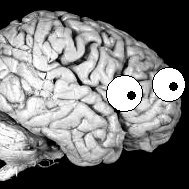
You are not actually perceiving this tweet. What you're seeing is the prediction error between what I wrote and what you expected me to tweet.
33
47
310
This is outrageous

In this scenario, the cost of publication is covered by an Article Processing Charge (APC) paid at the time of publication. The APC for Nature Neuroscience in 2022 is €9,500/US $11,390/£8,290.
0
0
2
The other perspective ( https://t.co/fF1BVGjRYc) uses circles with fixed radii to define city boundaries. Their commentary and our response has more details! Take a look at decide for yourself.
pnas.org
No robust relation between larger cities and depression
1
1
2
I have discussed this in detail elsewhere:
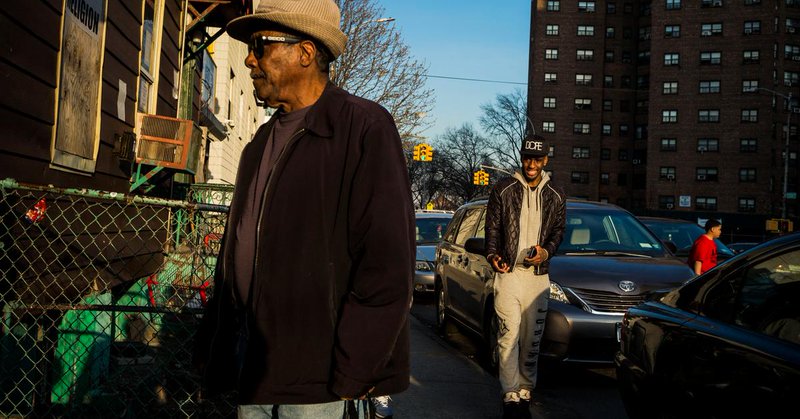
psyche.co
Large cities might seem detrimental to mental health but a comparison of depression rates suggests bigger is better
1
2
8
In our opinion ( https://t.co/7cevVFA7R2) cities are fundamentally spatially extended socioeconomic networks with end up including suburbs and some rural areas where socioeconomic ties to downtown areas are strong.
pnas.org
Reply to Huth et al.: Cities are defined by their spatially aggregated socioeconomic networks
1
0
2
It is important that we acknowledge both viewpoints as we promote and discuss these works.
1
0
3