
Unisense
@UnisenseDenmark
Followers
304
Following
387
Media
159
Statuses
303
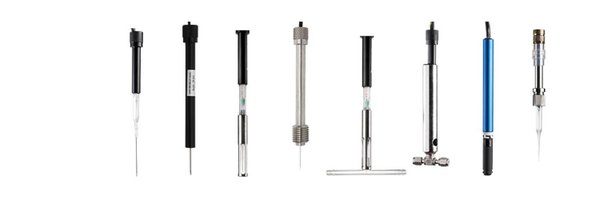
Unisense is a world leading manufacturer of microsensors and instrumentation for microscale measurement.
Aarhus, Danmark
Joined September 2018
Hypoxic niches in A. fumigatus #biofilms drive antifungal resistance. Cramer et al. (2020) showed that oxygen gradients form rapidly during biofilm growth, increasing drug tolerance. More O₂ → more sensitivity. Article: https://t.co/PAUU6mCZ7t See you at #ASMBiofilms
pnas.org
Human fungal infections may fail to respond to contemporary antifungal therapies in vivo despite in vitro fungal isolate drug susceptibility. Such ...
0
0
1
How do you measure #hydrogen? Join our #webinar to see how you can integrate #H2 sensors directly into your setup or reactor for real-time data in gas & liquid phases. See examples from #watersplitting, biomethanation & CO₂ conversion. Join Nov 18 or 19:
0
0
1

This is just a sneak peek of our latest upgrade — the Unisense H₂ Microsensor in action. With this tool, we can measure hydrogen concentrations with unmatched precision, raising the bar for accuracy, transparency, and credibility in the hydrogen industry.
0
1
3
Can we measure continuously, inline in a gas flow system? Which mounting options? Can we use the sensor at 10 bar? Install sensors directly in reactors and flow-through systems to measure in the liquid phase, in the headspace of a reactor, or directly in gas and liquid flows.
0
0
1
Line is ready to meet the researchers at the #solarfuels conference #5ISF in Newcastle. Stop by if you want to find out how our sensors can detect dissolved or gaseous H₂, O₂, and more, and if you can monitor continuously in situ or integrate them in closed systems.
0
0
3
Producing hydrogen from sunlight-driven water splitting needs catalysts at neutral pH, not just acidic. Study shows electron-poor cobalt–porphyrin catalysts outperform electron-rich at pH 7, boosting solar fuels potential: https://t.co/Ljy3JsXetW Meet Line at #5ISF, 1–5 Sep.
pubs.acs.org
Molecular catalysts offer an ideal platform for conducting mechanistic studies of the hydrogen evolution reaction (HER) due to their electronic tunability. This study explores a series of anionic...
0
1
1
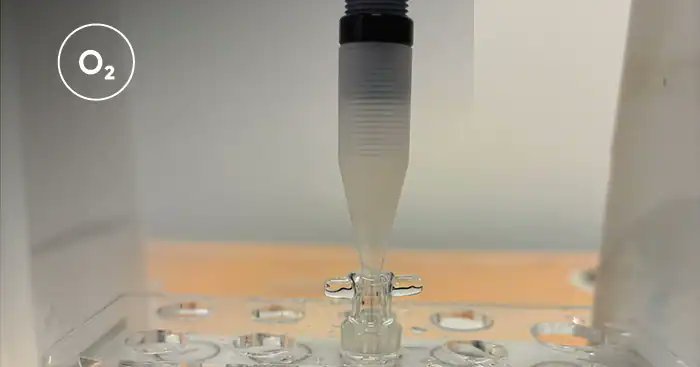
2-DG disrupts glycolysis & mitochondrial respiration in AML cells, per Christensen et al. study. Real-time oxygen use data shows it inhibits basal & stimulated metabolism—pointing to potential in leukemia treatment. Read more:
unisense.com
Real-time measurements of oxygen consumption rates in response to 2-deoxy-D-glucose treatment - read the application note
0
2
2
Few spots left for the workshop in Aarhus, October 7-9. Day 1: Introductory lecture + lab setup and experiments + fellow researchers' applications Day 2: Lecture + guided experiments + expert talk Day 3: Data analysis + wrap-up experiments Learn more: https://t.co/KS5W9l4Pz6
0
1
2
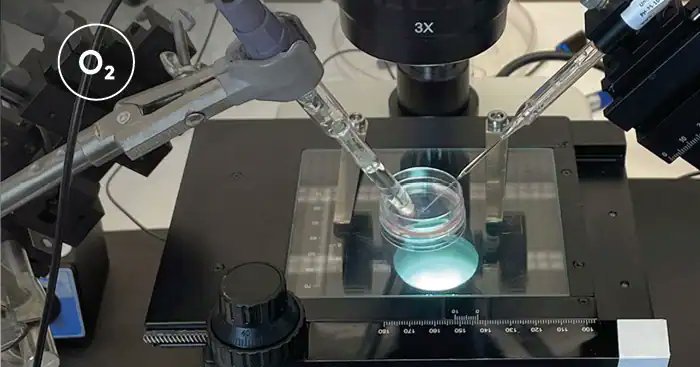
New app note: Researchers used a high-resolution pH microelectrode to map the spatial pH gradient inside gastric organoids derived from patient tissue. Their measurements revealed a clear drop in pH from the outer matrix to the organoid lumen:
unisense.com
pH measurement with microelectrode reveals distinct environment inside 3D organoid - learn about the researchers' results
0
0
1
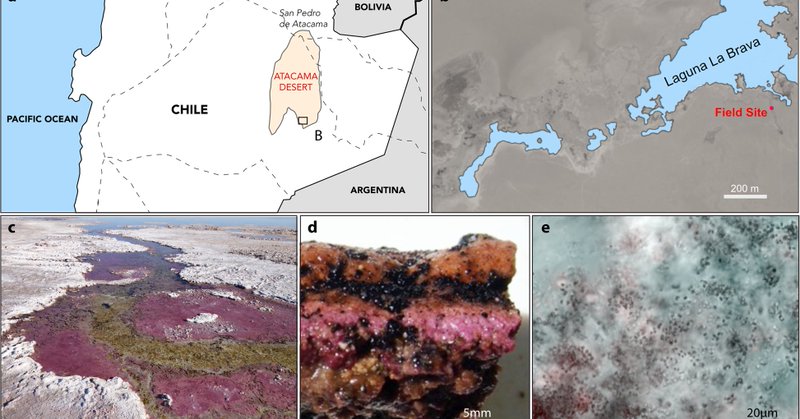
What can microbial mats tell us about early life on Earth? Researchers confirmed microbial mats' anoxic nature and revealed active arsenic and sulfur turnover. The mats precipitate carbonate minerals showing how ancient stromatolites may have formed. https://t.co/9ozhzd0AI2
nature.com
Communications Earth & Environment - Arsenic-consuming microbes of the hypersaline Laguna La Brava in Chile may be an analogue for early life during the anoxic conditions of the Archean,...
0
0
1
On 7-9 October, you can join our In-Person Workshop where you will work with microsensors alongside our team, attend expert-led lectures, and explore real-world research applications. Find the details and more info on our website. Here are a few images from last year's workshop.
0
1
1
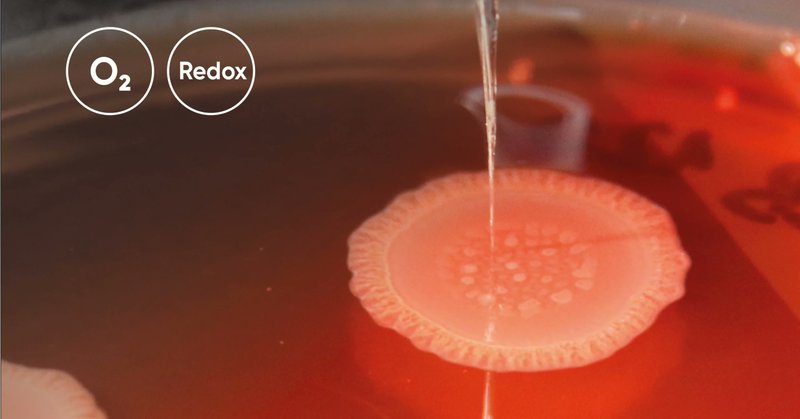
The researchers used 25 µm oxygen and redox sensors to map the gradients through a colony biofilm of the pathogen Pseudomonas aeruginosa. Visit us at booth 1518 at #ASMicrobe to learn more about how you can apply microsensors in your biofilm research.
unisense.com
In this study, researchers investigated the reduction of phenazines, which are antibiotics produced by P. aeruginosa.
0
1
2

Excellent work by Lucid travel award winner @Gracedoherty_ , who recently presented a poster at the 2025 IFFS World Congress in Japan exploring Resipher data! The project explores the #metabolic profiling of bovine oocytes by measuring oxygen consumption rate (OCR), a key
0
1
3
#EGU25 is underway and Tage is ready to show you how #microsensors can be applied in your #research application. So if you are looking to perform microscale measurements of O₂, N₂O, H₂, NO, H₂S, pH, redox, temperature, or electric potential, meet Tage for a talk at booth 47.
0
0
2
You can now access our workshop recordings directly on our website: https://t.co/Eqqn2N6Glx
https://t.co/iDaXaDpYOL
https://t.co/936f8AvDGu If you want to become a microsensor expert, all the knowledge is readily available.
unisense.com
Build your microsensor knowledge with this series of web lectures - you will get an overview of microsensors and knowledge of sensor types
0
0
2

Also big 'thank you' to @BioGeoChemBilly @AFBI_NI for the loan of their @UnisenseDenmark Lander, and daily words of wisdom: it went out 4 times, and came back 4 times 😌
2
2
5
In this recent blog post, microsensor expert Ole Pedersen presents a standard approach to measuring the oxygen consumption and oxygen production of plant tissues with just a sensor, a meter, and a gas-tight container.

🌿New method for measuring oxygen in plant tissues! Versatile setup with optical oxygen sensor Precision measurement with USB-connected meter Wide applications Explore more: https://t.co/OESM87mIjt
#PlantBiology #OxygenMeasurement #PlantScience
@ole_flooding @UnisenseDenmark
0
3
6
Sadly, it is the third and final day of our workshop. However, our lab is still buzzing with activity as our participants are making their final tests and measurements. If you are wondering about the flasks in the image below, we got to test a sample of meteorite dust.
0
0
1
For the next 3 days, we will enjoy the company of researchers from across the world. We look forward to teaching microscale measurements, calibrations, and much more, but we are just as much looking forward to learning from them, their experience and research applications.
0
0
1
Microplastics are a rising environmental issue. This study, co-author @TobiasSandfeld, shows how PLA, PET, and PS affect isopods and their gut microbes. PLA boosted gut microbe activity and H₂, PET and PS had negative effects. Could impact soil ecosystems

enviromicro-journals.onlinelibrary.wiley.com
Microplastic (MP) is an environmental burden and enters food webs via ingestion by macrofauna, including isopods (Porcellio scaber) in terrestrial ecosystems. Isopods represent ubiquitously abundan...
0
0
1