

FORCeS
@FORCeS_H2020
Followers
273
Following
100
Media
36
Statuses
222
FORCeS is an #H2020-funded project. It will provide more precise climate projections by reducing the uncertainty on how particles in the air affect climate.
Joined May 2019
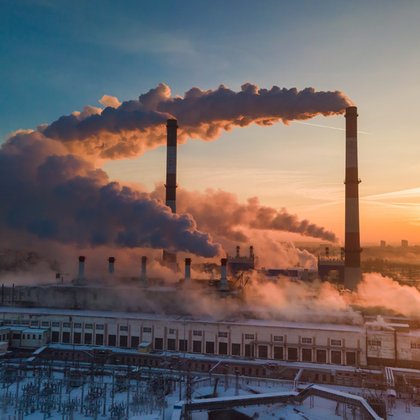
Want to know more about the results and conclusions from the FORCeS project, now that it has wrapped up? Read about our project on the @CORDIS_EU website below. 👇 https://t.co/X5vWUfh6U4
cordis.europa.eu
EU researchers shed light on understanding and reducing the long-standing uncertainty in anthropogenic aerosol radiative...
0
0
1

Aktypis et al. conducted dual chamber experiments using ambient air in a polluted and a pristine forested area, and found that the two environments had completely different potentials of forming additional SOA. @FORCeS_H2020 @atmo_access @ELIDEK_HFRI
https://t.co/fnYiW0FVA8
0
3
11

Our @NatureComms article on #climate sensitivity to CO2 featured on @EPFL_en news! A warm future may be easier that we think. #IPCC @lucile_ricard4 @cstacc
@FORTH_ITE @epflENAC @FORCeS_H2020
@CleanCloud_HE @iMIRACLI_ITN

.@LAPI_epfl scientists have developed a new rating system for climate models that evaluates their accuracy in predicting our planet's future climate. Their findings reveal a striking division among models—some predict extreme heat due to carbon sensitivity https://t.co/z4Yn1FU7yX
0
11
21
Thank you @Kathimerini_gr & @GiannisEl2 for covering our @NatureComms article on #climate sensitivity to CO2. A warm future may be easier that we think.#IPCC @lucile_ricard4 @cstacc @FORTH_ITE @EPFL_en @epflENAC @FORCeS_H2020 @CleanCloud_HE @iMIRACLI_ITN
https://t.co/QzvmZqSKj7
0
8
24
0
0
0
📢Paper out in @NatureGeosci! @PhilipStier et al. have studied the multifaceted aerosol effects on precipitation. Curious about the results? Access the paper here:
nature.com
Nature Geoscience - A consensus is emerging regarding the influence of aerosols on global precipitation patterns, although smaller-scale effects remain uncertain, according to a synthesis of recent...
1
1
9
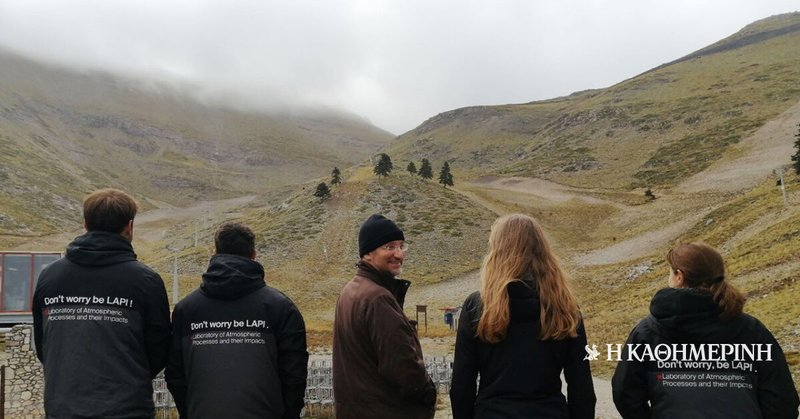
Great @Kathimerini_gr article by @GiannisEl2 of our work on #icemultiplication & role in extreme precipitation & climate. #CALISHTO @VGeorgakaki @cstacc @NCSR_Demokritos @LRSU_NTUA @EPFL_en @PyroTRACH @ERC_Research @FORCeS_H2020 @CleanCloud_HE @PanaceaRI
https://t.co/wrxfCvabaz
kathimerini.gr
Πρωτότυπη έρευνα με τη συμμετοχή Ελλήνων επιστημόνων για τη δυνατότητα πρόβλεψης ακραίων καιρικών φαινομένων.
0
12
22

Our findings on how natural marine biogenic emissions influence long-term climate variability in the North Atlantic are present in @EAC2024 @ovadnevaite @CnrIsac @FORCeS_H2020
0
1
12

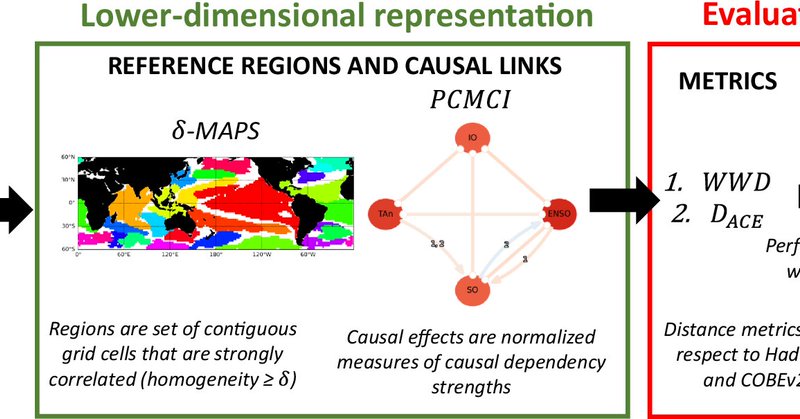
New study by @lucile_ricard4, @FabriFalasca10, @runge_jakob, @LAPI_epfl presents a network-based constraint of #climate sensitivity that can be used to evaluate and weight #CMIP6 #ClimateModels. @FORCeS_H2020
nature.com
Nature Communications - The Earth’s surface temperature response to increasing CO2 emissions remains uncertain in climate models within the CMIP6 project. The authors present a network-based...
0
6
13
Announcing #RafSIP, a ML-based #secondaryice mixed-phase #cloud parameterization for #climate #models.Exciting new way to develop simple, realistic models! https://t.co/r5wk0w9LgZ
@ERC_Research @pyrotrach @FORCeS_H2020 @CleanCloud_HE @snsf_ch @epflENAC @EPFL_en @cstacc @FORTH_ITE
1
7
32
Accurately modeling mixed-phase clouds (MPCs) is key for climate sensitivity and Arctic amplification. This is the topic of investigation in this new study by FORCeS participants Paraskevi Georgakaki & @LAPI_epfl. Curious? Learn more👇 https://t.co/iPjWaoJY4Y

agupubs.onlinelibrary.wiley.com
A random-forest parameterization for secondary ice production is developed using outputs from a 10-km horizontal grid spacing simulation Cloud phase partitioning agrees within a factor of 3, with...
0
0
7
Our new research article is published. 20 ML/DL (5 types) were assessed to predict Biogenic MSA and nss-Sulfate sealevel concentrations. The first high-resolution publicly available daily gridded dataset covering the North Atlantic. @ovadnevaite
@Mace_Head
@CnrIsac
@FORCeS_H2020

New Data description paper: IPB-MSA&SO4: a daily 0.25° resolution dataset of in situ-produced biogenic methanesulfonic acid and sulfate over the North Atlantic during 1998–2022 based on machine learning
0
2
8
Reminder!⏰ Join us today at 14.00 either in person or online for our final seminar.
🗓️FORCeS Nordic Seminar, 10 June! Join us on Monday when we will be concluding our understanding of aerosol-cloud interactions in the climate system, and what the new knowledge implies for policy- and decisionmakers, and the 2-degree target. More info 👉
0
0
2
Excellent article by @Latenighter_ in @Kathimerini_gr on the importane of the @ESA @JAXA_en #EARTHCARE mission & @CleanCloud_HE 's role Enjoy! https://t.co/yYTF6ObhH8
@EPFL_en @epflENAC @DepEnvs @AarhusUni @cstacc @NCSR_Demokritos @FORTH_ITE @ERC_Research @Pyrotrach @FORCES_H2020
kathimerini.gr
Οι διαστημικές υπηρεσίες Ευρώπης και Ιαπωνίας εκτόξευσαν στο Διάστημα τον πιο εξελιγμένο μέχρι στιγμής δορυφόρο, ο οποίος θα προσφέρει πολύτιμα δεδομένα για τα νέφη και την επιρροή τους στο κλίμα και...
0
8
10
🗓️FORCeS Nordic Seminar, 10 June! Join us on Monday when we will be concluding our understanding of aerosol-cloud interactions in the climate system, and what the new knowledge implies for policy- and decisionmakers, and the 2-degree target. More info 👉
0
4
5
FORCeS participants at @KITKarlsruhe just published a new study in @MDPIOpenAccess. The results suggest that the suppression of precipitation is an important factor in how marine stratocumulus clouds respond to changes due to aerosols. ☁️ Read more👇 https://t.co/I1qeP8TlXy

mdpi.com
Aerosol–cloud–precipitation interactions (ACI) are a known major cause of uncertainties in simulations of the future climate. An improved understanding of the in-cloud processes accompanying ACI...
0
1
7
Curious about the contribution of fluorescent primary biological aerosol particles to low-level Arctic cloud residuals? 🤔This new study shows that bioaerosols act as cloud seeds and may influence the presence of ice within clouds, access it here: https://t.co/UAlsrPUT7E
@EGU_ACP
0
3
8

Physics-informed learning of aerosol #microphysics
@PaulaHarder8, @DWatsonParris, @PhilipStier, Strassel, Gauger & @JanisKeuper → https://t.co/5DTOSHjh71
#AerosolModeling #NeuralNetworks #Climate #PhysicsInformedML #AerosolPhysics #Aerosols #ClimateModels #ML #MachineLearning
0
10
20

Anna Possner is looking for a PostDoc in her group cloud physics in the climate system at @goetheuni, focusing on microphysical processes in the context of secondary ice multiplication in mixed-phase clouds in frame of the @CleanCloud_HE project. https://t.co/kX2R62M4li
0
5
4
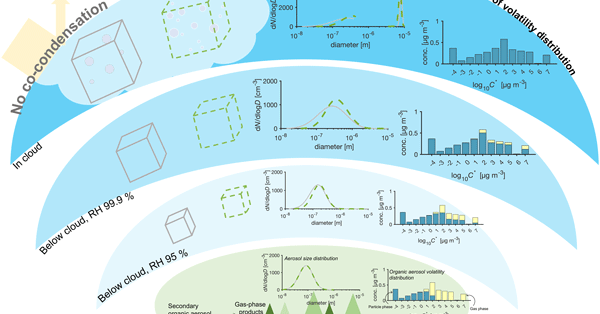
🌲☁️Just published in @EGU_ACP! FORCeS participants have observed that organic vapors that condense along with water vapor increase the number of aerosol particles that form cloud droplets. Curious about these results? Read the summary below.
forces-project.eu
FORCeS participants Liine Heikkinen, Daniel Partridge, Sara Blichner, Rahul Ranjan, Tuukka Petäjä, Claudia Mohr, and Ilona Riipinen just published a study
0
3
16