
Bingyi Yang
@BingyiY
Followers
202
Following
309
Media
15
Statuses
170
Research Assistant Professor at School of Public Health HKU | Former member of UF infectious disease dynamics group
Joined May 2019
Our new Fluscape work is out @eLife. We reported long term intrinsic cycles in individual antibody responses against 21 A(H3N2) strains that were isolated between 1968 and 2014.

elifesciences.org
Cross-sectional serological data and mathematical models suggest the existence of long-term periodicity in human antibody responses arising from multiple exposures to influenza A(H3N2), providing...
1
15
30

Age and fever symptoms can help identify highly contagious influenza patients. Our research at #HKUSPH helps control and prevent flu transmission. Check it out👉🌍Original source: https://t.co/Tjvr2UP8eF
0
3
2

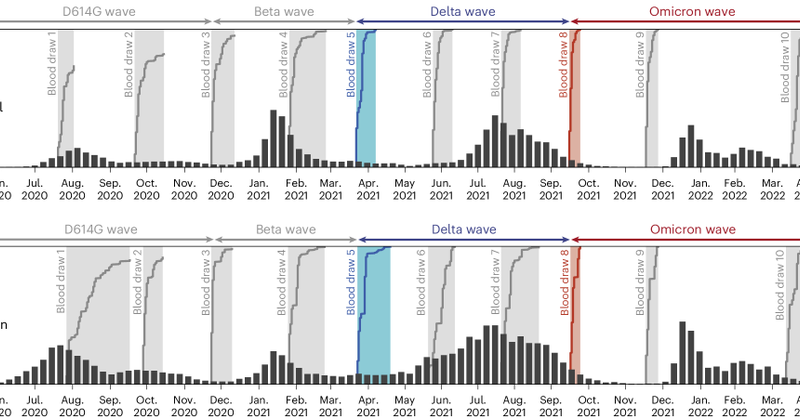
"The majority of immune protection against #SARSCoV2 conferred by natural infection cannot be fully explained by serum nAbs [neutralizing antibodies] alone." Varies considerably by variant https://t.co/tL7xVcF0Ek
@SunKaiyuan @NatureMedicine
nature.com
Nature Medicine - SARS-CoV-2 variant-specific neutralizing antibodies (nAbs) mediate protection against infection by the cognate variant to distinct extents, while the majority of protection...
7
75
281
We argued that incidence-based measures may not capture transmission fully, as they overlook exponential case changes and consequently violating the parallel assumption in DID analysis. Similar view and findings from other study:

medrxiv.org
Researchers frequently employ difference-in-differences (DiD) to study the impact of public health interventions on infectious disease outcomes. DiD assumes that treatment and non-experimental...
0
0
0
This is a reassessment of previously published study published in NEJM https://t.co/e0cBUrveAp We replicated their positive association between lift the mandate and incidence, but we found no association when replacing the incidence to reproduction number.

nejm.org
In February 2022, Massachusetts rescinded a statewide universal masking policy in public schools, and many Massachusetts school districts lifted masking requirements during the subsequent weeks. In...
1
0
0
Our recent study reassessed the lift of universal masks mandate suggested no evidence that such lift reduced SARS-CoV-2 transmission in schools. However, we revealed a significant difference when using incidence or transmissibility as outcome measurement.

academic.oup.com
Abstract. Amid the COVID-19 pandemic, education systems globally implemented protective measures, notably mandatory mask wearing. As the pandemic's dynamic
1
2
6

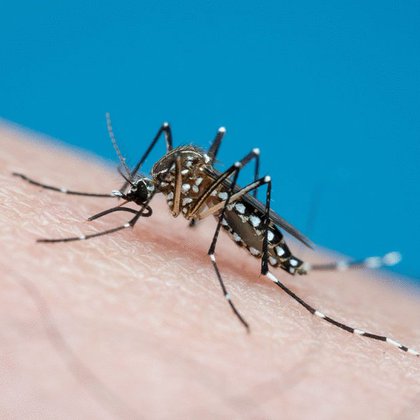
Our paper on the role of antigenic space in determining dengue disease risk is out as a cover article @ScienceTM
science.org
Antigenic distance between primary and secondary dengue virus infections is associated with dengue disease risk.
7
18
47

New preprint: Reconstructed influenza A/H3N2 infection histories reveal variation in incidence and antibody dynamics over the life course https://t.co/w5THpfjLYO 1/12

medrxiv.org
Humans experience many influenza infections over their lives, resulting in complex and varied immunological histories. Although experimental and quantitative analyses have improved our understanding...
4
27
60

Fantastic opening to our 3-day international conference this morning #immunity2023 with many excellent presentations including opening talks by Malik Peiris and Maria Van Kerkove
8
19
105

A short 🧵on a recent study by @MaggieLind2 with @MHitchingsEpi @datcummings Albert Ko et al. Data show that immunity induced by vaccines, prior infection or both (hybrid) protects against SARS-CoV-2 infection when viral exposure is low to moderate (1/)

nature.com
Nature Communications - Measuring an individual’s level of exposure to COVID-19 is challenging, and it is therefore unclear whether high exposure may impact immunity. Here, the authors...
106
1K
3K

How should we interpret recent patterns of SARS-CoV-2 evolution, from EG.5 to the new BA.2 descendent? What can we learn from other viruses? And where might things being heading next? I discuss some of the key ideas and research: https://t.co/jF0emU4c3j
5
32
106

our Cobovax study observed similar incidences of omicron BA.2 infection across diff vaccination groups despite weak neutralising antibodies to BA.2 in 3rd-dose CoronaVac recipients, suggesting nAbs may not be appropriate correlates of protection for inactivated COVID-19 vaccines

New research article> Comparative antibody and cell-mediated immune responses, reactogenicity, and efficacy of homologous and heterologous boosting with CoronaVac and BNT162b2 (Cobovax): an open-label, randomised trial https://t.co/PRT6BZb59Q
#COVID19
0
5
13
A #HKUSPH research observes high mortality during the Omicron BA.2 wave in Hong Kong due to lower vaccine coverage (42%) among adults ≥65 years old. ⬆ in antiviral usage & vaccination uptake over time in 2022 was associated with ⬇ case fatality risks. https://t.co/ekSoKtMe8d
medrxiv.org
Background Hong Kong contained COVID-19 for two years, but experienced a large epidemic of Omicron BA.2 in early 2022 and endemic transmission of Omicron subvariants thereafter. Methods We examined...
1
3
4
A #HKUSPH & @UChicago research on childhood immune imprinting studied data in Hong Kong and finds: ▪those imprinted to H1N1/H2N2 ➡17% lower risk of getting H1N1 ▪if imprinted to H3N2 ➡12% lower risk @TimkTsang @sarahcobey @bencowling88
@JIDJournal: https://t.co/dsaC8lrvnD
0
5
6

It isn't simply #stimulate, stimulate, stimulate,... prior #immunity dictates #infection #risk, but also quality of the #antibody #response, #antigenic #breadth of how much you can be #boosted
Our new Fluscape work is out @eLife. We reported long term intrinsic cycles in individual antibody responses against 21 A(H3N2) strains that were isolated between 1968 and 2014.
0
1
4
Note that the 24 years periodicity were from retrospective characterisation of antibodies after multiple exposures. It may imply the duration of interference by previously gained antibody and should not interpret as the duration for onward protection.
0
1
1
Lastly, the phase of titers residuals to the circulating strains are correlated with seroconversions, after accounting for pre-existing titers to these strains. Higher risks of seroconversion when the individual titers were more away from the population average (e.g, phase IV).
1
1
0
Overall high consistency were found in the observed and predicted phase of the strain in 2012. E.g., over 70% of individuals who were predicted to in phase I (red) in 2012 were actually fell in phase I in the observations.
1
1
0
To test if the individual's position in the antibody responses can be predicted, we predict the phase in 2012 using models trained from 14 strains from 1968 to 2002. We only used harmonic terms in the model, so estimates are not exactly match the observed HI residuals.
1
1
0