Meryl Theng
@uberhyped
Followers
355
Following
880
Media
110
Statuses
706
PhD | Quantitative Ecologist 🐅🐘💻📊 | [email protected] #ADHD she/they 🏳️🌈
Adelaide, Australia; Singapore
Joined January 2011
Back here for a bit to promote our new paper 🥳
I'm obligated to use this terrible website to boost the altmetrics for our 🎉NEW PAPER IN PNAS🎉 We estimated the number of species that have gone extinct in Singapore, including those that went extinct before we had a chance to discover them. https://t.co/9VgpvHChJF
1
1
9

Anatomy of a toxic lab: The Jetz lab at Yale. https://t.co/V78oojhp0t
18
213
588
And I make for the luckiest student! Thank you @jsdelean and @InvasionEcology ☺️
3
1
7
We've been working on this paper out today (and open access) for over 7 years, so bear with me while I tell you the story of how we discovered that wolves kill and eat sea otters (Panels A-D) and what this means for wolves, otters, and deer. /1 https://t.co/mGbOeNtNVv
8
185
672
This is really sad 😢 Mike was an inspiration to many in my part of the world.

I am saddened by the news of Mike’s passing 😔 - the greatest wildlife statistician and educator in SE Asia, Guru Mike Meredith (aka Pseudo Ronald Fisher). 🫡
1
0
7
Most ecosystems are powered by the cascade of captured sunshine through plants to higher trophic levels. In a new paper in @nature we quantify how much energy flows through birds & mammals in old-growth and logged forests in Borneo, and find a surprise https://t.co/holRtUX0Nu
10
134
449
📢 Paper alert 📢 The first chapter of my Ph.D. on diel activity 🕐of tropical mammals 🐘🐆🦌 it's out in @NatureComms With > 2.3 million TEAM camera-trap pics we revealed patterns among regions and their underlying processes. Check it out 👇 🧵(1/5) https://t.co/3eIcSiku3y
11
82
323
New paper! 📢 The second chapter of my PhD was just published in @MethodsEcolEvol 🤯 @andyroyle_pwrc and I developed a multievent mark-recapture model that accounts for state assignment errors in both sampling and diagnostic protocols in disease models! 🧑🔬 https://t.co/jNQHIi2DkT

besjournals.onlinelibrary.wiley.com
Hidden Markov models (HMMs) are broadly applicable hierarchical models that derive their utility from separating state processes from observation processes yielding the data. Multistate models suc...
3
24
86
Great thread about new open access materials, videos, software etc. A must for anyone interested in #abundance and/or #cameratraps "SCR with camera traps" ▶️ https://t.co/SfRabZ8CUc Congratulations and thanks to all who have participated in this website🙌🙌 #SCR

Do you use #CameraTraps for wildlife abundance? Do you feel intimidated by the complex models & codes that statisticians come up with to help design & analyze camera trap data? If your answer is yes to any of the above, follow this thread with a new resource that is pure gold:
0
5
12
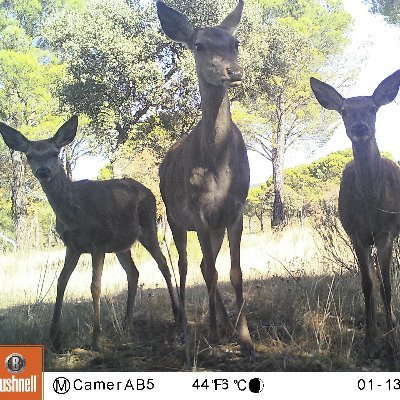
Our paper, "A cautionary tale comparing spatial count and partial identity models for estimating densities of threatened and unmarked populations" is now out! We used CT data and simulations to compare Spatial Count and Spatial Partial Identity models🦌 https://t.co/5Vsq9JjycN
1
13
45
Over the last 5 years I've been writing a book, and the e-book version is out now! https://t.co/zv9y22wCDp Complete with code boxes, maths boxes, ninjas and the odd Australianism which I hope won't get lost in translation. Solutions and supporting code in ecostats package on CRAN
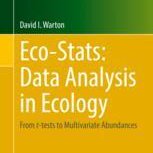
link.springer.com
10
234
872

Don’t dilute the term Nature Positive https://t.co/OuHpgfWVRO Nature Positive is being used by businesses, governments and NGOs, but its meaning risks being diluted from measurable net biodiversity gain towards merely any action that benefits nature, argues @EJMilnerGulland
0
93
208

Statistics for Ecologists by @FiebergJohn looks like a must-read 🤩 Will recommend it to my students and colleagues 😉 https://t.co/ZM9ESlOE9k
Thanks, Chris! For folks that may be interested, a link to an early version of the textbook can be accessed via the link below: https://t.co/cgFzLyyoJ5 I am actively seeking feedback to help me improve it with plans of publishing (open-access) in summer of 2023.
0
73
316
A review of movement models in open population capture–recapture
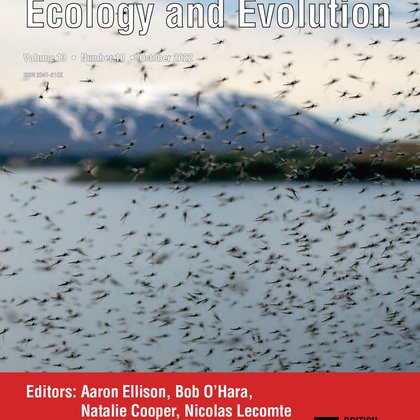
besjournals.onlinelibrary.wiley.com
Understanding rates of survival and recruitment is critical to population management, and capture–recapture methods of estimation are widely used. Spatial models allow for a spatial detection proc...
0
3
7
Rachel Fewster introduced a new and emerging technique, cluster capture-recapture (CCR), which can estimate animal density from UAV data where individual IDs are *latent*. One of the papers:
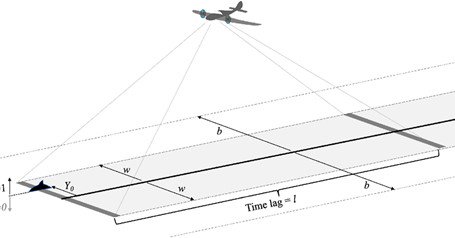
academic.oup.com
Abstract. We anticipate that unmanned aerial vehicles will become popular wildlife survey platforms. Because detecting animals from the air is imperfect, w
0
0
2
@bc_stevenson's SCR model accounts for spatial correlation in detections between detectors and it *does not* require collection of env covariates (that may be hard to acc fully). It uses uses random rather than fixed effects to explain the heterogeneity 🤩
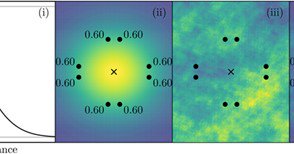
academic.oup.com
Abstract. Spatial capture–recapture (SCR) models are commonly used to estimate animal density from surveys on which detectors passively detect animals with
1
0
1
Finally catching up on some #isec2022 talks, and rewatching others. Can't believe how much I've missed. Will link some cool work below as I encounter them.
1
0
2

We are happy to share Ten Simple Rules to host an Inclusive Conference published in @PLOSCompBiol
https://t.co/fcUjaxgXwE This came from our experience organizing @user_conf and participating in other conferences. We (cc @SanchezTapiaA) summarize the rules here 🧵

journals.plos.org
Conferences are spaces to meet and network within and across academic and technical fields, learn about new advances, and share our work. They can help define career paths and create long-lasting...
1
46
91
Are you in #StatisticalEcology? Read our recommendations for a more #inclusive and #accessible community and sign if you agree with them https://t.co/8GusLAxL2Y Help us spread the word @ISEC_stats_ecol

Keep #diversity and #accessibility on the ISEC agenda, read and sign summary and recommendations from the roundtable @isec_2022 with @rocio_joo, @NulisInVerba, @Natasha_Karenyi, @DogGeneticsLLC #StatisticalEcology #ISEC2022 #diversity #inclusion #a11y
https://t.co/Kaf858Kwoy
0
7
9
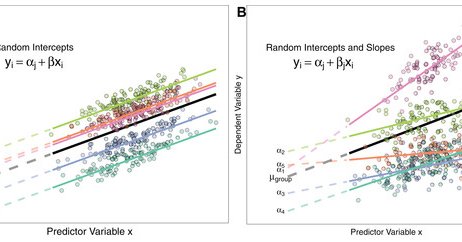
Very useful paper for graduate students and graduate courses in statistics
peerj.com
The use of linear mixed effects models (LMMs) is increasingly common in the analysis of biological data. Whilst LMMs offer a flexible approach to modelling a broad range of data types, ecological...
4
220
1K