
Stanford Bio-X
@StanfordBioX
Followers
3K
Following
43
Media
334
Statuses
2K
Stanford Bio-X is a pioneering interdisciplinary biosciences institute dedicated to pursuing new knowledge and improving human health.
Stanford, CA
Joined April 2016

Deadline approaching for participating in the international @Stanford Course on Neural Assembloids in the spring of 2026! This is an immersive, hands-on course on generating, probing and manipulating 3D neural #assembloids and #organoids for disease and development modeling.
1
9
32
In August of 2025, Stanford researchers, Ami Bhatt, Gavin Sherlock & graduate student Danica Schmidtke, made a landmark discovery in microbiome science — successfully isolating p-crAssphage, the most abundant virus in the human gut, for the first time. https://t.co/NbB0IsmMGE
0
1
4
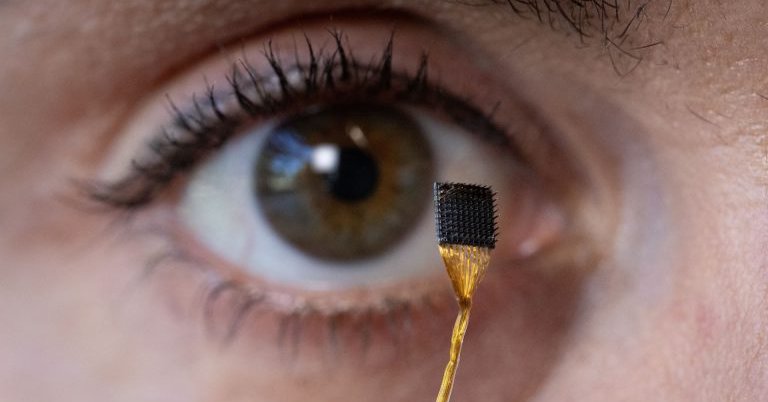
Stanford Medicine scientists have developed a brain-computer interface that “reads” thoughts from speech-impaired patients — but only on their command — potentially restoring rapid communication. https://t.co/mEAocdodHl
med.stanford.edu
Stanford Medicine scientists have developed a brain-computer interface that detects inner speech from speech-impaired patients, in a step toward restoring rapid communication.
6
51
164
Stanford Medicine researchers explain how sleep influences our moods and the ‘bidirectional’ nature of that relationship — plus how we can repair broken slumber to improve our mental health. https://t.co/czW540hMPR

med.stanford.edu
Stanford Medicine researchers explain how sleep influences our moods and the ‘bidirectional’ nature of that relationship — plus how we can repair broken slumber to improve our mental health.
2
25
74

Amyotrophic lateral sclerosis and frontotemporal dementia are devastating neurodegenerative diseases. Knight Initiative postdoc Yi Zeng is finding the role a protein plays in both, and whether it can lead to new diagnostics and treatments. Learn more: https://t.co/rSGzsjiPs3
0
2
5
#StanDOM's @euanashley, @joshuawknowles & @vnparikh were part of a multi-institutional team that published the most comprehensive map to date of the LDLR gene, the main genetic driver of familial #hypercholesterolemia. Read it in @ScienceMagazine: https://t.co/epMhFfzoNK
0
2
1
A Stanford Medicine-led trial found that a few weeks of personalized prehab -- a program focused on nutrition, physical activity, cognitive training and mindfulness -- improved patients’ physical and cognitive resilience before surgery.

med.stanford.edu
A Stanford Medicine-led trial found that a few weeks of personalized prehab improved patients’ physical and cognitive resilience before surgery, with noticeable changes in their immune system.
0
6
6

In this preprint, @Stanford scientists present Hybprinter, a 3D hybrid bioprinting platform that combines soft hydrogels with rigid biomaterials in a single, continuous process. By enabling stronger, more complex, & biologically compatible constructs that support vascularization
0
1
6
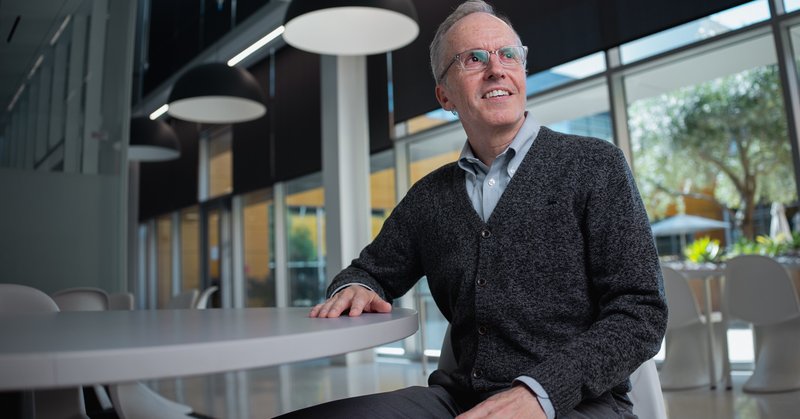
A great feature on our director @CurtLanglotz in Stanford Report. From AI-ready medical datasets to tools that advance care, it highlights why academia is central to progress in medical AI. Read here:
news.stanford.edu
Curtis Langlotz develops AI-powered systems that help medical experts and patients improve care.
0
2
8

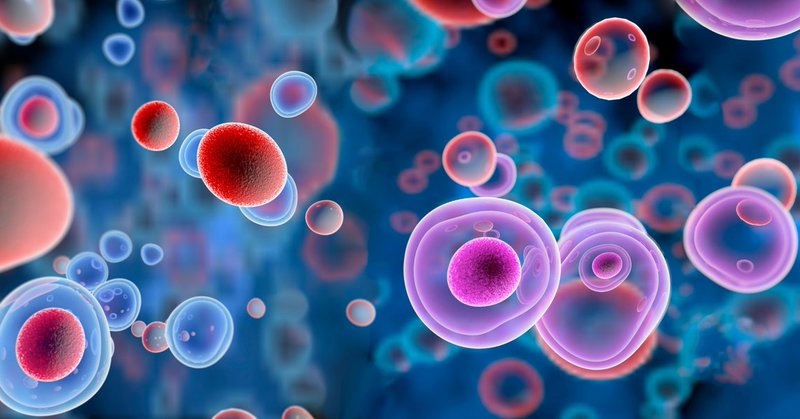
Listen to Institute Scholar @li_lingyin on the Future of Everything podcast @Rbaltman about how her immunotherapy work is exposing hidden cancers and developing new drugs:
engineering.stanford.edu
A researcher on the front lines of the fight against cancer explains how her immunotherapy work is unmasking hidden cancers and developing new drugs to kill them.
0
5
9
Twelve years ago, Stanford Medicine geneticist Ron Davis shifted his focus to study severe chronic fatigue syndrome — the disease that has profoundly affected his son. Today, each new discovery, big or small, gives him hope for a path forward. https://t.co/2ZhgWLxKI7
0
4
2
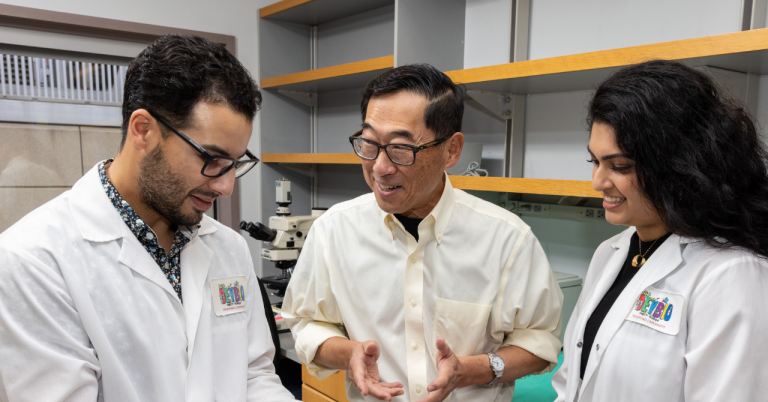
A Stanford Medicine study found that an “immune system reset” can potentially reverse autoimmune, or Type 1, diabetes. The strategy may also be applicable to other autoimmune diseases and organ transplantation. https://t.co/Vb2ZhkVEaK
med.stanford.edu
An “immune system reset” cured autoimmune, or Type 1, diabetes in mice in a Stanford Medicine study. The approach may be useful for other autoimmune conditions as well as organ transplants.
11
108
377
#StanDOM's @cncurtis is turning cancer data into treatment insights. Her AI-driven models & #DigitalTwins predict tumor evolution, winning her the 2025 @myESMO Translational Research Award. https://t.co/pOaPyrSv03
0
1
6

One of the best parts of @bioe_stanford is our incredible students — and Sydney Barta is no exception. 🌟 https://t.co/4ik7ncNbWN

news.stanford.edu
Track star Sydney Barta is pursuing a career as an orthopedic surgeon for athletes with amputations.
0
1
2
@StanfordMed researchers have uncovered how the common Epstein-Barr virus (EBV) can trigger lupus — solving one of immunology's longest-standing mysteries. Read the full Q&A with #StanDOM's William Robinson: https://t.co/Ur7kPdmbf5
0
2
8
Microscopic fibers in tissue are critical for our understanding of disease, but they have been difficult to study. Researchers at Stanford Medicine have come up with an easy way to visualize them. https://t.co/LCMn2UxFS5
5
81
264

Sharks have prowled Earth’s oceans for more than 400 million years, but a third of species are on the brink of extinction. A new Stanford-led analysis reveals those with specialized traits are most at risk. https://t.co/dWpa9CppHd

news.stanford.edu
One-third of Earth’s 500 shark species are on the brink of extinction. A new Stanford-led analysis reveals that species with specialized traits are most at risk.
3
8
30
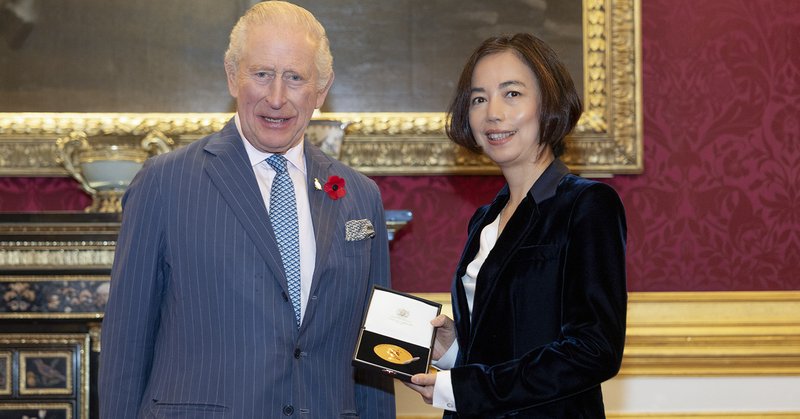
Prof. Fei-Fei Li (@drfeifei), co-director of @StanfordHAI, has been honored with the Queen Elizabeth Prize for Engineering – one of the field’s highest recognitions. https://t.co/DnTV3h7FBx
news.stanford.edu
The Stanford HAI co-founder is recognized for advancing computer vision and deep learning, and for championing human-centered AI.
5
18
99
In a Stanford Medicine-led clinical trial of a wireless retinal prosthesis, people with advanced macular degeneration regained enough vision to read books and subway signs. https://t.co/ZA2QHWqaJs
1
8
14
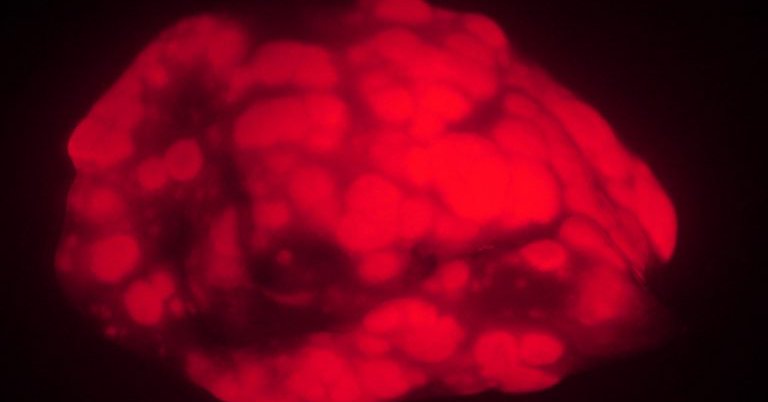
While cancer risk typically increases with age, research led by Stanford Medicine suggests that the very old may be less vulnerable — and they’re exploring why advanced age could offer protection.
med.stanford.edu
Although cancer incidence rises with age, the very old seem to be at less risk. A study led by Stanford University shows this phenomenon in mice and explores the protective effect of advanced age.
2
18
36