

Philip Murray
@philipmurraylaw
Followers
4K
Following
10K
Media
370
Statuses
6K
Law lecturer @RobinsonCamb / @cambridgelaw.
Cambridge
Joined October 2023
This, from @HCH_Hill, is exquisite. The common law has been deprived of a great lawyer.
1
8
28

Nonsense! On! Stilts! The primacy of the commons exists in terms of things like the Salisbury convention and the Parliament Acts. It does not include a general obligation of the Lords to defer to any vote or motion ever passed by the House of Commons.

And while I have enormous respect for you, David, our respective votes are not equivalent in constitutional character. I vote with electoral authority, you vote with a revising function that should not ultimately be decisive. An asymmetry central to the principle of primacy.
2
3
32
If you can't give us a quid, give us a RT

Yes it's that time of year already. The annual C-B living on a £1.00-a-day Challenge is here. We're living on £1-a-day for @MarysMeals. This is our basic for the week. We're planning closing time forays in search of bargains with the change
3
71
68

Any Lord is free to decide they should defer to the Commons even where the Bill is outside the Salisbury Convention. But there is no convention or rule which requires them to do so.
You’re asking primacy to be absolute in order to exist, but constitutional principles are hierarchical not binary. They require only that, at the point of ultimate conflict, the mandate of the Commons takes precedence. Statutory and conventional limits simply give effect to that.
1
2
13

@kitmalthouse But what is this ‘electoral authority’ you speak of? Not in a manifesto. When *your constituents* were polled by Opinium (commissioned by DiD) in 2024 asking them if they ‘want their MP (ie you) to vote for AD’, do you know how many said yes? 44% Funny, the things DiD don’t
6
29
161

It's sobering that some MPs have such a flawed understanding of how the Parliament in which they sit actually works. There is no constitutional principle of the 'primacy' of the Commons in the sense that @kitmalthouse asserts. Repeatedly asserting otherwise does not make it so.
You’re asking primacy to be absolute in order to exist, but constitutional principles are hierarchical not binary. They require only that, at the point of ultimate conflict, the mandate of the Commons takes precedence. Statutory and conventional limits simply give effect to that.
13
97
470

Both @ProfMarkElliott and @philipmurraylaw at Cambridge are clear: The Lords are not bound to pass a Private Member’s Bill from the Commons.
A neat rhetorical move, but constitutionally upside down. The Lords’ limits exist because the primacy of the elected House must be insulated from an unelected chamber, not because that primacy is in doubt. The settlement works to prevent precisely the scenario you imply.
1
5
21
No. The specific limits on the House of Lords would be redundant if there was a general requirement that it must always yield to the Commons. The Lords is under no duty to approve a non-manifesto Private Members Bill. See:
publiclawforeveryone.com
The Assisted Dying Bill has been approved by the House of Commons. But unless the Parliament Act is invokved, it also needs the approval of the House of Lords if it is to become law. What constitut…
A neat rhetorical move, but constitutionally upside down. The Lords’ limits exist because the primacy of the elected House must be insulated from an unelected chamber, not because that primacy is in doubt. The settlement works to prevent precisely the scenario you imply.
10
117
407
@ProfMarkElliott At least the Bill’s sponsor, @LordCFalconer, agrees on the true constitutional position here:

theguardian.com
A new British bill of rights is expected to be included in the Queen’s speech, but shadow lord chancellor says upper house would be within its rights to reject it
0
0
6
Not just private member’s bills, indeed, but government bills.
theguardian.com
A new British bill of rights is expected to be included in the Queen’s speech, but shadow lord chancellor says upper house would be within its rights to reject it
1
4
31
Good luck to all those coming to Cambridge in the next fortnight for admissions interviews, and especially those applying to @RobinsonCamb and @cambridgelaw. Your interviewers aren’t trying to trip you up. Explain your thinking, don’t worry about mistakes, and give it your all.
3
3
34
No, not rhetoric, but constitutional law. Lord Falconer has called for the House of Lords to vote down Commons private member’s bills in the past.
A neat rhetorical move, but constitutionally upside down. The Lords’ limits exist because the primacy of the elected House must be insulated from an unelected chamber, not because that primacy is in doubt. The settlement works to prevent precisely the scenario you imply.
4
43
206

Philosopher Hannah Arendt might have been writing about #assistedsuicide or, as some insist, '#assisteddying' [from: Arendt, Hannah, Thinking and Moral Considerations , Social Research, 38:3 (1971:Autumn) p.417]
0
12
9

Charles Péguy on returning to old sources or ‘ressourcement’: ‘the appeal made by a less perfect tradition to one more perfect; the appeal made by a shallower tradition to one more profound… a return to the source, in the literal sense’ (Les Cathiers de la Quinzaine, preface).
1
5
21

@Scott_Wortley @philipmurraylaw I think the reputation of Parliament is on the line if a half-arsed bill doesn’t receive proper scrutiny, but maybe that’s just me
4
6
67

This is politics, not procedure. That’s legitimate, all the signatories are politicians, but it’s dishonest to pretend it’s merely constitutional advice. Any government has a simple answer to fix this: put the bill in a manifesto and win an election. That neutralises the Lords.

NEW: In a joint letter, senior peers including 3 former cabinet secretaries and 3 former Lords speakers have warned peers not to use procedural manoeuvres to thwart the assisted dying bill. With 1,100+ amendments tabled, they warn the reputation of Parliament is on the line.
14
50
325

It must be dawning on the Bill’s supporters that they have brought this catastrophe on themselves by sneakily choosing the Private Member’s Bill route. They need to start from scratch with a properly prepared government Bill process.

If you don't do serious policy testing with pre legislative scrutiny & consultation before the legislation is introduced by deliberately choosing the private members bill procedure the time consuming hard work of policy scrutiny needs to be done during the legislative process.
16
126
503
If you don't do serious policy testing with pre legislative scrutiny & consultation before the legislation is introduced by deliberately choosing the private members bill procedure the time consuming hard work of policy scrutiny needs to be done during the legislative process.
NEW: In a joint letter, senior peers including 3 former cabinet secretaries and 3 former Lords speakers have warned peers not to use procedural manoeuvres to thwart the assisted dying bill. With 1,100+ amendments tabled, they warn the reputation of Parliament is on the line.
4
54
185
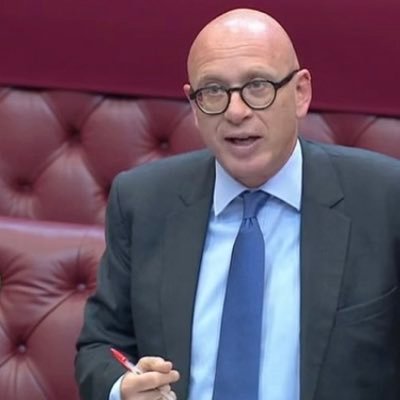
There are various limits on the Lords’ powers, both legal and conventional. If it were true that “Respect for the primacy of the Commons is not optional; it is the foundation of our parliamentary legitimacy”, none of them would be necessary. This letter both overstates and
NEW: In a joint letter, senior peers including 3 former cabinet secretaries and 3 former Lords speakers have warned peers not to use procedural manoeuvres to thwart the assisted dying bill. With 1,100+ amendments tabled, they warn the reputation of Parliament is on the line.
19
107
418

Again? They accidentally send to the onside journalist of choice before it is actually sent to the recipients. How unfortunate!

This letter, presumably for Peers, is dated 7 December but an ITV journalist had & publicised it on 6 December. Is that good reputationally? The date is as misleading as the letter's claims. The Lords Constitution Committee & Hansard Society have ruled Peers CAN reject the Bill.
4
65
250