Mridul K Thomas
@mridulkthomas
Followers
413
Following
13K
Media
79
Statuses
1K
ecology, temperature, multiple drivers, plankton, statistics, experimental design. https://t.co/UIdVUEjHrV
Geneva, Switzerland
Joined February 2010
Do you do multiple driver/stressor experiments? @ravignettes and I wrote a paper a few months ago to help you make them even better. Please share, especially with students! https://t.co/p5T1zq1KvI (OPEN ACCESS) (1/14)
annualreviews.org
For decades, multiple-driver/stressor research has examined interactions among drivers that will undergo large changes in the future: temperature, pH, nutrients, oxygen, pathogens, and more. However,...
3
11
16
New paper out by that describes data analysis tools creating by the Changing Ocean Biological systems Group last year at a workshop in Sweden. check them out for a good resource on coding and analysis: https://t.co/XcJxYKrpUe

aslopubs.onlinelibrary.wiley.com
Click on the article title to read more.
0
2
4
We still have a few slots free in our experimental design workshop at ITRS on the 30th of June in Brest, France. If you are attending the conference and interested in honing your skills in climate change research/design, please sign up!
itrs-home.org
The MEDDLE resources were developed to help researchers design and carry out tractable, intercomparable multiple driver experiments. In this workshop, participants will learn how to use these…
0
1
5

Delighted to share our new preprint on bioRxiv: https://t.co/Vg7bMpUN5X Where we integrated viral metagenomics and mathematical modelling to explore the temperature-driven biogeography of marine giant viruses - where do they live and why? (1/6)

biorxiv.org
Climate shapes the biogeography of microbial and viral communities in the ocean. Among abiotic factors, temperature is one of the main drivers of microbial community distribution. However, we lack...
1
3
12

Wait, how did I miss this?
New lifeform identified in the human gut. Function and symbiosis unknown. https://t.co/AQZL3joKuI
8
21
190
This pernicious idea that publicly funded data belongs to a scientist in perpetuity needs to die. It holds up the entire scientific enterprise to benefit a few senior gatekeepers. I've encountered this in my field too. Many supposedly public datasets are not.

Did you know that Germany has its own large-scale population-based biobank? The German National Cohort or NAKO @NAKO_Studie If not, let me tell you why👇
0
0
0
Anyone working on how those crop TPCs change with CO2, nutrients, water availability, and so on? We've speculated about it in recent papers but I haven't seen good data.
0
0
0
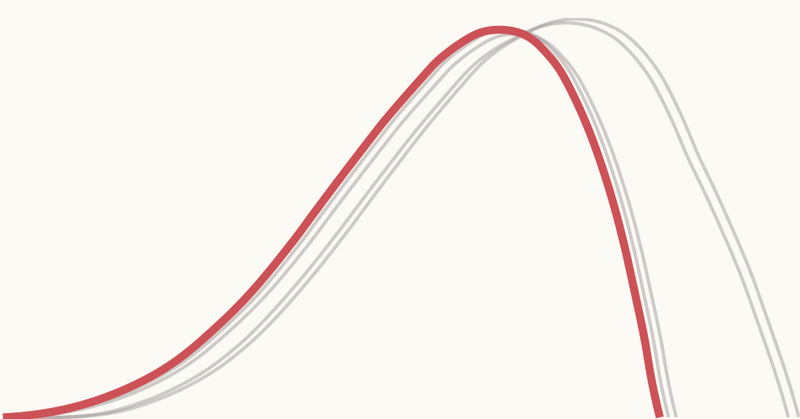
Nice to see thermal performance curves in @OurWorldInData ! https://t.co/CofkxBBZH4
ourworldindata.org
Climate change has slowed the productivity of key crops such as maize and soybeans, but might have had small positive impacts on wheat.
1
0
0
Goodhart's law strikes again.
This is wild. Farmers in Punjab may be shifting burning times to avoid satellite overpass times? It’s the kind of “well what if…” identification complaint R2 might make.
0
0
0
Aggressive resource competition! @ChrisKlausmeier @ElenaLitchman
New preprint! A new direction for my research program: Bacteria can use antagonism to forage for nutrients in microbial communities. Shoot spearguns with toxins into other cells and leak out nutrients! https://t.co/HGKArOPKKK
0
1
3
The academic community is really taking off at B***Sky. Join us!
0
0
1
To summarise this excellent thread: Satellites miss ~half of phytoplankton biomass and also do poorly at capturing blooms/peaks in abundance. Valuable work and I'm going to have to read the paper carefully.
(1/🧵) How much of Earth's phytoplankton do space satellites not "see"? Can chlorophyll from satellites reliably describe phytoplankton biomass? 🛰️🦠 In our new paper in @PNAS, we answer these questions with a fleet of undersea Argo robots 🤖🌊: https://t.co/dyx7uhBhaa
1
1
6
A nice, clear post with helpful R snippets and graphs.
#statstab #212 Eight basic rules for causal inference Thoughts: Good explanation of the basics; confounder, colliders, randomization, and when to adjust. #DAGs #causalinference #causal #collider #correlation #r
https://t.co/YCYDLtXDg5
0
0
1
To be clear, this is *not* a comment on the ongoing AMOC discussion, about which I don't know enough.
0
1
1
We in environmental science need to be more careful when using terms like 'tipping points' & 'regime shifts'. I'm not saying they don't exist, but too often we accept them based on thin evidence. "Tipping point" ought to mean more than "not a straight line".
1
1
5
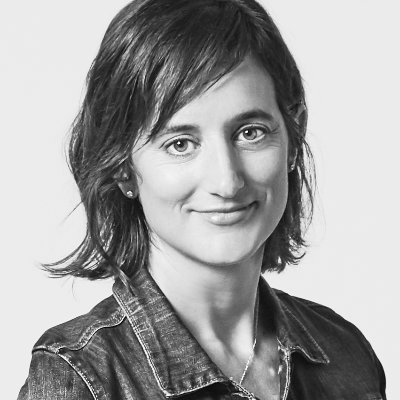
I'm talking at a conference later this year (on UX+AI). I just saw an ad for the conference with my photo and was like, wait, that doesn't look right. Is my bra showing in my profile pic and I've never noticed...? That's weird. I open my original photo. No bra showing. I put
578
3K
18K
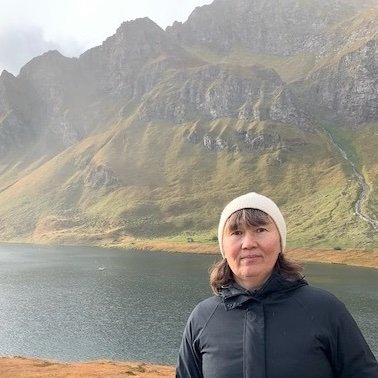
New preprint lead by @quant_ecology and @mridulkthomas, with @ChrisKlausmeier: How interactions between temperature and resources scale from populations to communities
biorxiv.org
Temperature and resources are fundamental factors that determine the ability of organisms to function and survive, while influencing their development, growth, and reproduction. Major bodies of...
1
15
36

Looking forward to it!
📢 UPDATED TIME for the GOA-ON Webinar 🗓️ Friday, 18. October ⏰14:00 UTC/ 16:00 CEST/ 10:00 EDT/ 19:30 IST Register now: https://t.co/aOA4a60gax
0
2
11
This looks exciting!
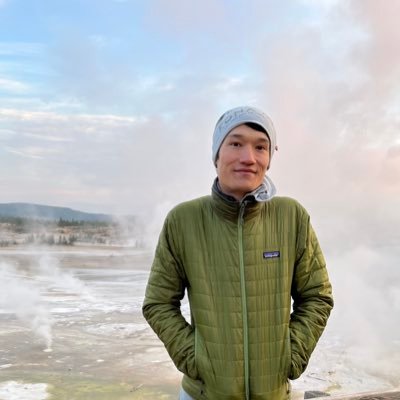
We found a way to implant bacteria 🦠 in fungi 🍄and used it to induce artificial endosymbiosis. Read all about it in our newest research paper @Nature . https://t.co/dJSITsVNOk
0
0
2
Kudos to everyone involved in investigating this. By failing to quickly identify, stop & penalise fraud, we're wasting an unconscionable amount of public money and burning hard-earned trust in the scientific community. We need to police ourselves better. https://t.co/DayT0lbLB4
0
0
8
Article linked if you'd like some background. The fraud (which has already led to retractions) has probably wasted tens of millions of dollars and countless hours. Academia runs on trust. We should celebrate, reward and defend those who uncover fraud. https://t.co/kWnVxsCzQh
0
0
0