Martin Hebart
@martin_hebart
Followers
5K
Following
4K
Media
295
Statuses
3K
Proud dad, Prof. of Computational Cognitive Neuroscience, author of The Decoding Toolbox, founder of https://t.co/hWZCF7XuMU @ martinhebart.bsky. social
JLU Giessen/Max Planck Leipzig
Joined June 2015
I'm thrilled to announce the THINGS initiative: An initiative of researchers around the world collecting and sharing large-scale behavioral and neuroscience data for object recognition and understanding, using the same image dataset. https://t.co/wYEw1ssSfl

things-initiative.org
Large-scale behavioral and neuroscience data for object recognition and understanding.
12
91
344

Dimensionality reduction may be the wrong approach to understanding neural representations. Our new paper shows that across human visual cortex, dimensionality is unbounded and scales with dataset size—we show this across nearly four orders of magnitude. https://t.co/SuGhRg7L5F
2
10
29

One week left to apply to the EPFL computer science PhD program https://t.co/G6rM91nahJ. It's an amazing environment to do impactful research with unparalleled compute! My #NeuroAI group is hiring. Consider this review service by our fantastic PhD students
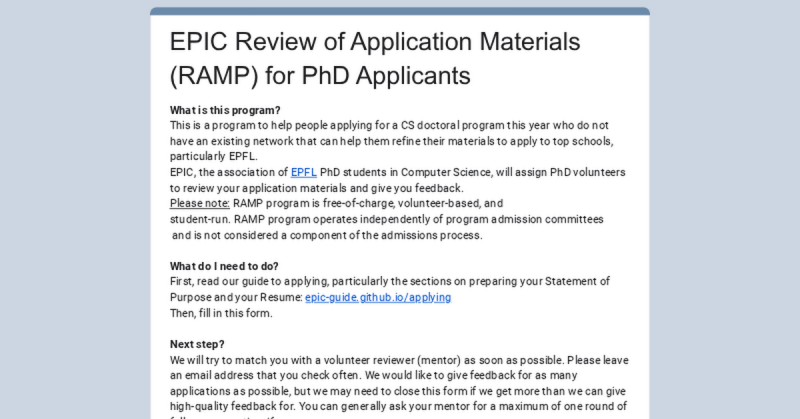
linkedin.com
Applying for a CS-related PhD soon, particularly at EPFL? The PhD volunteers from EPFL's Computer & Communication Sciences department can help review and provide feedback on the SoPs and resumes of...
0
5
12

This viral post by @paulg was based on a visual by @cremieuxrecueil. Taken at face value, it seemed to prove that IQ is almost entirely determined by genes. But when you look at the actual sources, you realize that this conclusion is fundamentally wrong.⤵️
25
64
489

Most medical LLM tools look impressive until you ask a simple question: what, exactly, are they optimized for? Most are optimized for passing exams, sounding fluent, and keeping liability low. That is a very different objective than helping a real clinician make a hard decision
1
0
2
We recently stumbled upon a surprisingly common misunderstanding in computing noise ceilings that can be quite consequential for model-brain comparisons. So if you care about noise ceilings, please check out Sander’s thread and our preprint! 👇

New preprint w/ Malin Styrnal & @martin_hebart Have you ever computed noise ceilings to understand how well a model performs? We wrote a clarifying note on a subtle and common misapplication that can make models appear quite a lot better than they are. https://t.co/71FlOXNrHz
0
2
13
New Correspondence with @davidpoeppel in Nat Rev Neurosci. https://t.co/u5onW8xbIN Here, we critique a recent paper by Rosas et al. We argue that "Bottom-up" and "Top-down" neuroscience have various meanings in the literature. PDF:
nature.com
Nature Reviews Neuroscience - Top-down and bottom-up neuroscience as collections of practices
2
11
53
New preprint w/ Malin Styrnal & @martin_hebart Have you ever computed noise ceilings to understand how well a model performs? We wrote a clarifying note on a subtle and common misapplication that can make models appear quite a lot better than they are. https://t.co/71FlOXNrHz
1
11
22

CipherOwl's SR3 stack: Screens 1million+ addresses per second Reasons with audit ready defensible output Provides report 10x output from compliance teams Research available in hours Book a demo to see how 5x your onchain compliance efficiency at 50% total cost of ownership
0
3
31
Super happy to announce that our Research Training Group "PIMON" is funded by the DFG! Starting in October, we will have exciting opportunities for PhD students that want to explore object and material perception & interaction in Gießen! Just look at this amazing team! 🧠👁️🫴
1
4
17
If you would like to follow Fernanda, please find her on Bluesky: https://t.co/eVAjm9cyIf and LinkedIn: https://t.co/WECN79OoiN
de.linkedin.com
I am a Marie Curie Fellow at the Vision and Computational Cognition Group at JLU Giessen,… · Berufserfahrung: Justus Liebig University Giessen · Ausbildung: The University of Queensland · Ort:...
0
0
0
This was a huge team effort, including Alex Puckett & @sbollmann_MRI who also supported the development of Fernanda's previous proof-of-concept version of this approach, as well as @robert_satzger, @HofstatterFelix, C. Bürger, @peerherholz, @david_linhardt, Noah Benson, @sampendu
1
0
0
(3) The community can now start to apply Fernanda's tool retrospectively to countless existing anatomical scans to investigate how individual differences in retinotopic organization relate to measures of individual differences in function. Really curious to hear your thoughts!
1
0
0

Tech in the background. Life in the foreground. With the iyO One, your attention is yours again.
1
1
5
(2) From a more practical point of view, depending on the goal of a study and the required fidelity, we can now confidently say that we may no longer need to collect retinotopic mapping data, freeing up scan time for other tasks.
1
0
0
(1) If we can accurately predict individual-specific brain function from brain structure, this means structure can act as a strong constraint to function in normally-developing individuals. To me, this offers a new paradigm for studying how structure and function are related.
1
0
0
What if you could predict brain function from structure in normally developing individuals? In her new work, Fernanda Ribeiro (not on X) provides a toolbox that accurately predicts retinotopy from T1 scans alone! https://t.co/bzDh2WHF1E This is exciting for several reasons:
1
6
21

Nature Vicarious body maps bridge vision and touch in the human brain https://t.co/MZihO1pAID

nature.com
Nature - A mode of brain organization that connects visual and bodily reference frames may translate raw sensory impressions into more abstract formats that are useful for action, social cognition...
3
25
97

New today in @Nature: your visual cortex contains touch-based body maps. https://t.co/DHI8AKwuJ9 Your brain transforms what you see into first-person, body-referenced codes: A previously unknown bridge between vision and touch.
1
7
13

$50,000 in MNEE stablecoin prizes for developers, builders, and agents The @MNEE_cash Hackathon is live. 🗓️ Deadline to apply: Jan 12, 2026 Build programmable money for AI agents, payment automation, and real-world finance using MNEE.
0
3
12
It’s not too late to apply for the PhD position in my lab! Please send your documents (cover letter, CV, transcripts, names of references) through the official application platform by Nov 25!
Please RT! I am looking for a PhD candidate in the area of Computational Cognitive Neuroscience to start in early 2026. The position is funded as part of the Excellence Cluster "The Adaptive Mind" at @jlugiessen. Please apply here until Nov 25: https://t.co/s8ZxH4oLfQ
8
62
232
Proud to share our lab’s first paper! Itamar’s work highlights an implicit but impactful tension between maximizing fit to behavioral data and staying sensitive to meaningful differences between neural network models.

Excited to share my first paper: Model–Behavior Alignment under Flexible Evaluation: When the Best-Fitting Model Isn’t the Right One (NeurIPS 2025). link below.
1
6
22
Excited to share my first paper: Model–Behavior Alignment under Flexible Evaluation: When the Best-Fitting Model Isn’t the Right One (NeurIPS 2025). link below.
1
4
17

Super excited to share that my Master’s project, “Convolutional architectures are cortex-aligned de novo,” has been published in Nature Machine Intelligence! https://t.co/Zmy1XwymFB w/ @EricElmoznino @michaelfbonner
3
15
38

University Hospitals’ research brings together federal, biotech and foundation partners to accelerate discovery. From clinical trials to health services and implementation science, UH is advancing innovation that improves outcomes for every patient.
1
2
6

🎓Recruiting Ph.D. students for Fall 2026!🎓 We study commonalities & differences across brains, and how they relate to cognition, language, & disorders. We develop brain templates, improve hyperalignment, and compare human brains with monkey brains & DNNs. https://t.co/CgjhD5Zsh0
6
80
392