

L. Sebastian Contreras-Huerta
@lsebastian_ch
Followers
279
Following
595
Media
4
Statuses
232
A/Prof at @Psicologia_UAI, researching the neural and cognitive bases of social decisions. Former @OxExpPsy and @TheCHBH
Viña del Mar, Chile
Joined July 2018
New work published today in @CommsPsychol, jointly led by the great @DrJoCutler and myself. "There is an urgent need to choose behaviours that mitigate climate change, but these are often more effortful. Can we increase pro-environmental motivation?" Find out below 👇

🌎 New paper in @CommsPsychol 🌍 https://t.co/jFTx5fxgEz There is an urgent need to choose behaviours that mitigate climate change, but these are often more effortful. Can we increase pro-environmental motivation? Joint w/ @lsebastian_ch & amazing international team 👇🧵
0
0
2
And if you want a more accessible take, check out this fantastic blog post written by one of my undergraduate students 👇 🧩 “Are we all hypocrites when moral failures come from effort, not malice?”
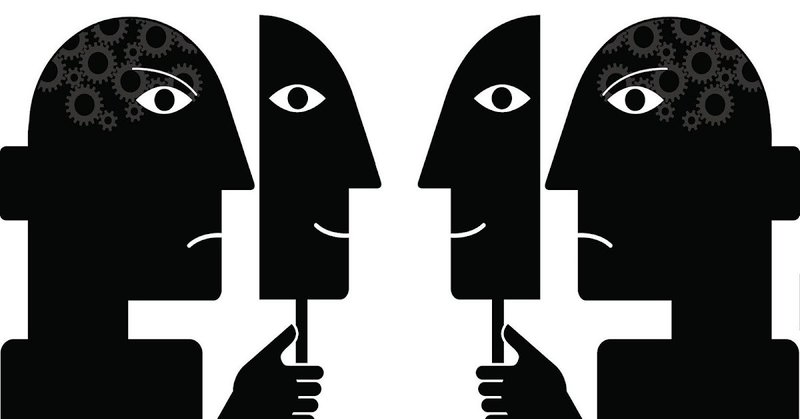
esd-lab.org
Sometimes we don’t fail for lack of morals, but for lack of energy. This study by Dr. L. Sebastián Contreras-Huerta explores how moral hypocrisy can arise not from malice, but from the effort it...
0
0
0
Huge thanks to my co-authors — @PsyHongbo @annayahprosser @thepsychologist @mollycrockett @brain_apps for the great collaboration on this project!
1
0
0
This study bridges moral psychology and decision neuroscience, showing how moral judgment and prosocial behaviour can diverge — and what this tells us about the roots of everyday moral hypocrisy.
1
0
0
These results suggest that moral hypocrisy may partly stem from reduced motivation to uphold one’s moral standards, not just from cynical double standards.
1
0
0
Even more: when people high in hypocritical blame did choose to help, they tended to perform worse — suggesting they may “like” to be nice, but fail in the “wanting” part of it.
1
0
0
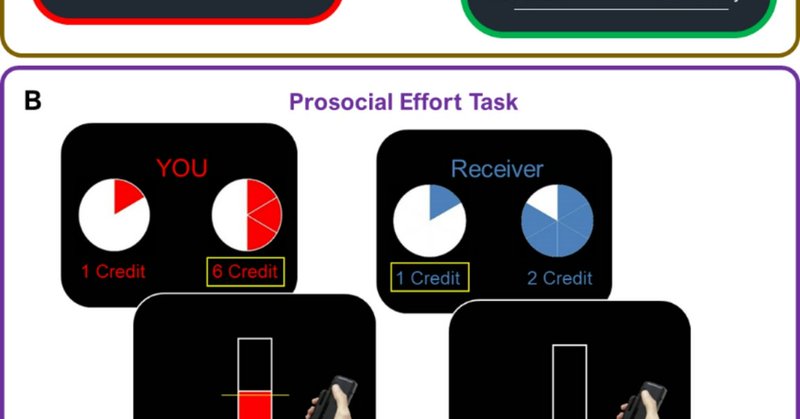
People who showed greater hypocritical blame were less willing to exert effort to help others — even when that help was costly but beneficial to someone else.
1
0
0
We also measured prosocial motivation: Participants decided whether to squeeze a handgrip device to earn money for either themselves or another person. We then tested whether people who blamed others more hypocritically were also less willing to act prosocially.
1
0
0
We used two behavioural tasks and computational modelling to measure the gap between people’s moral actions and their moral judgments of others’ similar decisions. Hypocritical blame was then the degree to which moral judgments of others deviated from one’s own moral decisions.
1
0
0
Many people think hypocritical blamers are simply deceitful or apply double standards. However, can moral hypocrisy emerge not from malice — but from merely the difficulty of acting on one’s moral values when effort is required?
1
0
0
Moral hypocrisy is easy to spot in daily life: think of someone who criticizes others for not recycling, yet takes long-haul flights, or condemns cheating while acting dishonestly in private. But what happens psychologically when people show this kind of hypocrisy?
1
0
0
Are moral hypocrites really dishonest — or just weak-willed? 🤔 Our latest paper, now out in Scientific Reports, explores the psychology of moral hypocrisy when helping others involves effort. Paper: https://t.co/ZsYyDzt9bU 💥
nature.com
Scientific Reports - Hypocritical blame is associated with reduced prosocial motivation
1
0
0
I'm excited to share the news that our global climate change project just won the Society for Personality and Social Psychology (@SPSPnews) @RobertCialdini Prize for a "paper that uses field methods and demonstrates the relevance of social psychology to outside groups and
6
30
168

Scientists are ‘most trusted’ source of climate information in global-south survey | @AyeshaTandon w/ comment from Charles Ogunbode @lsebastian_ch @NickZimson Richard Carson Stella Nyambura Mbau @TarunKhannaHBS Read here: https://t.co/Pr1wJTsPmC
0
2
6

A survey of 8,400 ppl in 7 Global South nations finds trust in climate scientists boosts knowledge. Yet #ClimateAction ranks 9th vs jobs & healthcare. Research is “biased to the north,” leaving southern voices invisible - @lsebastian_ch (@UAI_CL)
eco-business.com
Scientists are the most trusted source of information for climate change in some of the largest global-south countries, ranking above newspapers, friends and social media.
0
1
0
NEW – Scientists are ‘most trusted’ source of climate information in global-south survey | @AyeshaTandon w/ comment from Charles Ogunbode @lsebastian_ch @NickZimson Richard Carson Stella Nyambura Mbau @TarunKhannaHBS Read here: https://t.co/Pr1wJTsPmC
1
3
10

Announcing the second 'Computational Social Cognition Summer School' @unibirmingham and Uni. Leiden. Keynotes from @DianaTamir, @david_m_amodio & Matthew Rushworth, hands on tutorials and instruction from experts, and fun activities for a low price!

compsoccog.com
0
6
10
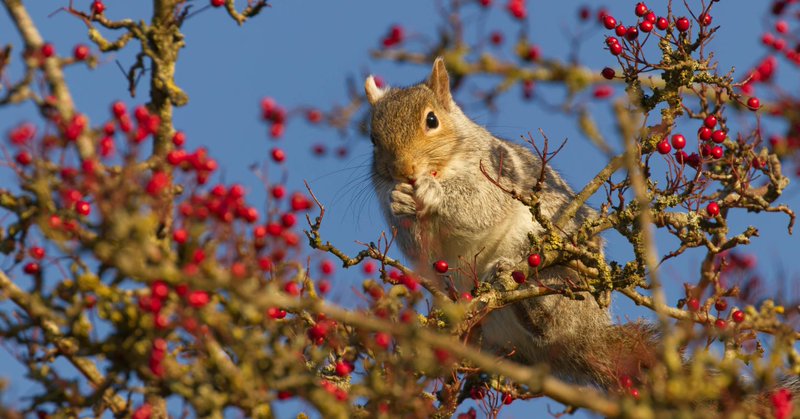
And thanks to @KubraFethiye who wrote an amazing piece about this paper here
psychologytoday.com
Every day we make choices that affect us and choices that affect others. New research using animal behaviour reveals which we are better at and how choices link to autistic traits.
0
0
1
Curious to learn more? Dive into the full paper here: https://t.co/tVGw7uJFI4 . Thanks to @brain_apps and @MSNlab, and co-authors @thepsychologist @Svenjakchnhff AndreaPisauro & ArnoGekiere, and @TheCHBH, @OxExpPsy @Psicologia_UAI @cscn_uai

nature.com
Scientific Reports - A reward self-bias leads to more optimal foraging for ourselves than others
1
1
3
This study highlights how self-bias influences decision-making, even in tasks designed without explicit self-gain motives. It reveals the adaptive mechanisms behind human foraging behaviour.
1
0
0