

Kris Parag
@krisparag1
Followers
175
Following
524
Media
13
Statuses
230
Engineering epidemics @krisparag.bsky.social
Oxford, England
Joined December 2014
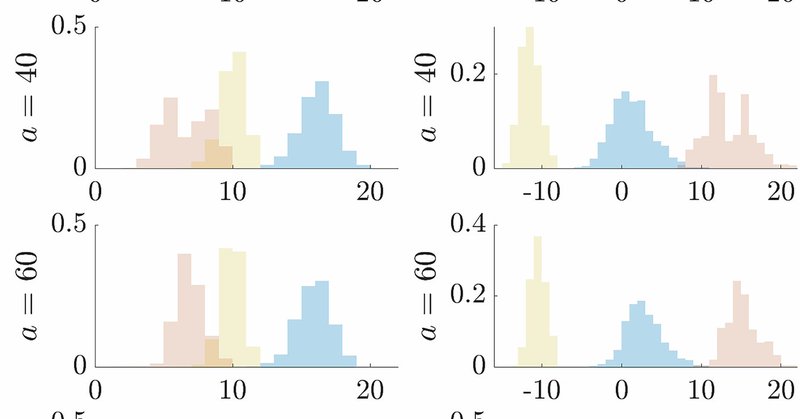
New paper: https://t.co/GrhgSDjBf7. We find that under-ascertainment and delays in reporting new cases have a surprisingly asymmetric impact on epidemic decision-making. It is much harder to know when to intervene than when to relax an intervention.
nature.com
Communications Physics - Deciding when to initiate or relax interventions during emerging infectious diseases is challenging due to uncertainties in epidemiological data. Here, the authors show...
0
0
2

NEW EPISODE #ScienceInContext! This week, Dr @SabineLvE speaks with Dr @krisparag1 about methods to estimate the instantaneous reproduction number and approaches to estimate uncertainty 👇 @imperialcollege @UniofOxford @ImperialSPH
2
3
8

A model-predictive control approach using noisy real-time case data can optimize timing of epidemic interventions, reducing both outbreak peaks and #Intervention costs compared to preset or threshold-based methods. https://t.co/mTTxBnz235
medicalxpress.com
Imperial College London's Department of Infectious Disease Epidemiology reports a model-predictive control approach that times non-pharmaceutical interventions from noisy real-time case data,...
1
11
13
@AmJEpi @NicSteyn Open access here https://t.co/vCrW5o85SD with an informative visualisation of various approaches (Fig S1 to appear)
0
0
1

Lots of fun working on this study. We take observed disease incidence and infer (well, refute) causal relations. @UriObolski @krisparag1

Check out our latest blog post! @YairDaon provides the story behind the research for newly published paper 'Refuting causal relations for synchronized pathogen dynamics' 🦠 Read the blog 👉 https://t.co/IqO8tPErER Read the paper 👉
0
2
4

"A primer on inference and prediction with epidemic renewal models and sequential Monte Carlo" (by Nicholas Steyn, Kris V. Parag, Robin N. Thompson, Christl A. Donnelly):

arxiv.org
Renewal models are widely used in statistical epidemiology as semi-mechanistic models of disease transmission. While primarily used for estimating the instantaneous reproduction number, they can...
1
9
40
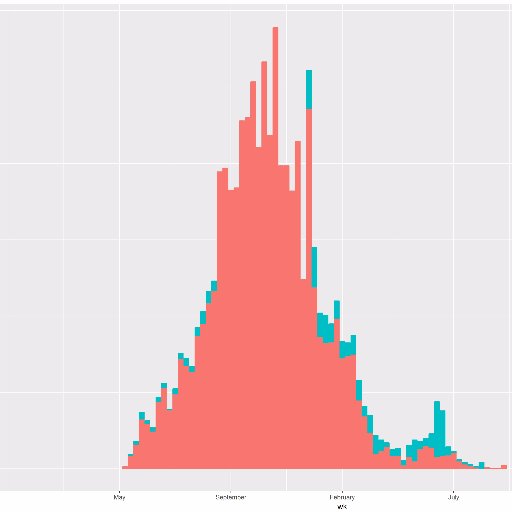
CLOSING SOON: Postdoc (London, UK) 2 Postdocs in Pathogen Genomics and Virus Genomic Epidemiology. with Oliver Pybus, Sarah Hill, Jayna Raghwani at @RoyalVetCollege More details:
0
3
7

The December issue of SIAM News is now live! In this edition, @science_eye overviews a recent study that derived a simple #mathematical equation to succinctly capture the wing flapping frequency a flying #animal must maintain to remain airborne. Read more: https://t.co/79RnM5SbvR
0
6
10

Oldies but goldies: Isaac Newton, De analysi per aequationes numero terminorum infinitas, 1669. The standard second-order method for root finding. Understanding its global convergence is hard. https://t.co/aoWeI50FB8
3
40
283
This study was inspired by the seminal work on factors behind controllability https://t.co/hBF7kfQK3P and attempts to generalise those factors by leveraging tools from control theory that are not often used in epidemiology.
pnas.org
The aim of this study is to identify general properties of emerging infectious agents that determine the likely success of two simple public health...
0
0
0
With this framework we can explore the impact of pre-symptomatic spread, surveillance biases, heterogeneities and differing generation times. We hope this approach can help inform on when targeted vs broader NPIs are needed and highlight the value of modelling feedback loops.
1
0
0
We reframe the epidemic as a positive feedback loop between past and new infections. Targeted NPIs (e.g. quarantines) disrupt that loop. The gain margin generalises R, the delay margin considers lags from surveillance or NPIs and we find that R only works in limited conditions.
1
0
0
Now in @PhysRevX
https://t.co/qoFvzZMOtz. We challenge the common use of R for assessing epidemic controllability. Using control theory, we derive epidemic gain and delay margins to better reflect the effort needed to stabilise outbreaks and pinpoint when targeted NPIs fail.
1
0
5

We have Kris Parag speaking on “Closing the feedback loop between infectious disease dynamics and real-time interventions” at the epinowcast seminar tomorrow at 3pm. https://t.co/407FBeVs2P
epinowcast.org
Epinowcast community site
0
4
8

Great collab with @RobinNThompson. We develop an event level R0, which includes importation patterns that can be behaviour driven. Builds on interesting work by @CarolineColijn and colleagues
pnas.org
COVID-19 is a global pandemic with over 25 million cases worldwide. Currently, treatments are limited, and there is no approved vaccine. Interventi...
0
1
2
We show how differences in perceived infection risks can boost epidemic superspreading. When less cautious individuals attend riskier events, spread is faster than expected. Data on behaviour and event attendance are integral to assessing outbreak risks.
royalsocietypublishing.org
We demonstrate that heterogeneity in the perceived risks associated with infection within host populations amplifies chances of superspreading during the crucial early stages of epidemics. Under this...
1
2
12
New preprint led by @sandor_beregi thinking about how we can decide when to relax or implement interventions using optimal control algorithms. We expose how delays, underreporting and policy frequencies can limit achievable epidemic control. https://t.co/uKN5K7msCK

medrxiv.org
Deciding when to enforce or relax non-pharmaceutical interventions (NPIs) based on real-time outbreak surveillance data is a central challenge in infectious disease epidemiology. Reporting delays and...
0
0
3
Please RT, the Spatial Epidemiology Lab ( https://t.co/9SrgXZJfJe,
@ULBRecherche) is hiring: I am looking for a post-doc to work on spatial models helping to target under-immunised communities during vaccination activities in the DRC:
1
36
35