
David Sinclair
@davidasinclair
Followers
513K
Following
7K
Media
2K
Statuses
9K
Professor researching why we age & how to reverse it. Author & host of Lifespan. Mission: Extend healthy life for all. Views are entirely his own 🙏✌️
Boston
Joined March 2012
Patent granted! Super proud of the team’s invention of the first truly safe age-reversal technology - for healing injuries, treating diseases, and hopefully extending human lifespan @Y_Ryan_Lu
199
297
3K
Less than 7 hours of sleep is associated with ~14% higher mortality Too much (8–9 hours) can raise it up to 34% The sweet spot for most people is ~7–8 hours
97
75
1K
ITOA states DNA breaks (and other stresses) create epigenetic noise that contributes to a loss of gene expression/cell identity & this leads to aging (exdifferentiation). These changes are reversible via mechanisms currently unknown

nature.com
Nature Aging - This Perspective describes and discusses the Information Theory of Aging, which proposes that aging primarily stems from the loss of youthful epigenetic information that can be...
2
5
32
Exciting new paper on aging: 1. CRISPR-mediated DNA breaks cause heritable epigenetic changes 2. Changes occur genome-wide, not just at breaks 3. Natural DNA breaks also disrupt the epigenome Strongly supports The Information Theory of Aging (ITOA) https://t.co/Vw4veR0JV3

link.springer.com
Genome Biology - CRISPR-Cas9 genome editing enables precise genetic modifications by introducing targeted DNA double-strand breaks (DSBs). While Cas9-induced DSBs are known to cause unintended...
13
39
288
New Review: Biological or epigenetic age is accelerated by severe stressors such as pregnancy, followed by only partial recovery https://t.co/Hsbl1pw6sH
191
70
1K
Sitting >3 h/day may account for ~3.8% of all deaths worldwide—over 400,000 deaths/year. Micro-movements matter (Rezende et al., Am J Prev Med 2016)
41
37
365
Good news: you don’t need 12,000 steps. In 15 cohorts, the most active people had 40–53% lower mortality, with benefits plateauing at 6–10k steps (Paluch et al., Lancet Public Health 2022)
38
73
920

New paper: A peptide analog called NN501 just drove substantial weight loss in high-fat diet mice with modest decreases in appetite. Could this be the future: burn off weight by engaging receptors in the brain rather than GLP-1RAs? @Cell_Metabolism
17
33
301

Slowing and reversing epigenetic drift can be achieved using epigenetic reprogramming, soon to be tested in humans in 2026

cell.com
Aging is characterized by changes in cellular identity and function over time. This process is driven by changes in chromatin factor localization during DNA break repair, which alters the epigenome...
3
13
65
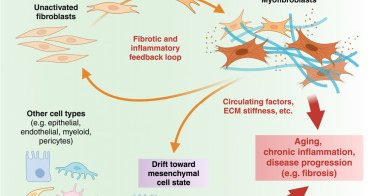
Here is the Oct 2025 Cell paper from the Belmonte Lab demonstrating Mesenchymal Drift
cell.com
Loss of cellular identity across aging and disease is linked to a widespread “mesenchymal drift,” characterized by upregulation of mesenchymal genes and altered stromal cell composition across...
1
6
28
Here is the ITOA Hypothesis in @NatureAging, first presented in a cell paper (2008) and refined in Lifespan: Why We Age and Why We Don't Have To (2019)
nature.com
Nature Aging - This Perspective describes and discusses the Information Theory of Aging, which proposes that aging primarily stems from the loss of youthful epigenetic information that can be...
1
3
25
An increased level of mesenchymal drift is associated with disease progression and a higher mortality risk
1
2
22
Epigenetic drift is observed across numerous aging human tissues and in various age-related conditions, including lung, liver, and kidney fibrosis, heart failure, and neurodegenerative diseases
1
2
20
Cells gain mesenchymal characteristics such as increased motility, reorganization of the cytoskeleton, and deposition of extracellular matrix components, which can lead to tissue stiffening and fibrosis.
1
2
23
Non-mesenchymal cells e.g. skin epithelial cells, blood vessel endothelial cells, blood vessels, and lymphatic tissue take on the gene expression patterns of mesenchymal cells that make up bone, muscle and fat
1
3
24
Mesenchymal drift (MD) is a recent concept in biology, describing the progressive, widespread acquisition of features typical of mesenchymal cells by cells that should maintain their specialized, non-mesenchymal identity. This phenomenon is considered a hallmark of aging
1
4
29
New article: The Information Theory of Aging (ITOA) states that epigenetic drift is a cause of aging, with cells taking up new identities. New review says slowing a process called "mesenchymal drift" has emerged as is a new strategy for rejuvenation
12
57
461
The commentary by my friend, Prof. Yousin Suh & Dr. Zev Williams
0
1
12
The original mouse paper by my colleague at @harvardmed Dr. Vadim Gladyshev https://t.co/ldSqU9TwTS
1
1
19