
Jeff Riffell
@RiffellLab
Followers
1K
Following
5K
Media
124
Statuses
2K
Professor at the University of Washington, Department of Biology https://t.co/tnlmdoeXJg
Seattle, Washington
Joined May 2011

Come join us at @GeorgiaTech ! We are searching for an Integrative Physiologist (broadly defined); we are growing an amazing eco-evo group here and would love to have you come be our colleague https://t.co/bfR7q65Uz1 Any q's feel free to ask SC Chair @SimonSponberg (1/n)
2
31
32
Assistant Professor opportunity in Integrative Organismal Biology, broadly interpreted, @ZoologyUBC. Come join a friendly, broad, and excellent community of folks interested in all aspects of animal biology. Views aren't bad either! 12 days left to apply! https://t.co/Eyk25o4Xcq
0
33
40

A nice @BBC_Future @KnowableMag article summarizing recent research on the potential impacts of air pollution on insect pollination https://t.co/ycj4RINMsz
@BenLangfordVOC @jmwryalls @RiffellLab @ILSE_UniSQ

bbc.com
Contaminated air is not only bad for us, it can also disrupt bees' highly attuned senses for finding flowers.
2
6
13

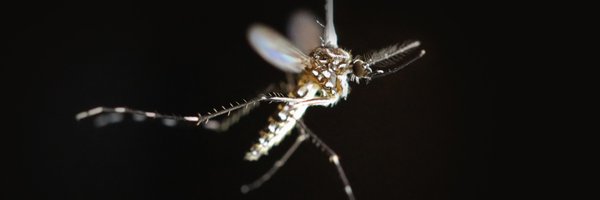
🆕 preprint alert 🦟. Dive into my latest work with @RiffellLab, @AntCribellier, @floriantm, Serge Poda, Olivier Roux, exploring how mosquitoes navigate complex swarm environments to find mates while avoiding collisions. 🔍
New pre-print from the lab, led by the amazing @Saumya_Gupta1 ! We found that swarming mosquitoes integrate acoustic and visual information to recognize mates and for collision avoidance—a great collaboration with @floriantm's group and Olivier Roux. https://t.co/pHr6PkVhg2
2
5
15
New pre-print from the lab, led by the amazing @Saumya_Gupta1 ! We found that swarming mosquitoes integrate acoustic and visual information to recognize mates and for collision avoidance—a great collaboration with @floriantm's group and Olivier Roux. https://t.co/pHr6PkVhg2

biorxiv.org
Malaria mosquitoes mate in swarms. Here, they must rely on multiple sensory cues in shaping their individual responses, such as during mate recognition, swarm maintenance, and collision avoidance....
3
10
38

A 2022 study in @SciRobotics developed a gyroscope-free visual-inertial flight control and wind sensing system for milligram flying #robots. https://t.co/cNsn3EVEYm
#ScienceMagArchives
4
5
46

Take a tea break and explore our commentary to learn about the systems that harm trans people, how this affects research, and actionable ways to support trans people in STEMM

cell.com
To build a just, equitable, and diverse academy, scientists and institutions must address systemic barriers that sex and gender minorities face. This Commentary summarizes (1) critical context...
1
9
14

Taste evolution in an herbivorous drosophilid https://t.co/GgwZcjcb3D
#biorxiv_evobio
0
7
10
Our latest paper has been published today which details our @NERCscience funded Free Air Diesel and Ozone enrichment platform https://t.co/wgzkCPa8NK Based @UniofReading it allows investigation of ecological impacts of air pollution in the field @jmwryalls @UKCEHPapers
1
5
11

I am honored to be a #SloanFellow! Thank you @SloanFoundation for your support! It is so awesome to be in a cohort with my BU colleagues @dcfylln (@AstronomyatBU) and @hadi_nia (@BUCollegeofENG). It has been a joy to start my lab at BU alongside so many inspiring junior PIs!

Chuanfei Dong (@AstronomyatBU), Meg Younger (@BU_Biology), and Hadi Nia (@BUCollegeofENG) will receive $75,000 each over two years to support their research, which spans astronomy, biology, and biomedical engineering. @dcfylln @meg_younger @hadi_nia
https://t.co/vOJ7znvhLZ
9
3
65

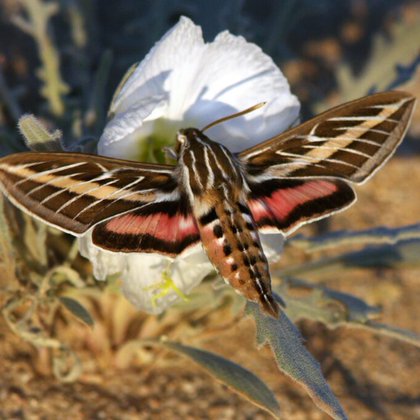
Scientists at @RiffellLab @UWBiology and @UWAtmosSci have discovered that nighttime air pollution — coming primarily form car exhaust and power plant emissions — is responsible for a major drop in nighttime pollinator activity. https://t.co/9fKvJP7lv5
washington.edu
Scientists at the University of Washington have discovered that nighttime air pollution — coming primarily from car exhaust and power plant emissions — is responsible for a major drop in nighttime...
0
3
12

Nighttime pollinator activity is dropping - and people are largely to blame. Research co-led by @RiffellLab published in @ScienceMagazine shows that nitrate radicals in the air degrade scent chemicals released by a common wildflower. More in @uwnews: https://t.co/iQD1iaVGzW
0
4
16

Friday's news pod is here! @naserturabi @CR_UK on cancer diagnosis @SarahLWilliams_ @CERN and @Cambridge_Uni on @FCC_study Joel Thornton and @RiffellLab at @UW on pollution and pollination @roxmiddleton on blueberries Michael Reiss on sex education https://t.co/pktkc6ZCpo

thenakedscientists.com
And how certain pollutants are hiding plants from pollinators
0
2
10

A study co-led by @RiffellLab (BIO) and @atmostaj (ATMS) suggested that the presence of nitrate radicals (NO3) degrades common wildflowers’ scent molecules, reducing the flowers’ attractiveness to pollinating insects. Read more about it here: https://t.co/ibM9EWZjxA
0
9
15
This study was led by Jeremy Chan, a fantastic grad student, and who was co-advised with @atmostaj . This study benefitted from a fantastic team of coauthors, and joins the work of @RobbieGirling and many others on the effects of pollution on pollinators.
2
1
5
The embargo on our latest Science article just lifted! We are excited to finally be able to share our findings on the effects of pollution on pollinator visits to flowers. Here's a link to the New York TImes article which will be in the paper tomorrow:

nytimes.com
The research, involving primroses and hawk moths, suggests that air pollution could be interfering with plant reproduction.
3
8
25

🕯️💡Our new study illuminates the mystery of why insects swarm around lights! Turns out, it's not attraction, but disorientation - insects mistake artificial lights for the sky and spiral around them. @FIU @NatGeoExplorers @dragonflyneuro
@FloridaMuseum
https://t.co/ThYSTEudGp

nature.com
Nature Communications - It is unclear why flying insects congregate around artificial light sources. Here, the authors use high-speed videography and motion-capture, finding that insects fly...

NEW PAPER: Ever wondered why insects fly in all sorts of crazy patterns around lights at night? So did we! We set about recording flying insects to work out what's going on. I'll summarise what we found in this 🧵. Spoiler: We don't think they confuse lights with the moon.
6
28
88

AI is everywhere! Got a kick out of reporting this story for @GeekWire on the @SICB_ meeting in Seattle. Thanks to @ShirBar3 and @RiffellLab for input, and @jamesdcrall and @gigi_melone for bee images. #SICB2024
https://t.co/UaSKJ58QTY

geekwire.com
A bumblebee labelled for tracking by computer vision. (James Crall Photo) The halls at a recent meeting of biologists in Seattle were buzzing with more
1
2
3
And I am recruiting postdocs and grad students, so please reach out if you are interested in any of these topics!
0
1
1