
Modeling Religious Change
@ReligiousChange
Followers
166
Following
1K
Media
62
Statuses
471
Collaborative project using artificial societies and demographic methods to better understand dimensions of religious identity & change around the world.
Joined June 2020
The Modeling Religious Change project is coming to its conclusion after 4 years of research and analysis, data collection, and model development. We've aimed to show the complexities of demographic projections and how behavioral factors like religion can influence the output.
3
1
4
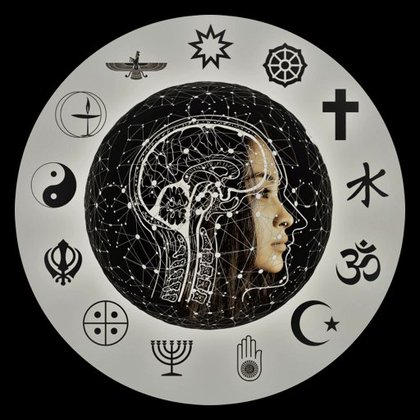
2. Do our dreams influence how we relate to god(s)? Cognitive Neuroscience of Religious Cognition is developing a computational model of the dreaming mind to predict how dreams/nightmares impact relationships with (supernatural) others. https://t.co/08nMGjrtte
@MindandCulture
cognitiveneuroscienceofreligion.org
The Cognitive Neuroscience of Religious Cognition project is conducting state-of-the-art cognitive and social neuroscience research to address the brain bases of how people formulate and express...
0
1
1
Related projects from @MindandCulture: 1. As religious affiliation declines, the spiritual but not religious (SBNRs) are increasing. Ritual for the Nonreligious will engage SBNR and “none” practitioners who develop or adapt new ritual practices. https://t.co/8RBtrnL01E
1
1
1
Funded by @templeton_fdn, MRC is an interdisciplinary, collaborative, multicultural research project of @MindandCulture. Thank you to all our partners who have made this happen: @VMASC_ODU, @CSGC, @nyupublichealth, and the Center for Modeling Social Systems at @NORCEresearch.
1
0
2
Our final accomplishment is the Assumption-Relative Religious Demographics Information System. Users can compare population projections across measures and data sources. You can visualize the outcome of population projections based on various assumptions. https://t.co/BVr3G2c2rm
1
0
1
We were able to fully replicate @pewresearch and @UN population data for several countries using microsimulation methods. This is a proof-of-concept for a novel approach to demography. https://t.co/hv5R0KKqdq
1
0
1
Another goal of ours was to apply computational methods to the demographic study of religion. Our artificial societies project religious change by re-creating real-world phenomena. This allows us to track individual agents, who interact & respond to environmental/social factors.
1
0
1
2 novel datasets will become available: -Dataset of Integrated Measures of Religion (DIM-R) harmonizes data on religious practices of 1 mil+ people -Religious Identity and Change (RICH) combines historical/contemporary surveys w/ religion measures in the US, Norway, and India
1
0
1
Our work is founded on religious change theory and data synthesis efforts. We plan to release the datasets our team created, which will allow scholars to analyze trends in religious change over time, across countries, & between measures of religiosity. https://t.co/bySlcuxABr
1
1
2
What role has religion played in major civilizational transformations? As a direct result of our project, authors Wesley Wildman and LeRon Shults introduce methodological tools & material insights for guiding conversations in an upcoming book. https://t.co/Of2ngQZCjc
bloomsbury.com
0
0
0
Our parent organization @MindandCulture is starting a new project, “Ritual for the Nonreligious,” which will explore the creativity of SBNR and ‘none’ practitioners who develop new ritual practices. What role do rituals play in human flourishing? https://t.co/8RBtrnL01E
1
2
5
“Non-religious believers [are] making an active spiritual decision, rather than simply opting out.” This article by @heavenwasblue and @DromiShai explores moral justifications for religious research on nonreligious people, which are a growing and diverse group.

New blog post here:
1
0
1
Throughout the year, people of various faiths and spiritualities mark religious celebrations with rituals and practices. These privately and publicly observed practices are recorded in our dimensions of religiosity. Here’s what’s happening this week:
0
0
0
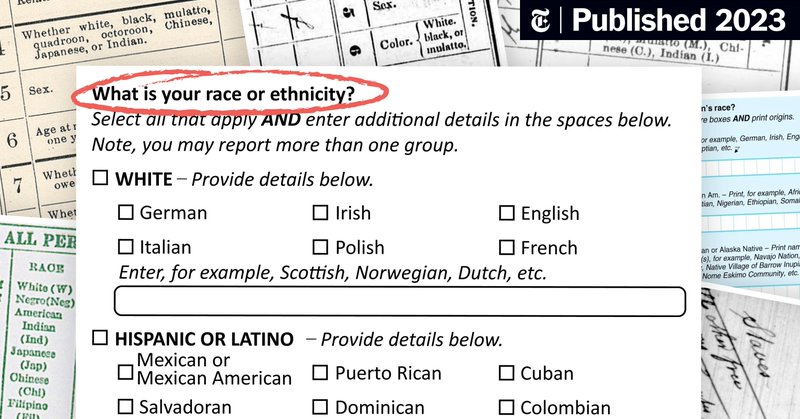
Like race, religious belief is incredibly complex and many people have multiple religious identities. The personal importance of religious identity also varies. We strive to capture this nuance in our agent-based models of religious change. https://t.co/MIUdIkse5z
nytimes.com
Census categories for race and ethnicity have shaped how the nation sees itself. Here’s how they have changed over the last 230 years.
0
0
0
Our parent organization, @MindandCulture ‘s project “Ritual for the Nonreligious” collects the rituals SBNR practitioners have developed to attain community and spiritual transcendence without reliance on the baggage and beliefs of institutional religion.
0
0
2
“Are we wired for transcendence?” Dave DeSteno interviews David Yaden and Robert Forman on transcendent experiences, and whether you need religion to have them.

What does being spiritual as opposed to religious mean? For most, it's about having experiences of connection, awe, transcendence, or wonder that overcome them at times. Where these come from isn't the big question, though. Rather, it's how they change us. https://t.co/ADbuQDLVnT
1
0
2
The ARDEMIS tool, which allows users to experiment with how different assumptions and datasets influence projections of religious change. We hope journalists, policy-makers, and anyone interested can gain from it. https://t.co/BVr3G2c2rm
0
0
0
In this briefing, @conradhackett, David Voas & Peter Brierley explore how survey bias, wording, and assumptions can skew data collection on (non)religious affiliation/change. We address this very issue, developing novel datasets and tools to streamline information.
We're just starting today's #RMCBriefing: How do you trust statistics on #religion that test membership numbers, affiliation & beliefs? Panel is @conradhackett of @pewresearch, Prof David Voas of @Uni_of_Essex & Dr Peter Brierley with extra guidance & advice for #journalists.
1
1
0
Throughout the year, people of various faiths and spiritualities mark religious celebrations with rituals and practices. These privately and publicly observed practices are recorded in our dimensions of religiosity. Here’s what’s happening this week:
0
0
0