

Maxime Policarpo
@MaximePolicarpo
Followers
127
Following
764
Media
25
Statuses
2K
Postdoc in evolutionnary biology in the Maude Baldwin group. Fascinated by vertebrates and their sensory modalities
Paris, France
Joined April 2013
Just in time before Christmas 🎅🏻🧬 Very happy to share this work, where we identified several horizontal gene transfers between fishes. This is a first for vertebrates (except for the anti-freeze protein example) ! https://t.co/bOVfUUI1Fn

biorxiv.org
Horizontal gene transfer (HGT) is less frequent in eukaryotes than in prokaryotes, yet can have strong functional implications and was proposed as causal factor for major adaptations in several...
2
4
12

NEW preprint!🥳 Orthogroups are a prerequisite for comparative genomics and Tree of Life inquiries Introducing #OrthoHMM, software that improves orthogroup inference, which may refine our understanding of genome evolution and the Tree of Life 🔗 https://t.co/pd3NQFRe5X
2
54
184
After the eye, the highest expression of non-visual opsins was found in gonadal tissues, supporting the recent observation that these genes play a crucial role in reproduction.
0
0
3
Finally, we found that, not only visual opsins , but also non-visual opsins, are mostly expressed in the eye, with an almost perfectly conserved expression pattern across the evolution of fishes.
1
0
2
We were able to perform a genome-wide analysis to find genes co-evolving with opsins. We found the first evidence, to date, that opsins co-evolve with genes involved in light-perception, and with several other genes (promising candidates for their role in photoreception !)
1
0
1
This is further supported by the fact that among different ecological factors, the best predictors for the number of opsins, but also for their selective pressure, was the depth at which a species live.
1
0
2
This strongly suggests that the evolution of opsins is driven by the photic conditions in which fish live, rather than alternative hypothesis such as the discrimination of conspecifics or preys/predators pigmentation.
1
0
2
We found striking different evolutionary patterns between visual and non-visual opsins, with the visual opsin repertoire evolving much faster than the non-visual repertoire. We also show a strong co-evolution between these two repertoires.
1
0
2
The variation in term of visual opsins copy number was huge, between 0 (complete loss in one cavefish !) to almost 20 in herrings. The variation for non-visual opsins was even greater, between 7 in the deepest living vertebrate (The Mariana snailfish) to 60 in the goldfish !
1
0
2
We took advantage of the large number of high-quality fish genomes now available (and representing almost every 🐠orders!) to conduct an in-depth analysis of visual opsins but also of non visual opsins, deeply understudied in vertebrates 🧬👀.
1
0
2
I am more than happy to share our preprint about the evolution of non-visual and visual opsins in fishes, fruit of a collaboration between the Salzburger lab (@fogg_lily , @WSalzburger ) and Fabio Cortesi (@FCortesi). https://t.co/ODU1QJHhO7

biorxiv.org
Photoreception – the detection of light for image formation (vision) as well as for non-image-forming purposes (circadian regulation, DNA repair) – is critical to the survival of most animals. In...
1
8
11

A first paper as co-author in @MurielPerron 's team ! Extremely grateful to have been welcomed into this lab and to be again able to enjoy doing science.

science.org
The neuroinflammatory microenvironment is pivotal in triggering retinal regeneration.
1
4
6

Convergent evolution in Afrotheria and non-afrotherians demonstrates high evolvability of the mammalian inner ear | Nature Communications https://t.co/O64YinuiG3

nature.com
Nature Communications - The inner ear is responsible for hearing and balance control. Here, the authors examine evolutionary convergence in the inner ear morphology of Afrotheria species and...
0
32
84

We finally touched base with Captain Paul Watson from his detention in Nuuk, Greenland where our CEO @OmarTodd and the @PaulWatsonUK1 media crew finally had the opportunity to bring a camera inside. First and foremost, he wants to extend his heartfelt thanks to all his supporters
70
573
1K

Published today in @Nature, we describe an approach for single-molecule protein reading on @nanopore arrays. By utilizing ClpX unfoldase to ratchet proteins through a CsgG nanopore, we achieved single-amino-acid sensitivity.
nature.com
Nature - A technique for threading long protein strands through a nanopore by electrophoresis and back using a protein unfoldase motor, ClpX, enables single protein molecules to be analyzed...
19
286
997

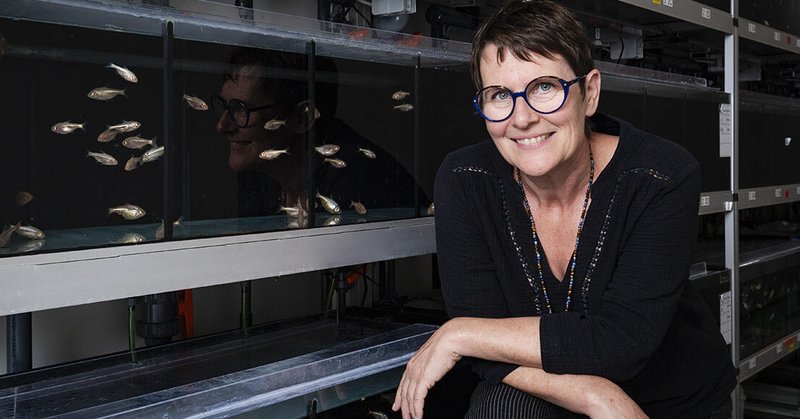
Depuis vingt ans, cette spécialiste de biologie du développement et de l’évolution s’est prise de passion pour un petit poisson qui vit dans les eaux d’Amérique centrale. Au point de se mettre à la spéléologie pour explorer de profondes grottes au ...
lejournal.cnrs.fr
Depuis vingt ans, cette spécialiste de biologie du développement et de l’évolution s’est prise de passion pour un petit poisson qui vit dans les eaux d’Amérique centrale. Au point de se mettre à la
2
12
23

🔔The team of Sylvie Rétaux and collaborators @EGCE_lab explore 🐟Cavefish 🧬pseudogenomics in a @BioMedCentral Ecology and Evolution article! ⬇️⬇️⬇️ Learn more... https://t.co/uwY1rVMFTc

link.springer.com
BMC Ecology and Evolution - Several studies suggested that cavefish populations of Astyanax mexicanus settled during the Late Pleistocene. This implies that the cavefish’s most conspicuous...
0
2
5
Many thanks to everyone who contributed to this work and who helped genotyping loss-of-function alleles in so many specimens @IdeevL . Additional thanks to all the team of Sylvie Retaux, @DECAteam1, for their sampling efforts over the past years that made this study possible.
0
0
0
This is most likely due to recurrent migrations of pseudogene free surface individuals in a the Toro populations, where ancient pseudogenes (which appeared before the split of the Toro population and other cave populations) are segregating.
1
0
0
Using the extreme case of Toro, we show that the pseudogene repertoire (represented by the number of loss-of-function alleles) is highly correlated to the phenotype (represented by the relative eye size).
1
0
0