
Ajay Mathuru
@MathuruLab
Followers
124
Following
37
Media
3
Statuses
70
The question that drives our research @yalenus is to gain a better understanding of how #brains operate and generate #behavior; #mechanisms.
At E6, Yale-NUS labs
Joined April 2020
Happy to announce our recent study on “Evaluating the inter-species transmission risk of amyloid beta peptide aggregates via ingestion” came online over the weekend. https://t.co/uYgKFK99fC
1
0
1
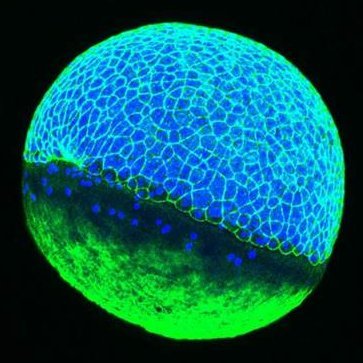
Our new manuscript describing gene multiplexing (using RAM-FISH) is finally out... We profiled multiple known and novel mRNA candidates during different developmental stages of Bicyclus and Danio. https://t.co/0oNlz7Z2N3
@MonteiroLab @MathuruLab
1
2
4
And, a big thank you to a fantastic ongoing collaboration with @TirthaDasBaner1 and Antónia Monteiro, on a number of projects. The spatial expression patterns studied uses a modified HCR tech perfected in-house allowing for expression analyzing in 2-3 week old z.🐟!
0
0
1
However, chrna3 mutants exhibited a prolonged attraction to alcohol and were less affected by alcohol exposure. These findings suggest that chrna3 dysfunction may contribute to acute alcohol tolerance, potentially playing a significant role in the development of addiction.
1
0
0
This mirrored the concentration-dependent contrasting effects alcohol has on typical behavior.
1
0
0
Our study employed a novel zebrafish self-administration assay to examine the role of chrna3 in alcohol response. Juvenile zebrafish displayed a biphasic reaction to alcohol, initially drawn to it but subsequently avoiding it.
1
0
0
chrna3 modulates biphasic response to alcohol https://t.co/ITgooO6UKW Our preprint on biphasic response to alcohol and the nicotinic acetylcholine receptor subunit chrna3 is out! The lay summary of our findings in the thread below.

biorxiv.org
Alcohol use disorders (AUDs) are complex phenomena governed by genetics, neurophysiology, environment, and societal structures. New methods to understand the underlying neurogenetics are valuable for...
1
2
2
Great to see what started out as a fun little 💬 with @jangruber467 and @ nicktolwinski a few years ago matured into the HLCA catalyst award and this paper! Congratulations to @ Josh Raine, on his first paper in the lab!
0
0
0
However, we conclude we need more research to fully ascertain if iatrogenic transmission by this route is possible when the Aβ sequence similarity between species is higher than it is between zebrafish and humans or there is a long incubation period.
1
0
0
This is great news given the prion-like properties of the amyloid-β, and the many reports of the propagation and spread of Aβ seed after intravenous or intracerebral inoculations.
1
0
0
Our study investigated dietary Aβ aggregates transmission, using a transgenic fly expressing human Aβ fed to #zebrafish. While there was no problem in detecting these aggregates in the feed, no Aβ transfer or pathology was observed in zebrafish gut or brains.
1
0
0
Evaluating the transmission risk of amyloid beta peptide via ingestion https://t.co/HYBZD3mUjx The answer at the moment, thankfully, seems to be unlikely! Read more ⬆️

biorxiv.org
Recent reports suggest that amyloid beta (Aβ) peptides can exhibit prion-like pathogenic properties in humans. Transmission of Aβ peptide and the development of associated pathologies after surgeries...
0
4
6
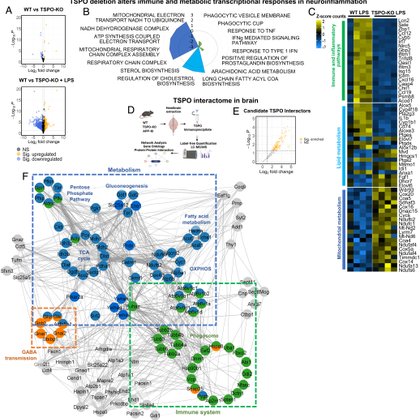
📢New paper out in #PNAS on mitochondrial control of microglial phagocytosis. 🧵A brief thread https://t.co/z3mUgJH2HD
@PNASnews @NTU_LKCMedicine @NTUsg @alzforum
#mitochondria #microglia #Alzheimers #Immunometabolism
pnas.org
Microglial phagocytosis is an energetically demanding process that plays a critical role in the removal of toxic protein aggregates in Alzheimer’s ...
1
9
28
Check out the smchd1 story here. https://t.co/QpvkgMgONl Had not been thinking about homeotic transformations till this amazing study with @shifengxue and @ReversadeLab. Congratulations 🎉 also to Raunak Vijayakar whose capstone thesis contributed to this publication. His 1st 📝!
0
1
3
Happy to share our latest work on the role of maternal SMCHD1 in regulating #HOX expression @NatureComms with @ReversadeLab @MathuruLab. This project survived a job change, maternity and pandemic. 🧵 https://t.co/9uGUq0w7AX 1/n
nature.com
Nature Communications - Hox genes are known to control anteroposterior patterning, including the vertebrate spine. Here Xue et al. show that maternal Smchd1 regulates Hox expression in an...
6
16
53
Hi all, We are hiring! My lab has two open positions. Please write to me with the job title in subject line. Details here - https://t.co/AJmRbbXhC4 And here - https://t.co/baMBjWVwma
#zebrafishjobs
0
5
8
Great to see this work in pre-print! congrats @ Anja and @ Erin Connect with me at Mathurulab for these mutants. Oxytocin receptors influence the development and maintenance of social behavior in zebrafish (Danio rerio)
biorxiv.org
Zebrafish are highly social teleost fish and an excellent model to study social behavior. The neuropeptide Oxytocin is associated different social behaviors as well as disorders resulting in social...
0
0
2
Whole-Exome Sequencing to Identify Potential Genetic Risk in Substance Use Disorders: A Pilot Feasibility Study https://t.co/fr3UXgjJXF ##mdpijcm via @JCM_MDPI
mdpi.com
Genetics intersects with environmental, cultural, and social factors in the development of addictive disorders. This study reports the feasibility of whole-exome sequencing of trios (subject and two...
0
0
0
Fantastic to see this published. Great #Collaboration with IMH, NAMS, and Venki‘s lab @ IMCB on an important problem. #Mentalhealth “Whole-Exome Sequencing to Identify Potential Genetic Risk in Substance Use Disorders…” https://t.co/fr3UXgjJXF,
@JCM_MDPI
2
1
8