
Jakub Kronenberg 🌈🌍
@JakubKronenberg
Followers
186
Following
550
Media
50
Statuses
374
Ecological economist working on environmental values, sustainable consumption, and degrowth. Special focus on birds and urban social-ecological systems.
Lodz, Poland
Joined September 2022
We are hiring a postdoc in the Social-Ecological Systems Analysis Lab. Strong experience in social science methods. Fluency in Ukrainian (and/or Russian). Part of the work will be carried out in Ukraine. The research project focuses on urban greening, civic ecology and resilience
2
1
3
Call for abstracts is now open for #ESPEurope2026! Share your research, experiences, and innovations to help advance ecosystem services knowledge for a nature- and people-positive Europe. Submit your abstract: https://t.co/LFUbuui6aN
@ESPartnership
0
0
0
Postdoc wanted! #GreeningInTheRedZone #Resilience #UrbanGreenSpaces #CivicEcology #SocialScience
#NatureBasedSolutions #GreenInfrastructure #Ukraine Deadline 24 Dec. Job start Feb 2026. 30 months University of Lodz https://t.co/OVDiyEEOiC
0
0
0
The project links to the 'Greening in the Red Zone' concept. The deadline for applying for this job is December 24th. And the job starts in February (30-month contract).
0
0
0
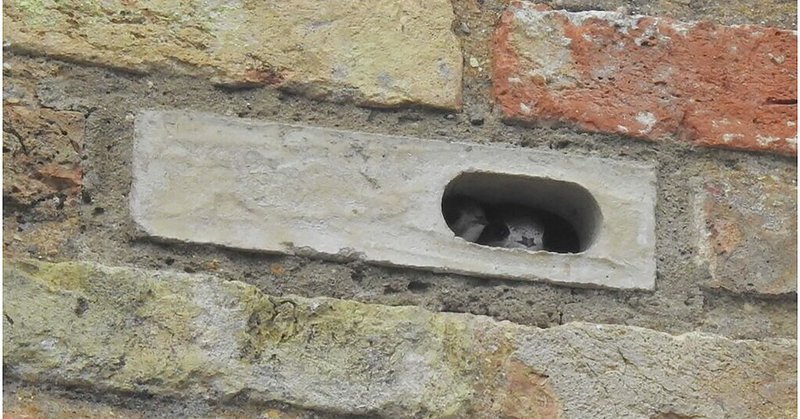
This is clearly evident in the case of #switbricks in the UK, where the biodiversity net gain and elusive offsetting don't account for specific species interests. "If a swift could fight for their existence with words: nonhuman interests and politics" https://t.co/OlSBVpV64S
nature.com
npj Urban Sustainability - If a swift could fight for their existence with words: nonhuman interests and politics

Biodiversity offsetting is a pathway to extinction. It should not be relied upon at any level of government to permit species destruction.
0
0
1
Campaign against the use of feathers in #fashion spurred broad interest in #birds, largely motivated by #RelationalValues @IPBES @KaiChanUBC @StanOchota @peta @BirdLife_News @AmyTwiggerH @curlewcalls @DominicCouzens Here is the storyline. See https://t.co/Gnb4bmmR9N for details

🪶 New research reveals the transformation of British society's relationship with birds at the turn of the 20th century ➡️ https://t.co/UeF9hsRiH6
@JakubKronenberg
0
0
2
11/11 This case study shows that conservation is not a linear story of continuous improvement or refinement of ideas but rather a cyclical one, with the same arguments reappearing in new contexts, fitting into the broader system of socio-economic priorities. @ConservOptimism
0
0
0
10/11 It featured arguments that were used in many other campaigns for nature conservation, most notably those recently framed as #RelationalValues.
1
0
0
9/11 It also involved other strategies for #transformativechange (sensu @IPBES), notably arguing for a systemic change in the sector specifically responsible for bird loss and promoting the legal protection of nature.
1
0
0
8/11 It involved working with worldviews, in particular, reinterpreting the Christian foundation as a sense of responsibility for other God's creatures and avoiding cruelty and harm to them. #ChristianOrnithology
1
0
0
7/11 ...and for people to develop meaningful relationships with them. It emphasised relational values on top of intrinsic and instrumental ones. The campaign illustrates how clashing values led to a broader transformative change.
1
0
1
6/11 The (R)SPB campaign and the broader debate on feather fashions exemplify early attempts to shape people's relationship with birds. The campaign focused on moving from the consumptive use of birds towards the appreciation of the birds' rights to live in the wild...
1
0
0
5/11 This study is based on an analysis of around 200 leaflets, reports, academic and popular science articles, letters and other documents, mostly associated with the (R)SPB, covering three decades from 1889 to 1921.
1
0
0
4/11 The wearing of bird feathers by women was debated in the media, on the streets, in shopping environments and on many other occasions. The campaign against feather fashions was instrumental in creating the (Royal) Society for the Protection of Birds [(R)SPB].
1
0
1
3/11 Studying the historical campaign against using birds in fashion offers insights into present discussions on the value of nature and how to leverage values for broader sustainability transformation.
1
0
0
2/11 British people's relationships with birds changed at the turn of the 20th century. Killing birds for food, feathers, collections and sports started to give way to seeing birds as creatures that deserved the right to live their own lives in nature.
1
0
0
1/11 The changing values of #feathers and their wearers: The transformation of British society's relationship with #birds at the turn of the 20th century History of #BirdConservation @Natures_Voice @RSPBScience #RelationalValues #BirdEcon @PETAUK
https://t.co/Gnb4bmmR9N
besjournals.onlinelibrary.wiley.com
Read the free Plain Language Summary for this article on the Journal blog.
1
0
0
The seemingly simple case of mandating #swiftbricks turned out dramatically more difficult than it might have seemed at the outset...it just appeared relatively easy, compared to tackling the other key driver of the swifts’ population decline #InsectLoss
https://t.co/wyVamPQwYi
journals.sagepub.com

One thousand people have followed me here in the last week. If you don’t know much about the swift brick campaign, I wrote a book about it called #NatureNeedsYou - The Fight To Save Our Swifts. It’s been a shocker of a ride so far but I will never give up. Why? I love birds.
0
0
0