
Biodiversity Sensitive Urban Design
@BioUrbanDesign
Followers
110
Following
176
Media
3
Statuses
133
Updates from the Biodiversity Sensitive Urban Design team @ICON_Science @RMIT_CUR @UniMelb Follow for inspiring solutions to bring nature back into our cities!
Naarm, Australia
Joined July 2022
We are excited to share our brand new Biodiversity Sensitive Urban Design webpage! https://t.co/jwxchHjcjU It's the go-to place for you to get updates from our team, learn about the different projects we are working on and find lots of #BSUD resources.
0
8
24
📢 New research by colleague Hugh Stanford: Exploring how cities can unlock the potential of overlooked, informal green spaces! #urbanism 🌏 #urbanNature
#naturebasedsolutions
https://t.co/40lDpobBy2

theconversation.com
Cities seeking to create greener, more liveable neighbourhoods can revitalise disused spaces in various ways. Encouraging and supporting communities is key.
0
2
4

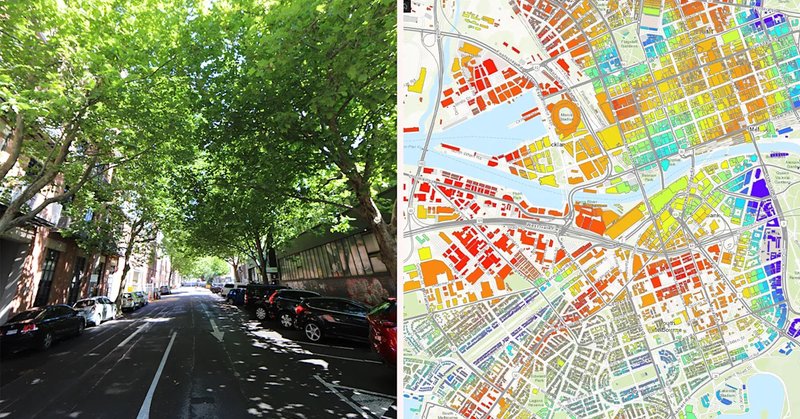
Overseas, the ‘3-30-300' city planning rule is increasingly seen as critical to human health and wellbeing. But new research from @RMIT has found Sydney and Melbourne are failing when it comes to one key component - tree cover. https://t.co/Cwec8eVFo6
au.news.yahoo.com
The new idea is helping residents live healthier and happier lives, but detailed maps show how parts of Australia are falling short.
0
4
7

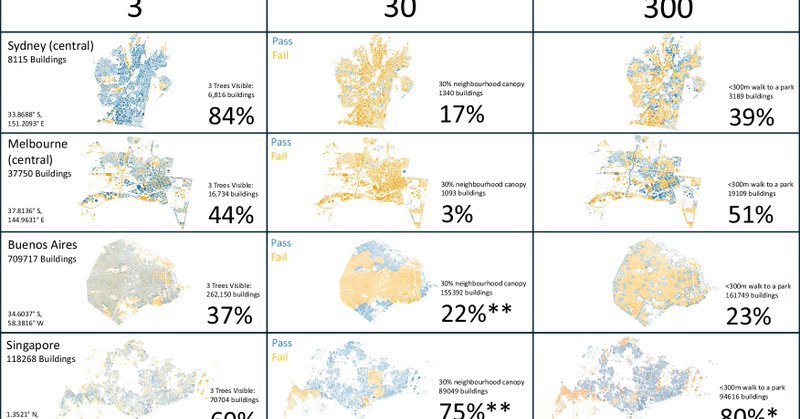
Many cities fail the 3-30-300 benchmark for urban nature. The ‘3’ is often met and the ‘300’ is patchy due to poor tree canopy coverage. Cities need better planting conditions and governance to support tree growth @_ficus @TerrEcolGroup @geoconR @sbekessy
nature.com
Nature Communications - The study reveals that most buildings in eight global cities fail the 3-30-300 benchmark for urban nature, due to insufficient tree canopy. The ‘3’ standard is...
0
8
10
📢Our OA research shows informal green spaces (IGS) are an integral part of the #urbanNature landscape, contributing as much as formal green spaces to species richness!🌿 Using crowdsourced data we assessed how different #greenspace supports birds & plants https://t.co/Z2gpD9rdPs
0
1
1
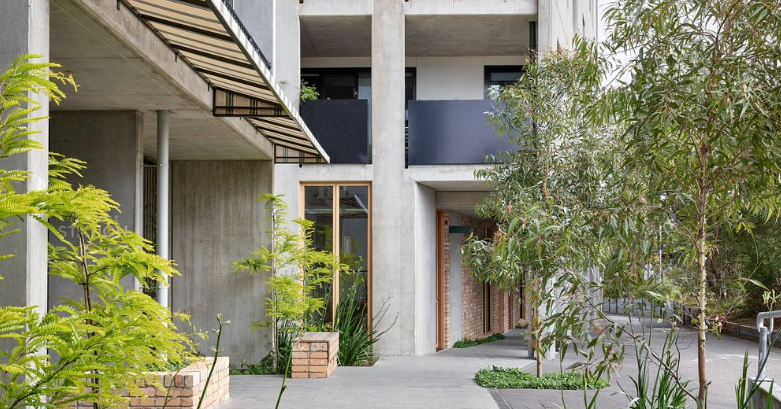
Up now on the ICON blog: Find out about the new "Nature Pledge for Developers" launched by @sbekessy @Biodivcouncil at the recent Global Nature Positive Summit! #naturePositive #urbanNature Will your organisation join others in signing the pledge? https://t.co/qDZjkFwnhf
icon-science.org
Australia needs more housing. But major expansions in residential and commercial developments could pose risks to remaining threatened species habitats, resulting in detrimental consequences for our...
0
2
2

Here at the global nature positive summit in Sydney - excited about our Built Environment session coming up soon - hoping for some tangible ways forward for the development industry to embrace nature positive @ICON_Science @RMIT_CUR @Biodivcouncil
7
9
28
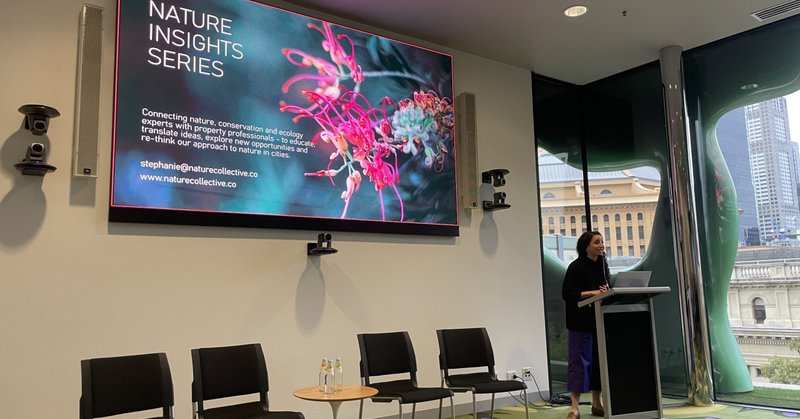
Fresh post on the ICON blog https://t.co/gjRSEPB0VR The @BioUrbanDesign team with Nature Collective presented their first "Nature Insights" series to a huge range of industry people across the property sector:
icon-science.org
ICON Science recently partnered with Nature Collective to organise the first session of their ‘Nature Insights Series’ entitled ‘Ecology Insights for the Property Sector.’ The Nature Insights Series...
0
2
2
One day (soon?) 'everyday nature' will be a basic human right. Read our new paper for the latest on how to rethink design of cities to build everyday nature into the urban fabric https://t.co/i9O517icVm
@Biodivcouncil @RMIT_CUR @GeorgiaGarrard @RewildingOZ @livingbuilding
1
21
52

A great piece by @_ficus and @HollyKirk for @ConversationEDU on using 'stepping stones' to connect isolated #wildlife habitats to help #birds and #insects thrive in our cities. #UrbanWildlife #NatureInCitites

theconversation.com
Our cities are full of obstacles and hazards for native wildlife but also contain many valuable patches of habitat. Creating green spaces to connect these patches improves their lives and ours.
0
5
9
📢 Our new OA research shows spatially targeting new green spaces to connect bigger patches of habitat can maximise investment for #urbanbiodiversity
@_ficus explains it nicely! https://t.co/VUI17IeXIO 🌱🗺️🐝🐦🦗 Paper with @sbekessy @GeorgiaGarrard here:
1
11
17

Our cities’ secret gardens: we connect with nature in neglected green spaces just as much as in parks, explain @HughStanford1 and @HollyKirk Read here: https://t.co/Zu16tNM4yy
@DrAmitSarwal @Pallavi_Aus @rishi_suri @RMIT @JacintaAllanMP @opdwivedi82
0
4
7
More #urbanEcology to help inform #urbanPlanning - hot off the press today! 📰🌿📢🐝🗺️🌱 Stepping stones for wildlife: how linking up isolated habitats can help nature thrive in our cities https://t.co/pIbkaeb5oO via @ConversationEDU with @_ficus
theconversation.com
Our cities are full of obstacles and hazards for native wildlife but also contain many valuable patches of habitat. Creating green spaces to connect these patches improves their lives and ours.
0
2
3

The tangle of greenery along railway lines, flowers growing on vacant lots, or unmown grassy patches under power lines, it turns out people in cities engage with nature in all these spaces, write researchers from @RMIT. https://t.co/a41jIdoeM2

theconversation.com
The tangle of greenery along railway lines, flowers growing on vacant lots, or unmown grassy patches under power lines, it turns out people in cities engage with nature in all these spaces.
0
5
10
Research from ICON scientists @HughStanford1 @HollyKirk @RMIT_CUR in the @ConversationEDU today! #urbanNature #natureConnection #citizenscience
Check out this summary of our recent work on the value of informal green space for human-nature interaction! 🌱🕵️♀️🍃🚶♀️💚 https://t.co/CCzkCC92Sr
0
3
4
Check out this summary of our recent work on the value of informal green space for human-nature interaction! 🌱🕵️♀️🍃🚶♀️💚 https://t.co/CCzkCC92Sr
theconversation.com
The tangle of greenery along railway lines, flowers growing on vacant lots, or unmown grassy patches under power lines, it turns out people in cities engage with nature in all these spaces.
0
8
13
📢 OA #urbanNature research by @HughStanford1 hot off the press! With @HurleyJoe @GeorgiaGarrard we use #citsci data to explore where people are connecting with nature in informal green spaces across Melbourne - it's surprisingly often! Read more here: https://t.co/kgEFGBpxi6
0
3
11

Let’s not forget our urban environments on this #WorldEnvironmentDay Here’s a little tour of mine #wildoz #urbanbiodiversity #citieswithnature @SciMelb @networkedcities
4
18
67
While all trees can have some benefits, many of the benefits of nature in cities are linked to biodiversity — not just greenery. Read more from: @Biodivcouncil's @sbekessy from @ICON_Science @RMIT
https://t.co/SpDckAix3b
biodiversitycouncil.org.au
Increasing the amount of nature in our cities can provide many benefits as long as it's done with biodiversity in mind.
0
14
25
For World Biodiversity Day, 360info ran this short article of mine. Let's not miss the chance to bring nature back while greening our cities https://t.co/Ewrd9u7mul
@Biodivcouncil @ICON_Science @RMIT_CUR @BushHeritageAus @RewildingOZ @LivingFutures

360info.org
Increasing the amount of nature in our cities can provide many benefits as long as it’s done with biodiversity in mind. A tree-lined city boulevard on a hot summer’s day is often a welcome sight for...
0
5
11
A bit excited that our 'Blueprint for a Nature Positive Adelaide' is now out for comment - https://t.co/ydfT3Ytpst
@ICON_Science @HollyKirk @GeorgiaGarrard @CityKat75 @_ficus @RMIT_CUR @Biodivcouncil @GreenAdelaide
0
7
20