Waleed OmdWala
@visualswala
Followers
108
Following
936
Media
63
Statuses
704
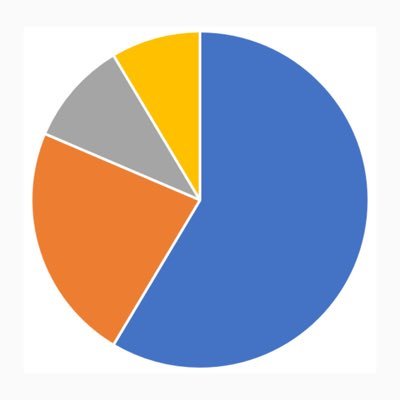
Top 10 richest people in the world: $1T
$990B
$980B
$970B
$960B
$950B
$940B
$930B
$920B
$910B
$900B
$890B
$880B
$870B
$860B
$850B
$840B - Elon Musk 🇺🇸
$830B
$820B
$810B
$800B
$790B
$780B
$770B
$760B
$750B
$740B
$730B
$720B
$710B
$700B
$690B
$680B
874
561
8K


"just say the word" is not just the new absolutely—it's the new em-dash.
13
6
191

Geoffrey Hinton says mathematics is a closed system, so AIs can play it like a game. They can pose problems to themselves, test proofs, and learn from what works, without relying on human examples. “I think AI will get much better at mathematics than people, maybe in the next
197
203
2K
"Creativity belongs to humanity and not machines." What is creativity? Hear 2012 physics laureate Serge Haroche share some thoughts on creativity during our Nobel Prize Conversations in Madrid. Watch the full event: https://t.co/pgNrGR9qFG
27
46
193
Some advice from physics laureate Frank Wilczek to kick off 2026.
29
141
866
#OTD 1 January 1985: Physics laureate Donna Strickland is shown aligning an optical fiber at University of Rochester. Her Nobel Prize-awarded research has led to improvements within the field of laser physics. Strickland was the third woman to be awarded the physics prize.
19
53
229
In his youth, #NobelPrize laureate Ardem Patapoutian @ardemp moved from a war-torn Beirut to Los Angeles, USA. Today he is a scientist in California at @scrippsresearch. His discovery of a novel class of pressure sensors led to him receiving the 2021 medicine prize.
42
43
223
👍
"For you only life is of value, you have a lingering attachment to it and it continues to be interesting as there are still things to discover and to amaze you, and it is only life that can excite you. That’s exactly how it is with you, isn’t it?" Gao Xingjian was awarded the
0
0
0
What do you use AI for? "The Godfather of AI", Geoffrey Hinton, shared what he likes using AI for during our Nobel Prize Conversations event in Madrid, Spain. Hinton was awarded the 2024 Nobel Prize in Physics “for foundational discoveries and inventions that enable machine
53
84
336

“Having broad cross-disciplinary and exposure experience is critical,” says @YouTube CEO @NealMohan, BS ’96, MBA ’05. That’s why for the last century, Stanford GSB and @StanfordEng have jointly prepared students to lead at the intersection of business and technology.

gsb.stanford.edu
100 years on, each school retains the pioneer mindset that changed the way the professions were taught.
0
6
8
Could AI change your political opinions? Two new studies approach the question from different angles: Professor Robb Willer examines the message, Professor Zakary Tormala looks at the messenger.

gsb.stanford.edu
People find AI-delivered arguments convincing. This could help bridge political divides — or fuel polarization.
0
2
3
“Everything about the new economy is going to require more electricity,” said Interior Secretary Doug Burgum, MBA ’80, at a recent Stanford Institute of Economic Policy Research event. “If we’re not producing it, it affects everything we do.”

gsb.stanford.edu
The U.S. Interior Secretary highlights the rising need for affordable and reliable power.
0
1
2
Take a chance on someone. Find clarity in your ambitions. Work together to achieve your goals. Throughout 2025, our View From The Top speakers have shared career insights, leadership lessons, and more. See our top takeaways from this year’s View From The Top series.
0
3
3
Success isn’t just about what you do. As Professor Jennifer Aaker and Associate Professor Szu-chi Huang find, it’s about what you keep doing.

gsb.stanford.edu
To sustain the behaviors that helped you reach a goal, think about the achievement as a journey rather than a destination.
0
2
4

Stanford radiologist and data scientist Curtis Langlotz is developing AI-powered systems to predict medical outcomes, improve patient care, and design better drugs. #ResearchMatters
https://t.co/XzQ6WYcotK

news.stanford.edu
Curtis Langlotz develops AI-powered systems that help medical experts and patients improve care.
7
17
87
Stanford researchers have become the first to demonstrate that machine-learning control can safely guide a robot aboard the ISS, laying the groundwork for more autonomous space missions. https://t.co/0hVRg8aaAS

news.stanford.edu
Stanford researchers have become the first to demonstrate that machine-learning control can safely guide a robot aboard the ISS, laying the groundwork for more autonomous space missions.
12
15
75