
Steffaney Wood-Rocca
@steffwould
Followers
137
Following
285
Media
7
Statuses
97
PhD Candidate @Scripps_Ocean | Marine Chemical Biology & Harmful Algae 🌊 | @DavidsonCollege @FulbrightFIN @HelsinkiUni Alum | She/Her/Hers
San Diego, California
Joined January 2015
Learn more about my PhD research by checking out my profile by @Scripps_Ocean! 🧬🔬🌊

Meet Scripps PhD student @steffwould! This marine chemical biologist works with @MoorelabSIO & @andreweallen to study #HarmfulAlgalBlooms, which sometimes produce acids that contaminate seafood, poison marine mammals & threaten human health. Read our Q&A: https://t.co/zgm9Vr06hk
1
0
15
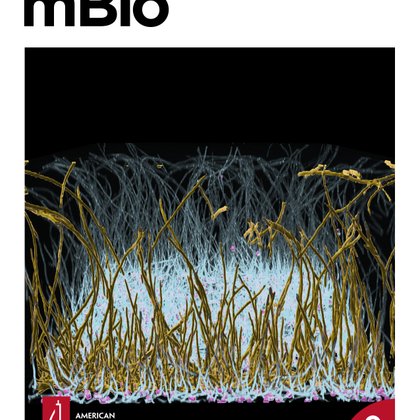
First paper from my PhD is officially out! We uncovered how benthic diatom Nitzschia navis-varingica makes the neurotoxin domoic acid. Grateful to all our collaborators in the @BradMoore_SIO, Todd Michael, @andreweallen, and Mari Yotsu-Yamashita labs!
journals.asm.org
Domoic acid (DA) is a potent neurotoxin produced by marine micro- and macroalgae problematic to fisheries and toxic to humans and animals. Our study elucidates the molecular mechanisms underlying DA...
The benthic #diatom Nitzschia navis-varingica harbors massive genomes and an expanded domoic acid (dab) gene cluster (>60 kb). Genomics + biochemistry reveal enzyme diversification driving a unique toxin chemotype. @andreweallen @BradMoore_SIO
https://t.co/S0p0JOyn5L
#enzymology
0
1
3
The benthic #diatom Nitzschia navis-varingica harbors massive genomes and an expanded domoic acid (dab) gene cluster (>60 kb). Genomics + biochemistry reveal enzyme diversification driving a unique toxin chemotype. @andreweallen @BradMoore_SIO
https://t.co/S0p0JOyn5L
#enzymology
0
4
7
🔬 Cuts to federal research funding put our family, friends, communities and planet at risk. Scripps Oceanography scientists Paul Jensen and @BradMoore_SIO spoke with NBC News on how cutting and freezing research dollars impacts crucial breakthroughs. ⬇️ https://t.co/WPOBXJGPOn

nbcnews.com
A team of researchers from the Scripps Institution of Oceanography at the University of California, San Diego, are working to explore the bottom of the ocean in an effort to discover scientific...
0
5
9
🌊 ⚠️ If you're curious to learn more about the harmful algal bloom currently impacting Southern California waters, @SCCOOS_org director and Scripps Oceanography biological oceanographer Clarissa Anderson shares more about the event with @ocregister. ⬇️ https://t.co/p1PsH12uLk

ocregister.com
Since late February, more than 800 poisoned animals have been reported in just Los Angeles and Orange counties.
1
11
18
A #HarmfulAlgalBloom is affecting #SoCal marine life, and Scripps Oceanography scientists like @SCCOOS_org's Clarissa Anderson are on the frontlines to better understand its impact. She shares more on the importance of this work for @RandomLengths. ⬇️ https://t.co/piSOEjX5vD
randomlengthsnews.com
When the Ocean Sends a Cry for Help - The Los Angeles Harbor Area's Only Independently owned news magazine serving San Pedro, Wilmington, Carson, Lomita, Torrance, Long Beach, Rancho Palos Verdes and...
0
3
4
With the support of @NOAA funding, Scripps PhD candidate Steffaney Wood (@steffwould) is working to better understand and predict a neurotoxin called domoic acid—a toxin directly affecting marine life along our shores. Learn more from @SpecNews1SoCal. ⬇️ https://t.co/ZlURIQe3n0

spectrumnews1.com
The toxin is caused by algal blooms of Pseudo-nitzschia
0
1
11
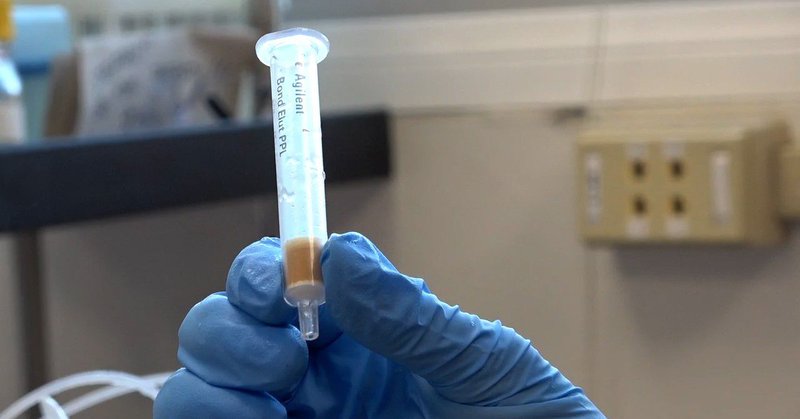
Check out this news story about our research and the ongoing domoic acid event. None of this work would be possible without NOAA funding. Thank you @jo_kwon and @SpecNews1SoCal for the feature! @Scripps_Ocean @BradMoore_SIO @andreweallen
spectrumnews1.com
The toxin is caused by algal blooms of Pseudo-nitzschia
0
1
2
Standing-room only as Professor Bradley Moore (@BradMoore_SIO) accepts @UCSanDiego’s prestigious Distinguished Research Award. The award is a sign of respect from his peers for his groundbreaking research mining the ocean for new medicines.
0
7
33
California Department of Public Health Issues Recreational Shellfish Advisory for Santa Barbara County
independent.com
(SANTA BARBARA, Calif.) – On September 26, 2024, the California Department of Public Health (CDPH) issued an Advisory “not to consume” sport /
0
1
1

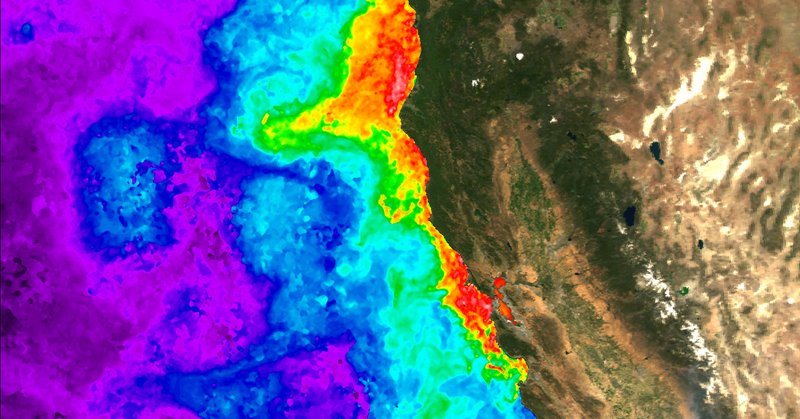
A team of researchers from JCVI, @Scripps_Ocean, and collaborators published a groundbreaking study on predicting harmful algal blooms (HABs) that contain high levels of the neurotoxin domoic acid. https://t.co/AKmFIjcnsW
jcvi.org
La Jolla, California—September 19, 2024—A team of researchers from the J. Craig Venter Institute (JCVI), Scripps Institution of Oceanography...
2
5
8

New pub today in @PNASNews that extends our @noaacoastalsci ECOHAB work at @Scripps_Ocean on domoic acid biosynthesis with @Andreweallen to support toxin forecasting during an oceanic diatom bloom

pnas.org
In 2015, the largest recorded harmful algal bloom (HAB) occurred in the Northeast Pacific, causing nearly 100 million dollars in damages to fisheri...
1
10
51
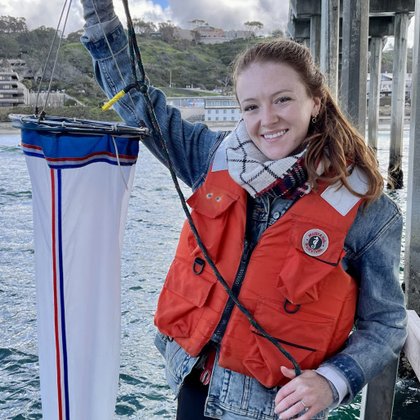
My graduate student Steffaney Wood @steffwould is pretty cool! Check out her @Scripps_Ocean profile...
scripps.ucsd.edu
Steffaney Wood is a fifth-year PhD student researching marine chemical biology at Scripps Institution of Oceanography at UC San Diego. She grew up primarily in San Clemente, Calif., and Silver...
2
1
26
Out today at @ScienceMagazine - giant PKZILLA proteins spew huge polyketide marine toxins, just like #Godzilla! Witnessed by @photocyte & @VikShende at @Scripps_Ocean

science.org
Prymnesium parvum are harmful haptophyte algae that cause massive environmental fish kills. Their polyketide polyether toxins, the prymnesins, are among the largest nonpolymeric compounds in nature...
3
44
191
SCCOOS is fortunate to be led by Clarissa Anderson - take a moment find out more!! https://t.co/Mg1yJE390J
@SCCOOS_org @CeNCOOS @usioosgov @Scripps_Ocean

scripps.ucsd.edu
Clarissa Anderson is the Director of the Southern California Coastal Observing System (SCCOOS) and the NOAA Cooperative Institute for Marine, Earth, and Atmospheric Systems (CIMEAS) at Scripps...
0
2
5
.@UCSanDiego has been awarded $7.35 million in @NSF and @NIH funding for the Scripps Center for Oceans and Human Health, led by faculty member Bradley Moore. The program seeks to understand marine contaminants and nutrients in a changing climate: https://t.co/jIPeT7m1Rl
2
6
27
Move over titin... introducing PKZILLA as the largest protein in life that makes one the largest nonpolymeric compounds in biology, the marine polyether toxin prymnesin. Congrats to @photocyte & @VikShende and rest of team!
biorxiv.org
Prymnesium parvum are harmful haptophyte algae that cause massive environmental fish-kills. Their polyketide polyether toxins, the prymnesins , are amongst the largest nonpolymeric compounds in...
5
38
136
Excited to share my research on harmful algal blooms (#HABs) and their impact on marine ecosystems!🌊🔬 Thanks for featuring my work @Scripps_Ocean! Check out the video to learn about fieldwork exploring Pseudo-nitzschia HABs. #PhDResearch #MarineScience #ScienceCommunication
Scripps PhD candidate Steffaney Wood (@steffwould) studies harmful algal blooms or HABs, which is when microscopic algae grow in overabundance & produce toxins that pose a threat to marine mammals. Learn more about her fieldwork in Monterey Bay looking at Pseudo-nitzschia HABs.⬇️
2
3
22
Grateful to have presented my work at the International Conference of Harmful Algae this week in Hiroshima, Japan! What a great week learning more about HABs and biotoxins🔬 #ICHA2023 @ISSHarmfulAlgae
0
0
13

New paper out in @NatureComms today! Short-term acidification promotes diverse iron acquisition and conservation mechanisms in upwelling-associated phytoplankton https://t.co/MOVZdATPmQ
4
25
64